- 1. Gas Transmission and Distribution Need Different Pipes
- 2. Why API 5L Carbon Steel Is Commonly Selected
- 3. Comparing Seamless, ERW and LSAW Steel Pipe
- 4. Pressure Design, Welding and Corrosion Risks
- 5. External Coatings and Pipeline Integrity
- 6. What Gas Pipeline Buyers Should Specify
- 7. Frequently Asked Questions
- 8. About LONGMA
The pipe used in a gas pipeline depends on whether the system is a long-distance high-pressure transmission line, a gathering line, a local distribution main or a service connection. Carbon steel line pipe manufactured to API 5L is widely used for transmission. Polyethylene pipe is also used in permitted gas distribution networks, while specialist metallic materials may be selected for corrosive or unusual service conditions. There is no single pipe material suitable for every gas pipeline. Selection must follow the applicable design code, regulations and actual operating environment.
Gas Transmission and Distribution Need Different Pipes
Long-distance natural gas transmission systems commonly use welded carbon steel line pipe, including ERW and LSAW products, and may also use seamless steel pipe where appropriate. Engineers choose grade, diameter and wall thickness based on pressure, mechanical loads, toughness, construction conditions and economics. High-strength API 5L grades such as X52, X60, X65 and X70 are among the options, but the correct grade is project-specific.
Local distribution systems often operate under different conditions and may use polyethylene piping where permitted by regulations and the applicable gas piping standard. Polyethylene offers corrosion resistance and flexibility but has temperature, pressure and installation limits. It is incorrect to say plastic pipe cannot carry gas under pressure. Equally, polyethylene used in distribution should not be assumed suitable for a high-pressure cross-country transmission system.
Gathering lines and facility connections can have additional requirements because the gas composition, moisture, carbon dioxide, hydrogen sulfide or operating temperature may differ from those of a dry-gas transmission line. In some environments, corrosion-resistant alloys, lined pipe or other engineered solutions may be necessary.
Why API 5L Carbon Steel Is Commonly Selected
API Specification 5L provides product requirements for specified seamless and welded steel line pipe. Its strength grades and product specification levels allow designers and purchasers to select material appropriate to a pipeline transportation system. The grade designation X65, for example, refers to a specified minimum yield strength of approximately 65 ksi, or 448 MPa—not 72 MPa. A higher yield grade may allow a thinner wall in a suitable design, but the final thickness must also account for pressure, construction loads, fracture control, corrosion allowances and other code requirements.
PSL1 and PSL2 are product specification levels, not general declarations of pipeline safety. PSL2 generally includes tighter chemical and mechanical requirements and additional toughness and inspection provisions, depending on the product and grade. A project may require PSL2, but it is inaccurate to claim that every gas pipeline must use PSL2. Purchasers should identify the API 5L edition, product level and all applicable supplementary requirements in the order.
Comparing Seamless, ERW and LSAW Steel Pipe
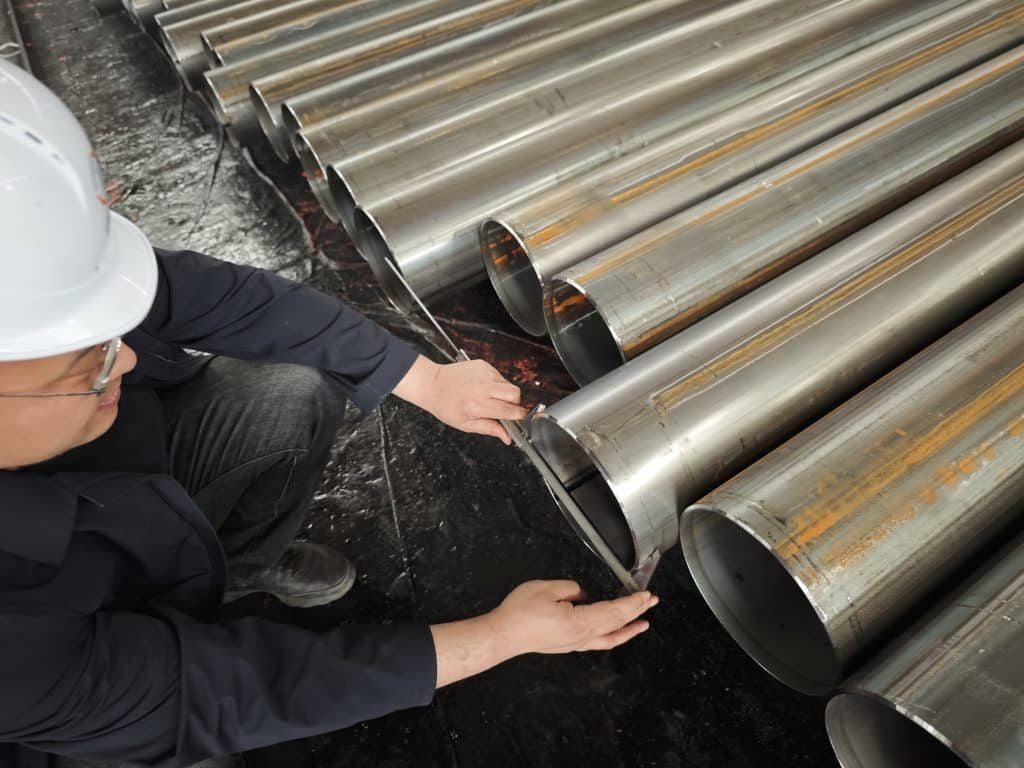
Seamless pipe is typically manufactured by piercing and rolling a heated billet. It has no longitudinal weld and is available in selected dimensions and grades. It is not made primarily by drilling a hole through a solid bar, and the absence of a longitudinal seam does not eliminate the need for testing.
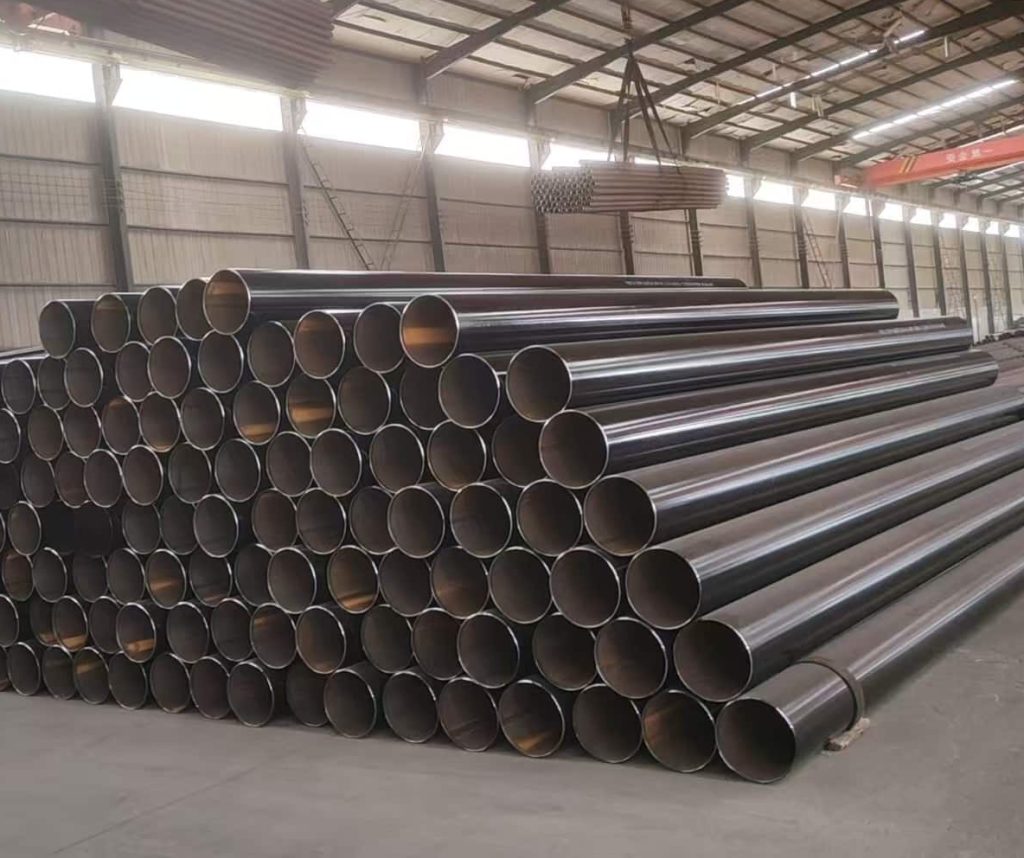
ERW pipe is formed from steel strip or coil and joined along a longitudinal seam using electrical resistance heating and pressure. It is widely considered for suitable small and medium diameter applications, subject to the mill’s actual size range and the ordered standard. Welding quality, seam inspection and traceability must be verified.
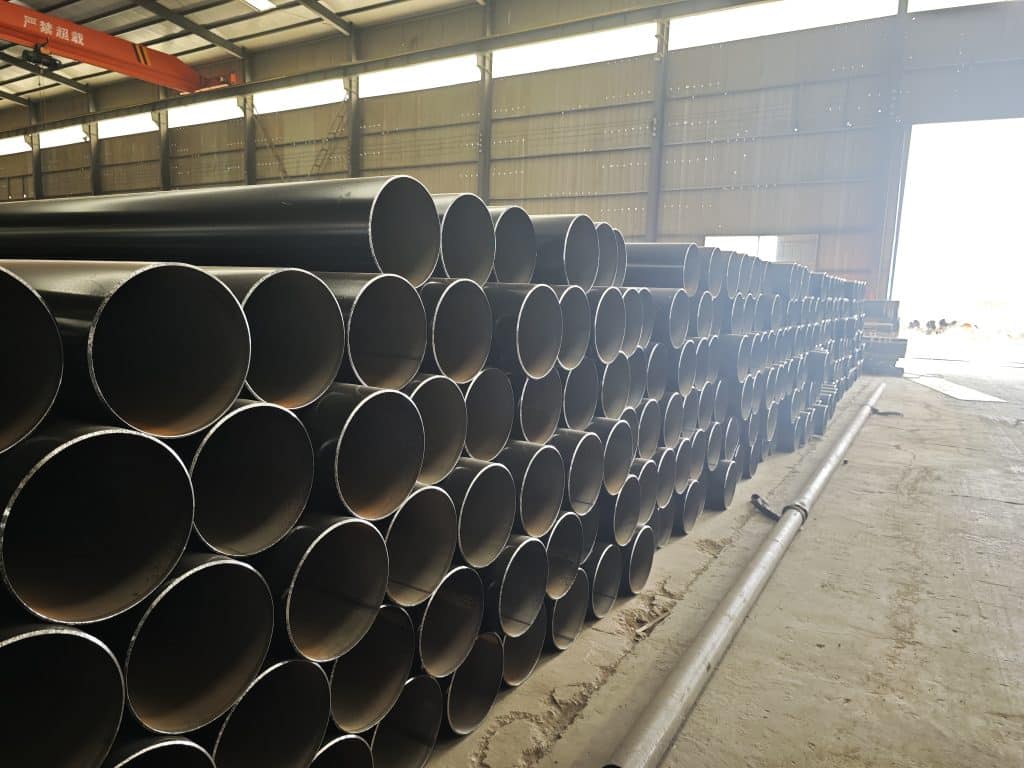
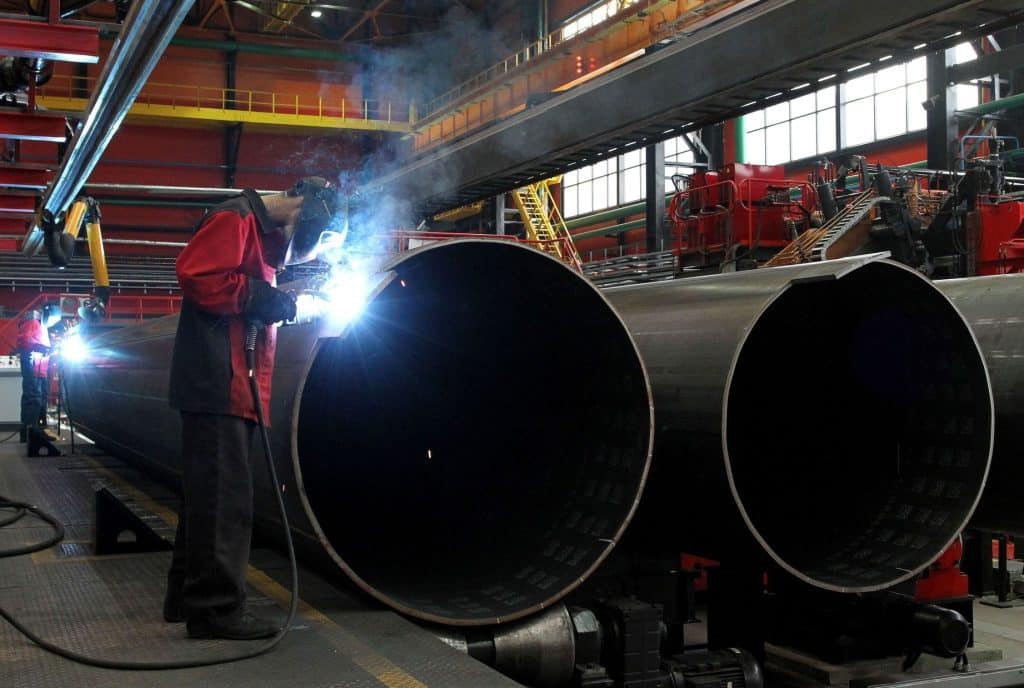
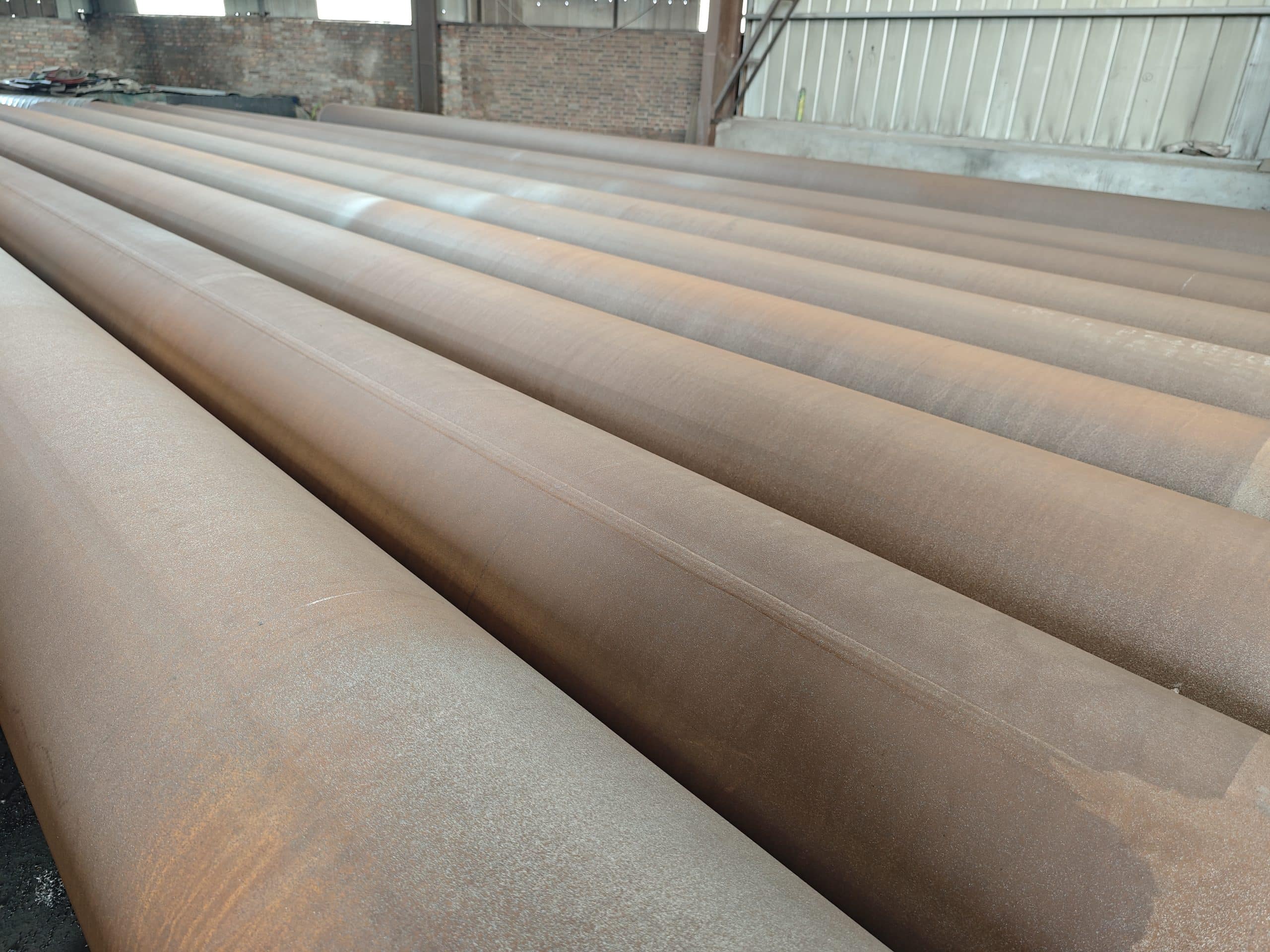
LSAW pipe is formed from steel plate, often by JCOE or UOE methods, and longitudinally welded using submerged arc welding. It is commonly selected for larger diameters or heavier wall requirements. However, a particular diameter does not automatically mandate LSAW, and neither manufacturing process is categorically stronger or safer. Engineers should compare dimensions, mechanical properties, weld quality, toughness, project delivery and lifecycle requirements.
Pressure Design, Welding and Corrosion Risks
Pipeline pressure capability is determined by engineering design, not by the grade name alone. For gas transmission, a relevant code such as ASME B31.8 may govern pressure design, design factors, material requirements and other constraints, depending on jurisdiction. Design calculations consider outside diameter, wall thickness, specified strength, temperature, allowances and loads. Maximum allowable operating pressure must be established for the complete system, including joints and other components.
Field girth welding requires a qualified procedure, qualified personnel and appropriate inspection. Depending on the applicable construction requirements, API 1104 or ASME BPVC Section IX may be relevant to welding procedure qualification. Carbon equivalent, wall thickness, consumables, preheat and hydrogen control affect weldability. Hydrogen-assisted cold cracking during welding must not be confused with hydrogen-induced cracking associated with certain wet H₂S service environments.
If hydrogen sulfide is present, determine whether the service falls within the scope of ISO 15156/NACE MR0175 or other project-specific requirements. Sulfide stress cracking and hydrogen-induced cracking are distinct mechanisms requiring appropriate evaluation. A single H₂S partial-pressure value is not a universal qualification rule for all gas pipelines. Material selection must reflect water content, chemistry, stress, temperature and the governing requirements.
External Coatings and Pipeline Integrity
Buried steel pipelines are commonly protected by a qualified external coating and, where applicable, cathodic protection. Fusion-bonded epoxy (FBE), three-layer polyethylene (3LPE) and other coating systems may be considered based on operating temperature, soil, handling and installation. Their thicknesses are defined by the applicable coating standard and project specification, not by a universal figure of only a few micrometres. Coating selection also requires attention to adhesion, holiday detection, damage repair and compatibility with cathodic protection.
Coatings reduce exposure to external corrosion but cannot guarantee that a pipeline will remain corrosion-free throughout its design life. Internal corrosion control may require water management, chemical treatment, material selection, monitoring or internal protection. Design life is a project objective, not a blanket warranty provided by the coating alone.
During operation, integrity management can include corrosion monitoring, cathodic-protection surveys, leak detection and in-line inspection where technically feasible. The inspection method and interval depend on risk, regulations, pipeline characteristics and the operator’s integrity program; no single annual survey schedule is universally mandatory.
What Gas Pipeline Buyers Should Specify
A useful request for quotation identifies whether the line is for transmission, gathering or distribution. It should state the governing design and product standards, editions, pipe grade, PSL where applicable, outside diameter, wall thickness, length, end preparation, operating pressure, temperature, gas composition and environmental conditions. Also specify toughness, sour-service requirements where applicable, coating, testing, traceability and required certificates.
When comparing suppliers, confirm that the offered manufacturing process and size range match the actual requirement. Request representative inspection documents and evidence of the relevant manufacturing capability. If the contract requires an API Monogram licence or an ISO quality-management certification, verify its status and scope; do not treat either as an automatic requirement for every gas pipeline purchase.
Review delivery, handling, coating protection and site-welding requirements before the order is finalized. Material acceptance should be based on the specified tests and records, not only on marketing claims about strength or corrosion resistance.
Frequently Asked Questions
What pipe is used for high-pressure natural gas transmission? API 5L carbon steel line pipe is commonly used, with grade, dimensions and manufacturing route selected through the governing design requirements.
Can polyethylene pipe carry natural gas? Yes, in gas distribution applications where the material and installation are permitted by the applicable standards and regulations.
What is the difference between ERW and LSAW? ERW joins formed strip or coil using electrical resistance heating; LSAW joins formed plate using submerged arc welding. Suitability depends on the specification and project conditions.
Does X65 have a yield strength of 72 MPa? No. The X65 designation corresponds to approximately 65 ksi, or 448 MPa, specified minimum yield strength.
Is sour-service pipe required for every gas line? No. The requirement depends on the actual gas and water chemistry, operating conditions, applicable standards and project specification.
Do coatings remove the need for cathodic protection? Not necessarily. Coatings and cathodic protection are often complementary parts of a buried steel pipeline’s corrosion-control design.
About LONGMA
LONGMA specializes in round ERW and LSAW welded steel pipes, with more than 20 years of experience. Its manufacturing site covers 230,000 m², and annual production exceeds 500,000 tonnes. For gas transmission projects, buyers can provide the API 5L grade, PSL, dimensions, coating requirements and service conditions for technical discussion. Email: info@ilongma.com.