- 1. Arc Welding & Submerged Arc Welding: Process Principles Overview
- 2. Arc Welding vs. SAW: 10 Core Parameter Comparison
- 3. Deep Dive into Weld Performance: Advantages and Risk Control
- 4. Industry Application Scenarios: Which Process to Choose?
- 5. Weld Inspection: International Standards & LONGMA’s Control System
- 6. Selection Decision: 5 Questions to Quickly Target the Right Process
- 7. FAQ: Common Procurement Questions
- 8. About LONGMA: Professional Supplier of Arc Welded & SAW Steel Pipes
Applicable Fields: Oil & Gas · Pressure Vessels · Chemical Processing · Power Engineering · Offshore Engineering · Structural Engineering
In industries such as oil and gas, pressure vessels, chemicals, power, and offshore engineering, welding quality directly determines a steel pipe’s safety, durability, and project operating costs. Arc Welding and Submerged Arc Welding (SAW) are the two most widely used welding technologies in steel pipe manufacturing—the former excels in flexibility, while the latter has become the mainstream process for producing large-diameter, high-pressure steel pipes due to its high level of automation and consistent weld quality.
This article provides a comprehensive technical reference covering process principles, performance comparisons, analysis of 4 key sub-processes, weld quality risks, NDT inspection standards, and selection decision-making—helping procurement managers and engineers mitigate selection risks and make well-informed purchasing decisions
Arc Welding & Submerged Arc Welding: Process Principles Overview
1.1 Arc Welding and Its 4 Major Sub-processes
Arc welding utilizes the high heat generated by an electric arc to melt the base metal and filler material, forming a permanent joint. Based on specific execution methods, it is mainly divided into the following 4 categories:
| Sub-process | Full Name | Characteristics | Typical Applications |
| SMAW | Shielded Metal Arc Welding (Stick) | Simple equipment, highest flexibility, highly dependent on welder skill | On-site welding, maintenance, low-volume fabrication |
| GMAW | Gas Metal Arc Welding (MIG/MAG) | Higher efficiency, low spatter, suitable for semi-automation | Steel structures, storage tanks, pipeline installation |
| GTAW | Gas Tungsten Arc Welding (TIG) | Highest weld quality, slow welding speed, higher cost | Stainless steel precision tubes, high-cleanliness systems |
| FCAW | Flux-Cored Arc Welding | High efficiency, all-position welding, suitable for thick plates | Heavy steel structures, shipbuilding, bridges |
1.2 Submerged Arc Welding (SAW) and Differences Between LSAW / SSAW
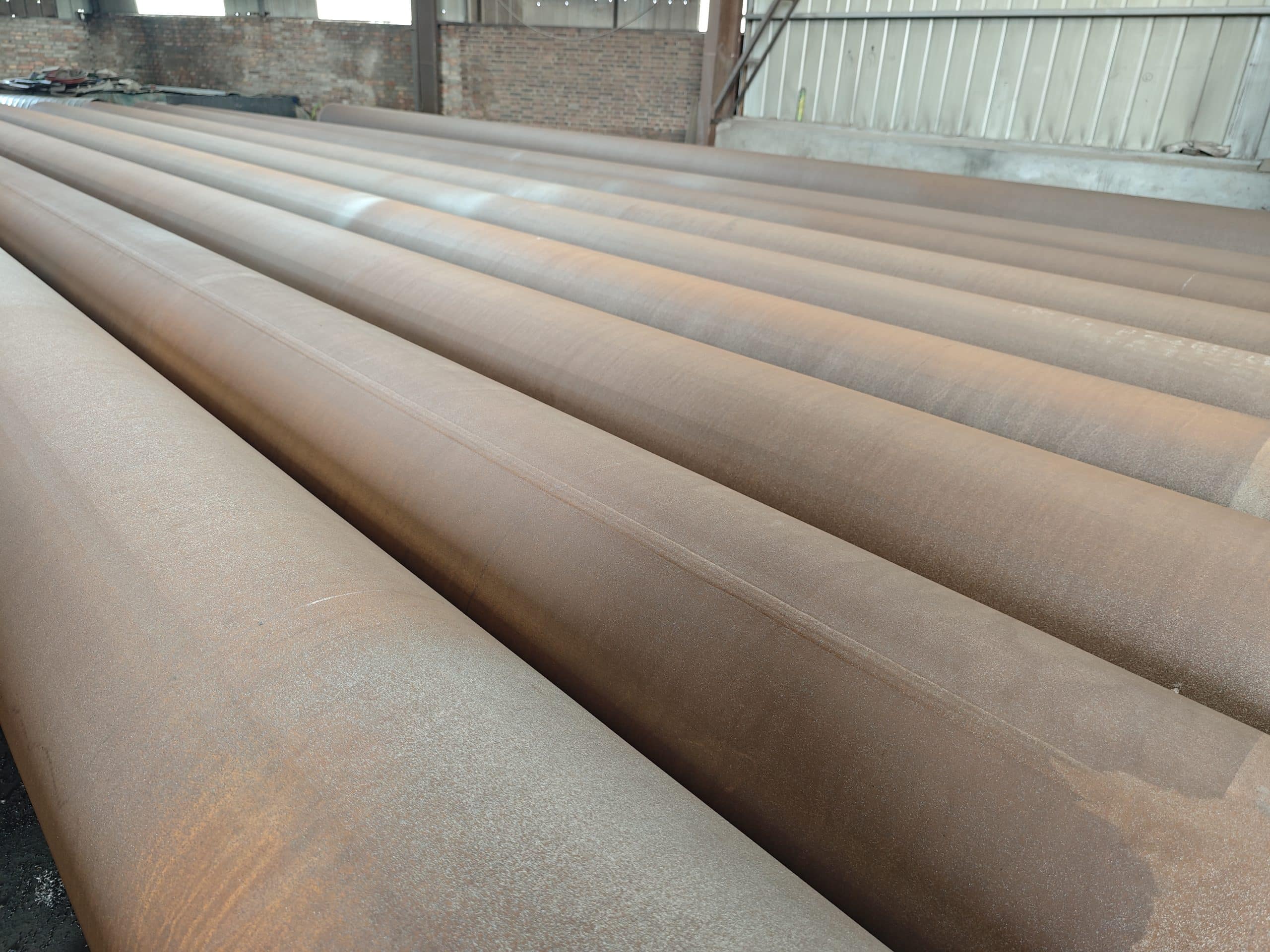
Submerged Arc Welding is completed under a protective layer of granular flux. The arc is invisible, heat input is uniform, and weld quality is consistent, making it the preferred process for industrial large-diameter steel pipe production.
| Type | Weld Seam Form | Primary Advantages | Applicable Scenarios |
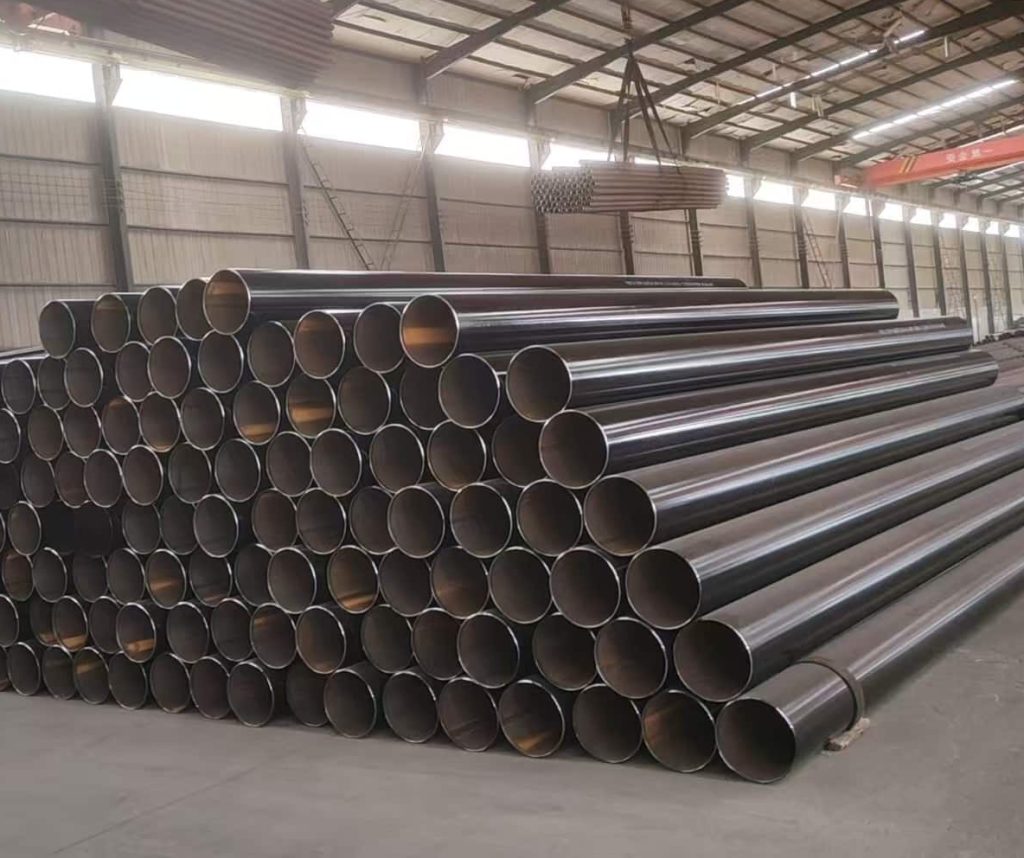
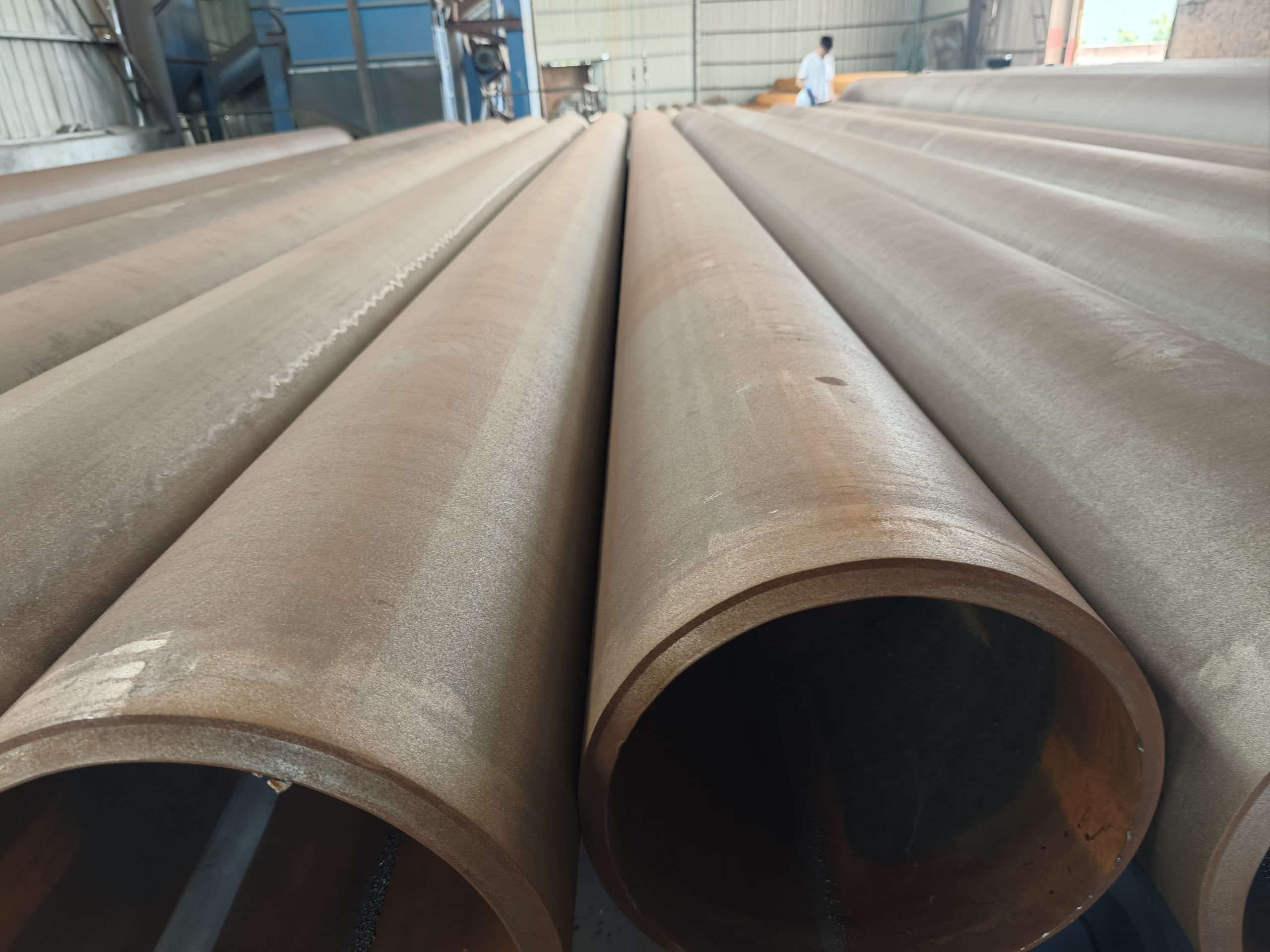
| LSAW | Longitudinal Seam | High dimensional accuracy, uniform wall thickness, short weld length | High-pressure pipelines, API 5L X65/X70, LNG |
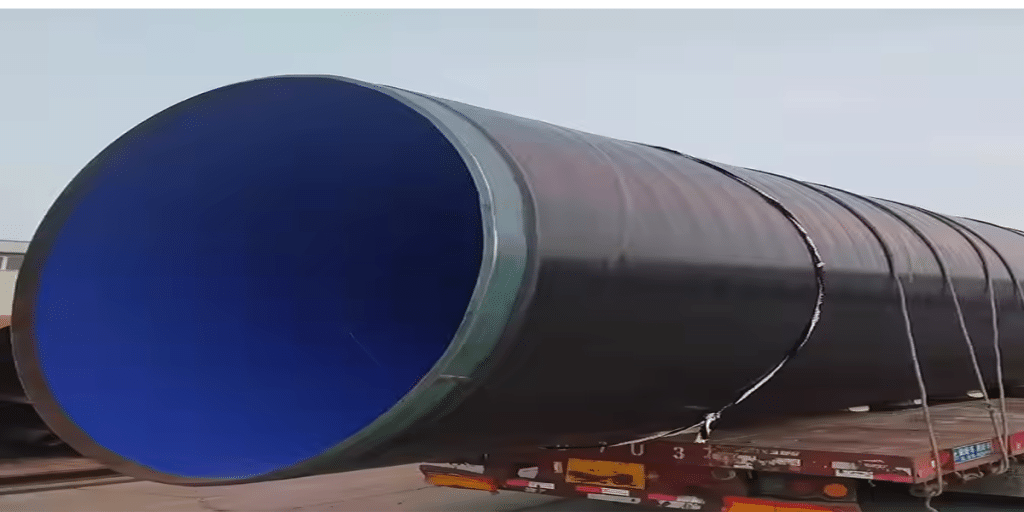
| SSAW | Spiral Seam | Flexible manufacturing, multiple diameters produced from the same plate width | Water conservancy, non-high-pressure transport, large-diameter structural pipes |
Typical Applicable Standards: ASTM A358 / ASTM A671 / ASTM A672 / ASTM A691 / API 5L PSL1/PSL2 / ISO 3183
Arc Welding vs. SAW: 10 Core Parameter Comparison
The following comparison table covers the 10 most critical dimensions for procurement decision-making, designed for supplier evaluation and project selection:
| Comparison Item | Arc Welding | Submerged Arc Welding (SAW) | Procurement Focus Point |
| Welding Method | Open arc, manual or semi-automatic | Covered by flux, fully automatic | SAW offers higher consistency |
| Automation Level | Manual / Semi-automatic | Fully automatic | SAW batch quality is more stable |
| Welding Speed | Moderate | High | SAW offers higher delivery efficiency |
| Spatter Level | Spatter present, requires post-treatment | Virtually no spatter | SAW produces a cleaner surface |
| Weld Consistency | Significantly affected by welder skill | Stable and consistent | Prefer SAW for mass production |
| Applicable Wall Thickness | Primarily thin to medium plates | Medium-thick to extra-thick plates | Select SAW for thick-walled high-pressure pipes |
| Applicable Pipe Diameter | Flexible, all diameters | Best for medium-to-large diameters | LSAW is preferred for large diameters |
| Mechanical Properties | Good, depends on welder skill level | Superior, controllable parameters | Select SAW for high-pressure critical conditions |
| Production Cost | Low equipment cost | High initial equipment investment | SAW offers better total cost for bulk procurement |
| Mass Production Capacity | Fair | Excellent | SAW is better suited for large-scale projects |
Deep Dive into Weld Performance: Advantages and Risk Control
3.1 Arc Welded Joints: Advantages & Common Risks
Arc welding is mature and adaptable, making it the top choice for field installation and complex structures. However, quality fluctuations caused by manual operation represent its biggest challenge:
| Quality Dimension | Advantage | Common Risk | Preventive Measure |
| Welding Flexibility | All-position welding, adaptable to complex joints | — | Select appropriate sub-process (GTAW for highest accuracy) |
| Welder Dependency | — | High impact of welder skill on consistency | Strictly execute WPS/PQR and welder qualification assessments |
| Porosity Risk | — | Porosity prone to occur if shielding is inadequate | Check shielding gas purity and electrode storage conditions |
| Cracking Risk | — | Occurs when cooling rate is too rapid | Control preheating and interpass temperatures |
| Spatter | — | Excessive spatter increases post-treatment workload | Optimize FCAW/GMAW parameters |
| Automation Potential | GMAW/FCAW can achieve semi-automation | — | Improve repeatability and precision |
3.2 SAW Welded Joints: Advantages & Common Risks
SAW performs exceptionally well in industrial mass production, but full automation does not mean zero risk. Pre-weld qualification and real-time parameter monitoring remain indispensable:
| Quality Dimension | Advantage | Common Risk | Preventive Measure |
| Weld Formation | Uniform and consistent, controlled reinforcement | — | Regularly calibrate sizing rolls and seam tracking sensors |
| Penetration Depth | Deep penetration, high joint strength | — | Strictly enforce parameters specified in WPS |
| Mechanical Properties | Excellent impact toughness, suitable for low temperatures | — | Manage traceability of welding material batches |
| Porosity Risk | Flux protection, extremely low porosity rate | Damp flux may cause porosity | Enforce flux drying and storage management |
| Slag Inclusion Risk | Low risk in single-pass welding | Incomplete slag removal in multi-pass welding | Conduct strict interpass slag cleaning inspections |
| Cracking Risk | — | Hot cracking occurs if parameters are improper | Verify preheating temperature and Carbon Equivalent (CE) value |
⚠️ Critical Procurement Note
When procuring SAW steel pipes, do not rely solely on the Mill Test Certificate (MTC). You must simultaneously require WPS/PQR welding procedure qualification documents and NDT inspection reports—all three documents are essential.
Industry Application Scenarios: Which Process to Choose?
There is no absolute superiority between Arc Welding and Submerged Arc Welding; the key lies in matching the process to the specific project requirements:
| Application Scenario | Recommended Process | Core Rationale |
| Structural Steel Work | Arc Welding (SMAW/GMAW) | High flexibility, simple equipment, high field construction efficiency |
| Pipeline On-site Installation | Arc Welding (GTAW/SMAW) | Field operations unrestricted by space, all-position welding capability |
| Stainless Precision Tubes | Arc Welding (GTAW) | TIG offers highest weld quality, suitable for high-cleanliness requirements |
| Storage Tank / Equipment Repair | Arc Welding (SMAW/FCAW) | Repair scenarios where SAW equipment is unsuitable for field deployment |
| Oil & Gas Transmission Lines | SAW (LSAW) | API 5L PSL2, high pressure; LSAW weld seam reliability is unmatched |
| High-Pressure Steam / Boiler Tubes | SAW (LSAW) | ASTM A671/A672, thick wall, large diameter; SAW is mandatory |
| LNG / Cryogenic Engineering | SAW (LSAW) | Strict low-temperature impact requirements; SAW toughness is more reliable |
| Offshore Platforms / Subsea Pipelines | SAW (LSAW) | Dual challenges of high pressure and corrosion; SAW offers stronger long-term durability |
| Nuclear / Special Engineering | SAW + Strict NDT | Highest safety level, 100% NDT inspection, maximum weld traceability |
| Ultra-large Diameters (OD > 600mm) | SAW (LSAW/SSAW) | Arc welding cannot achieve industrial mass production at this diameter range |
Weld Inspection: International Standards & LONGMA’s Control System
5.1 Primary NDT Inspection Methods and Applicable Standards
| Inspection Method | Purpose | Primary Standards | Applicable Process |
| Visual Testing (VT) | Weld surface profile, geometric defects | ISO 17637 / ASTM A530 | Arc Welding + SAW |
| Ultrasonic Testing (UT) | Internal cracks, lack of fusion, lamination | ASTM E213 / ISO 10893-10 | Arc Welding + SAW |
| Radiographic Testing (RT) | Image records of porosity, slag, incomplete penetration | ASTM E94 / ISO 10893-7 | Primarily used for SAW |
| Eddy Current Testing (ECT) | Surface and near-surface cracks | ASTM E309 / ISO 10893-2 | Primarily for online ERW |
| Hydrostatic Testing | Verification of tightness and pressure-bearing capacity | ASTM A999 / API 5L | Arc Welding + SAW |
| Tensile Testing | Verifies weld strength and elongation | ASTM A370 | Arc Welding + SAW |
| Bend Testing | Verifies weld plastic deformation capacity | ASTM A370 | Arc Welding + SAW |
| Charpy V-Notch (CVN) | Low-temperature toughness verification | ASTM A370 / API 5L PSL2 | Primarily for SAW high-pressure pipes |
💡 Pro Tip
API 5L PSL2 and ASTM A672 enforce mandatory requirements for NDT coverage ratios, impact test temperatures, and Carbon Equivalent (CE) limits. Specifying only the standard name without designating the product level during procurement may result in testing requirements lower than actual project demands.
5.2 LONGMA In-House Laboratory Full-Process Quality Control
Reliable welded steel pipe quality must be verified by data, not reputation alone. LONGMA’s internal laboratory covers every critical node from raw material entry to finished product dispatch:
| Inspection Stage | Testing Items | Quality Control Objective |
| Raw Material Receiving | Chemical composition (OES Spectrum) / PMI / Mechanical properties / Metallographic analysis | Verify steel grade, carbon equivalent, and weldability |
| In-Line Welding Process | Current / Voltage / Speed / Heat input / Flux quality / Weld profile | Real-time parameter monitoring to ensure full compliance of every weld seam |
| Finished Product Testing | Hydrostatic test / UT / RT / ECT / Tensile / Bend / Impact / Dimensions | Comprehensive validation of finished weld seam and pipe body quality |
| Documentation & Traceability | EN 10204 3.1 MTC / NDT reports / Hydrostatic records / WPS/PQR | Supports third-party acceptance, project audits, and export customs clearance |
LONGMA supports witness inspections by third-party agencies such as SGS, BV, TÜV, and DNV, providing EN 10204 3.1 / 3.2 Material Test Certificates to fulfill strict documentation requirements for various projects and owners.
Selection Decision: 5 Questions to Quickly Target the Right Process
Answering these 5 questions before procurement will help you quickly determine whether Arc Welding or Submerged Arc Welded (SAW) steel pipe is required:
| Key Question | Answer → Arc Welding | Answer → Submerged Arc Welding (SAW) |
| Application: Factory manufacturing or field installation? | Field installation / Repair | Factory mass production |
| Pipe Diameter and Wall Thickness? | Flexible for all diameters (mostly thin-to-medium) | Medium-to-large diameters / Medium-thick to extra-thick |
| Design Pressure Rating? | Low to medium pressure, general fluids | High pressure (API 5L X65/X70 and above) |
| Low-Temperature Impact Testing Required? | No low-temperature requirements | Specified impact temperature and energy requirements |
| Applicable Standard? | ASTM A53 / AWS D1.1 / Structural standards | ASTM A671/A672 / API 5L PSL2 / ISO 3183 |
💡 Decision Rule
If 3 or more answers point toward Submerged Arc Welding, LSAW is generally the better option. If field construction is the primary condition, the flexibility of Arc Welding (GTAW/SMAW) is irreplaceable.
FAQ: Common Procurement Questions
Q1: Is SAW steel pipe always better in quality than Arc Welded steel pipe?
Not necessarily. Submerged Arc Welding offers clear advantages in industrial mass production, large-diameter thick-walled pipes, and high-pressure applications due to superior weld consistency. Arc welding provides irreplaceable flexibility in field installation, irregular joints, and low-volume processing. Selection should be based on specific project requirements rather than simple process rankings.
Q2: Which is more suitable for high-pressure transmission pipelines, LSAW or SSAW?
High-pressure, long-distance pipelines typically prefer LSAW. LSAW pipes offer high dimensional accuracy, shorter weld seams, uniform wall thickness, and better fusion via double-sided submerged arc welding, making them ideal for high steel grades like API 5L X65/X70. While SSAW offers manufacturing flexibility and lower cost, its spiral weld seam is longer, and certain high-pressure project specifications place additional restrictions on SSAW.
Q3: Besides the MTC, what documents are required when procuring SAW steel pipes?
A complete procurement documentation package for SAW steel pipe should include:
1. EN 10204 3.1 Material Test Certificate (MTC) (covering chemical composition and mechanical properties)
2. WPS/PQR (Welding Procedure Specification / Procedure Qualification Record)
3. NDT Inspection Reports (UT/RT/ECT according to applicable standard/level)
4. Hydrostatic Test Records
5. Dimensional Inspection Report
6. Heat Treatment Records (when required by Class specification)
*For export projects, a Third-Party Inspection (TPI) report should also be attached.*
Q4: How do API 5L PSL1 and PSL2 differ regarding weld inspection requirements?
PSL1 specifies basic chemical and mechanical requirements with relatively flexible NDT and impact test rules. PSL2 mandates Carbon Equivalent (CE) control, 100% inline weld UT inspection, Charpy V-notch impact testing at specified temperatures and minimum energy levels, along with stricter upper limits on chemical composition. High-pressure oil and gas projects should always specify PSL2 to prevent delivery standards from falling short of project needs.
Q5: How can a buyer verify if a supplier genuinely possesses API 5L PSL2 SAW welding capabilities?
You can verify capability through the following steps:
• Request valid WPS/PQR documents (including underlying PQR test records).
• Examine historical NDT report numbering logic and heat number traceability.
• Confirm that production machinery features automated recording of welding parameters.
• Ask for sample historical MTCs for API 5L PSL2 products.
• Arrange a factory audit or pre-shipment witness inspection through third-party agencies like SGS, BV, or TÜV for direct verification.
About LONGMA: Professional Supplier of Arc Welded & SAW Steel Pipes
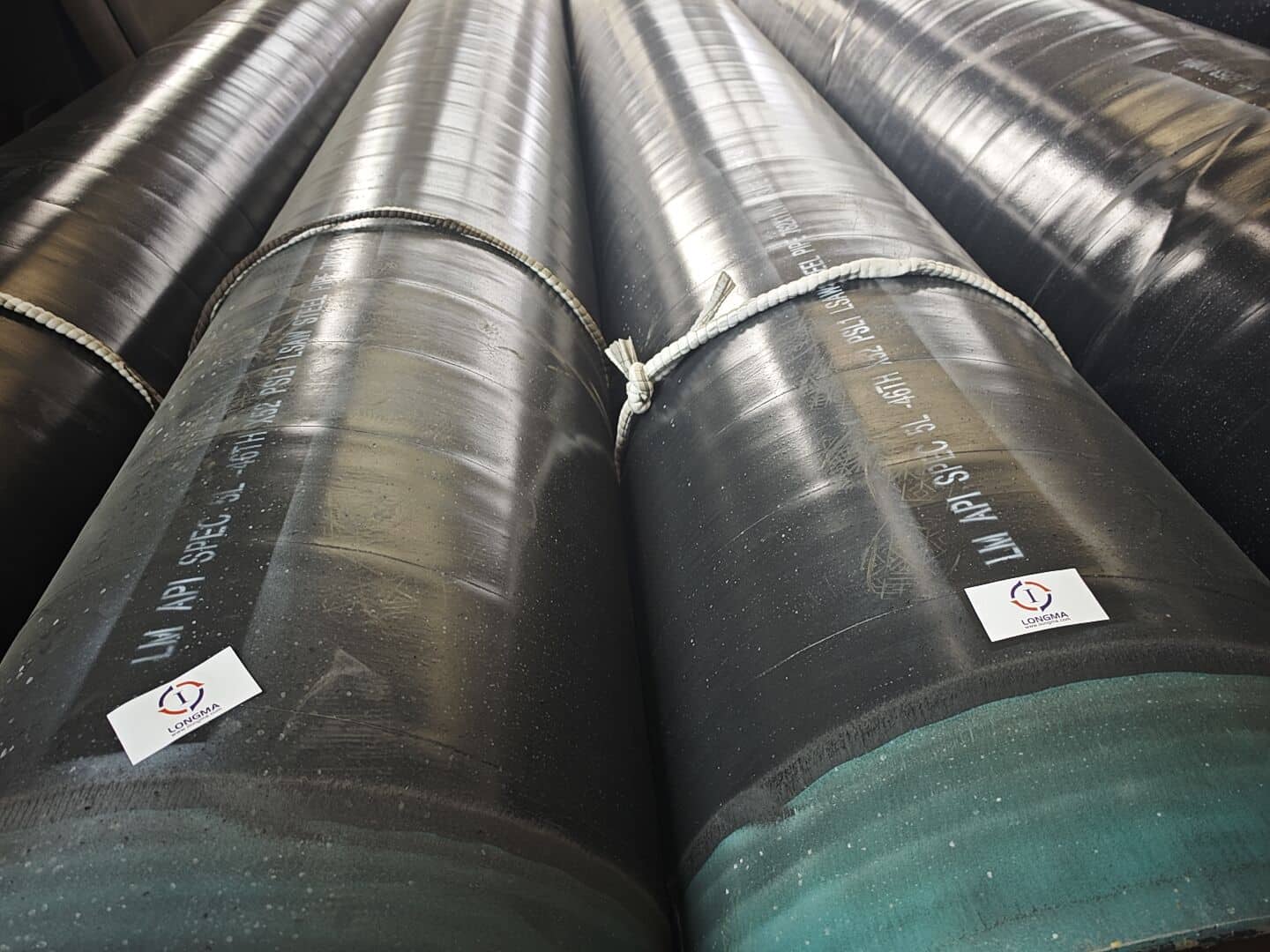
With over 20 years of expertise in manufacturing ERW and LSAW steel pipes, LONGMA’s core advantage lies in its verifiable, end-to-end quality control system:
- Multi-Standard Certifications: ASTM A53 / A358 / A671 / A672 / A691 / API 5L (PSL1/PSL2) / ISO 3183
- Large-Scale LSAW Production: Mass production of large-diameter thick-walled pipes covering API 5L X52 through X70 steel grades
- Comprehensive In-House Testing: Full coverage of Chemical / PMI / Mechanical / Metallographic / UT / RT / ECT / Hydrostatic testing
- Complete Welding Qualifications: Fully documented WPS/PQR aligned precisely with steel grades and wall thicknesses
- Traceable Documentation: EN 10204 3.1 / 3.2 MTCs with full heat-number traceability
- Third-Party Witness Inspection: Fully supports on-site witnessing and pre-shipment testing by SGS, BV, TÜV, and DNV
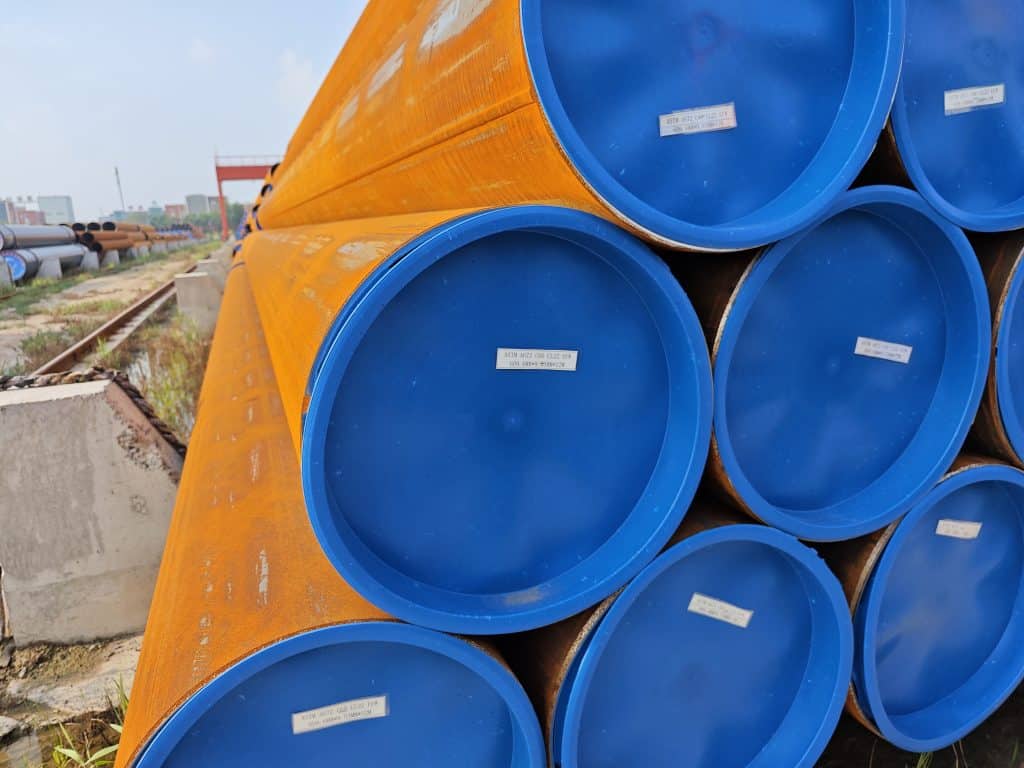
- Customized Services: Anti-corrosion coatings, end preparation, specialized packaging, and OEM project support
If you are currently selecting Arc Welded or SAW steel pipes for your project, contact LONGMA to request: Process Selection Advice · Specification Confirmation · Sample MTCs · NDT Reports · Project Quotations