- 1. Why Is Steel Pipe Dimensional Inspection So Important?
- 2. Key Dimensional Inspection Items in Steel Pipe Production
- 3. Core Methods of Steel Pipe Quality Control
- 4. Why Are “In-House Laboratories” Becoming Increasingly Important?
- 5. Most Common Dimensional Risks in Steel Pipe Procurement
- 6. How to Select a Reliable Steel Pipe Supplier?
- 7. Conclusion
In oil and gas transportation, offshore engineering, building structures, power station boilers, and large-scale infrastructure projects, the dimensional accuracy of steel pipes is directly related to engineering safety, welding efficiency, and later operational stability. For buyers, whether steel pipes can strictly meet standard dimensional tolerances is often more important than price alone.
Especially in the procurement of API 5L pipes, LSAW pipes, seamless pipes, and thick-walled pipes, excessive dimensional deviations may lead to:
- On-site welding difficulties
- Pipe misalignment
- Seal failure
- Installation rework
- Project delays
- Increased additional procurement costs
Therefore, steel pipe dimensional inspection and quality control systems have become core indicators in international engineering procurement audits.
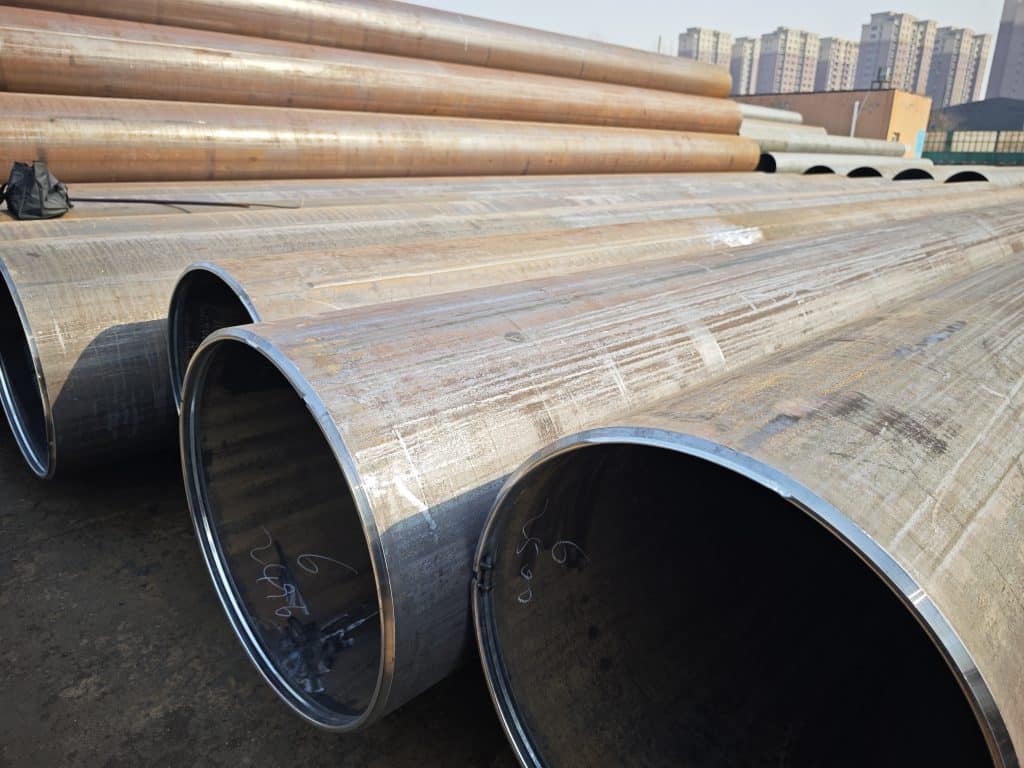
With over 20 years of manufacturing experience, LONGMA will thoroughly analyze dimensional inspection and quality control methods in steel pipe production from the perspectives of inspection methods, international standards, in-house laboratories, and procurement risk control, helping buyers select truly reliable steel pipe suppliers.
Why Is Steel Pipe Dimensional Inspection So Important?
Steel pipe dimensions affect not only appearance but also directly determine:
- Pipeline connection accuracy
- Pressure-bearing capacity
- Welding quality
- Installation efficiency
- Long-term operational stability
For large-scale oil and gas projects, excessive dimensional deviations of steel pipes may render the entire batch un-installable.
Examples:
- Out-of-tolerance outer diameter affects flange connections
- Insufficient wall thickness reduces pressure-bearing capacity
- Excessive ovality impairs automatic welding
- Length errors increase on-site cutting costs
Thus, international standards impose strict requirements on steel pipe dimensional inspection.
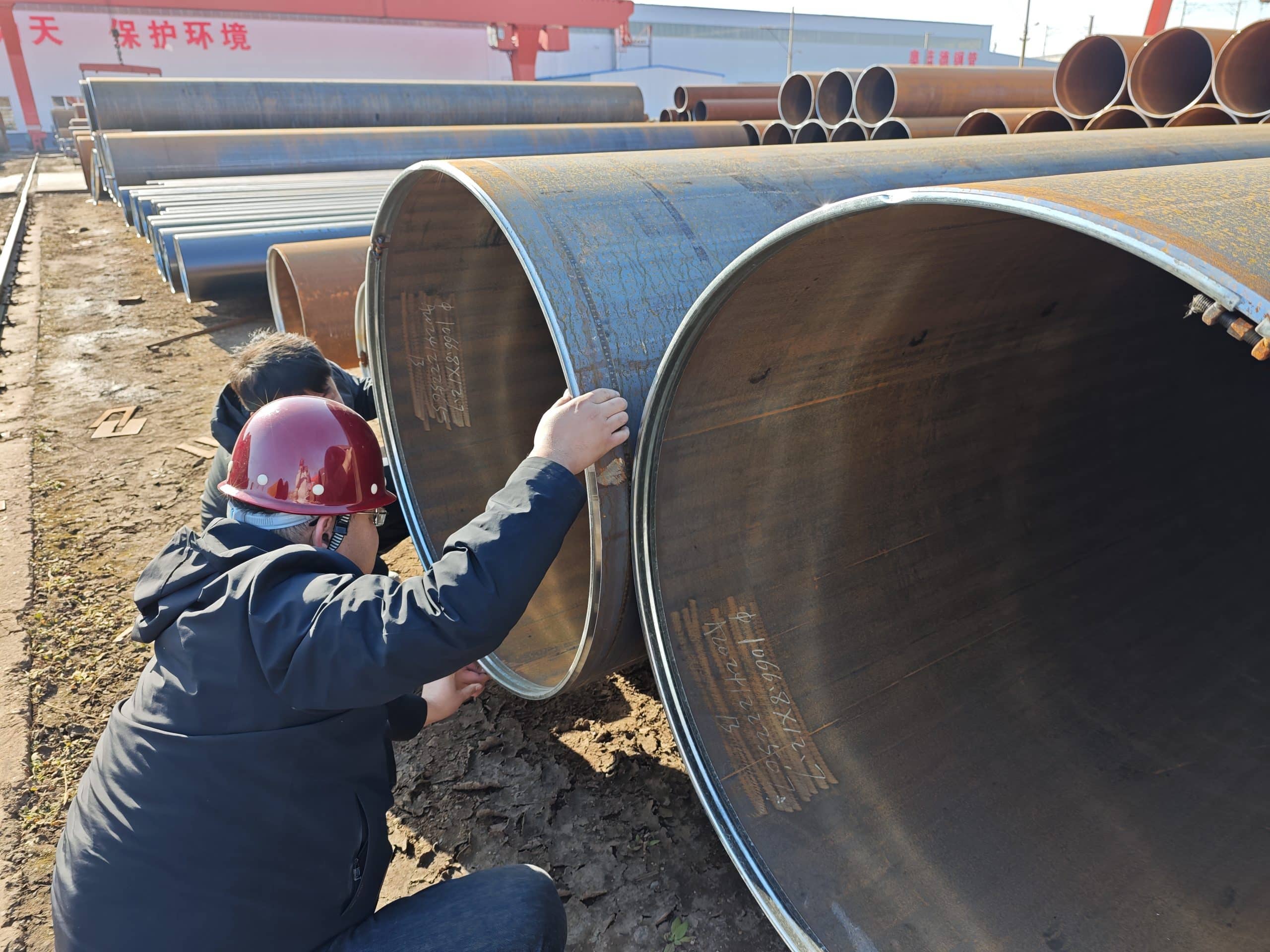
Key Dimensional Inspection Items in Steel Pipe Production
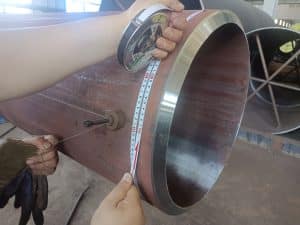
- Outer Diameter (OD) Inspection
Purpose
Verify that the outer diameter of steel pipes complies with standard tolerance requirements.
Common Standards
| Standard | OD Requirements |
| API 5L | Specifies allowable OD deviations for different specifications |
| ASTM A53 | Limits on outer diameter deviations |
| EN 10219 | European standard for structural steel pipes |
Inspection Methods
Common equipment:
- Laser diameter gauge
- Digital caliper
- Automatic on-line diameter measuring system
LONGMA adopts an automatic laser diameter measuring system on the LSAW pipe production line to monitor OD changes in real time and improve production consistency.
- Wall Thickness Inspection
Purpose
Ensure the pressure-bearing capacity of steel pipes meets design requirements.
Insufficient wall thickness is one of the most serious quality risks in steel pipe procurement.
Common Inspection Equipment
| Inspection Method | Features |
| Ultrasonic thickness gauge | High-precision, non-destructive testing |
| Micrometer inspection | Suitable for sampling inspection |
| Automatic on-line thickness measuring system | Real-time monitoring |
Standard Requirements
- API 5L PSL2
- ASTM A106
- ASTM A671
All specify clear limits on negative wall thickness deviations.
LONGMA uses an on-line ultrasonic thickness measuring system to continuously inspect each pipe, effectively reducing the risk of uneven wall thickness.
- Length Inspection
In international projects, length errors of steel pipes directly affect construction efficiency.
Common Issues
- Insufficient fixed length
- Excessive length deviation
- Inconsistent batch lengths
Inspection Methods
- Automatic length measuring system
- Laser ranging equipment
- Manual re-inspection
Length accuracy is particularly critical for subsea pipelines and long-distance oil transportation projects.
LONGMA can provide according to customer requirements:
- Fixed-length steel pipes
- Double random lengths
- Custom special lengths
To meet the needs of different engineering projects.
- Ovality Inspection
Steel pipe ovality directly affects:
- Automatic welding quality
- Pipeline pairing accuracy
- Sealing performance
Ovality control is more challenging for large-diameter and thick-walled steel pipes.
Inspection Standard
API 5L specifies clear requirements for steel pipe roundness.
Inspection Equipment
- Roundness measuring instrument
- Laser scanning system
- Multi-point diameter measuring equipment
LONGMA effectively controls steel pipe ovality through forming process optimization and on-line straightening systems.
Core Methods of Steel Pipe Quality Control
Dimensional inspection is only part of steel pipe quality control.
Truly reliable steel pipe manufacturers also establish a complete quality control system.
Raw Material Quality Control
The first step to high-quality steel pipes is high-quality steel plates or billets.
LONGMA conducts on raw materials:
- Chemical composition analysis
- Mechanical property testing
- Surface defect inspection
- Ultrasonic testing
To ensure raw materials comply with:
- API 5L
- ASTM
- EN
- ISO standards
Many low-cost steel pipe suppliers’ problems often do not occur in the finished product stage, but stem from unstable raw material quality.
On-Line Non-Destructive Testing (NDT)
Non-destructive testing is a core link in steel pipe production.
Common Inspection Methods
| Inspection Method | Inspection Purpose |
| UT (Ultrasonic Testing) | Detect internal defects |
| RT (Radiographic Testing) | Detect weld defects |
| MT (Magnetic Particle Testing) | Detect surface cracks |
| ET (Eddy Current Testing) | Detect surface and near-surface defects |
Standard Basis
- API 5L Annex E
- ASTM E213
- ISO 10893
LONGMA is equipped with automatic UT/RT testing systems to achieve 100% weld inspection and improve product reliability.
Why Are “In-House Laboratories” Becoming Increasingly Important?
Today, international buyers pay increasing attention to the in-house laboratory capabilities of steel pipe manufacturers.
Because what truly determines product stability is not just single inspection, but:
- Continuous quality control capability
- Batch consistency
- Data traceability
- Problem prevention capability
LONGMA has established a complete in-house laboratory system, including:
- Mechanical property laboratory
- Metallographic laboratory
- Chemical analysis laboratory
- Non-destructive testing center
- Dimensional inspection center
Complete inspection reports and quality traceability documents can be provided for each batch of API 5L pipes, LSAW pipes, and structural steel pipes.
This is also an important reason why LONGMA has long served international oil and gas, energy, and infrastructure projects.
Most Common Dimensional Risks in Steel Pipe Procurement
Many buyers focus too much on steel pipe prices while ignoring quality risks.
In fact, the later losses caused by dimensional problems far exceed the procurement price difference.
Common Procurement Risks Include:
| Risk Issue | Consequence |
| Insufficient wall thickness | Pressure-bearing failure |
| Out-of-tolerance outer diameter | Uninstallable |
| Length error | On-site rework |
| Excessive ovality | Welding difficulties |
| Inconsistent batch dimensions | Project delay |
Therefore, mature steel pipe manufacturers usually establish a strict whole-process quality control system.
How to Select a Reliable Steel Pipe Supplier?
When selecting a steel pipe manufacturer, buyers are recommended to focus on reviewing the following capabilities:
| Audit Item | Core Content |
| Dimensional inspection capability | Equipped with automatic inspection equipment |
| Non-destructive testing capability | Achieves 100% inspection |
| Laboratory capability | Has a complete inspection system |
| Project experience | Served international projects |
| Quality traceability | Supports MTC documents |
For the procurement of API 5L pipes, LSAW pipes, and large-scale engineering steel pipes, a mature quality control system is far more important than low prices.
Conclusion
With the increasing quality requirements of global oil and gas, energy, and infrastructure projects, steel pipe dimensional inspection and quality control have become core indicators in procurement audits.
From outer diameter inspection, wall thickness inspection to non-destructive testing and laboratory analysis, each link directly affects the safety and long service life of steel pipes.
As a professional steel pipe manufacturer with over 20 years of experience, LONGMA continuously optimizes steel pipe production processes and quality control systems, providing global customers with highly reliable API 5L pipes, LSAW pipes, and customized steel pipe solutions.
If you are looking for:
- Steel pipe products with stable dimensional accuracy
- Complete inspection reports
- International standard certifications
- Rich engineering project experience
- Reliable long-term partners
LONGMA will provide safer, more stable, and higher-quality steel pipe solutions for your projects.
Welcome to contact us for:
- API 5L steel pipe inspection reports
- Third-party inspection certificates
- Steel pipe dimensional tolerance technical documents
- Project case materials
- Latest product quotations and technical support