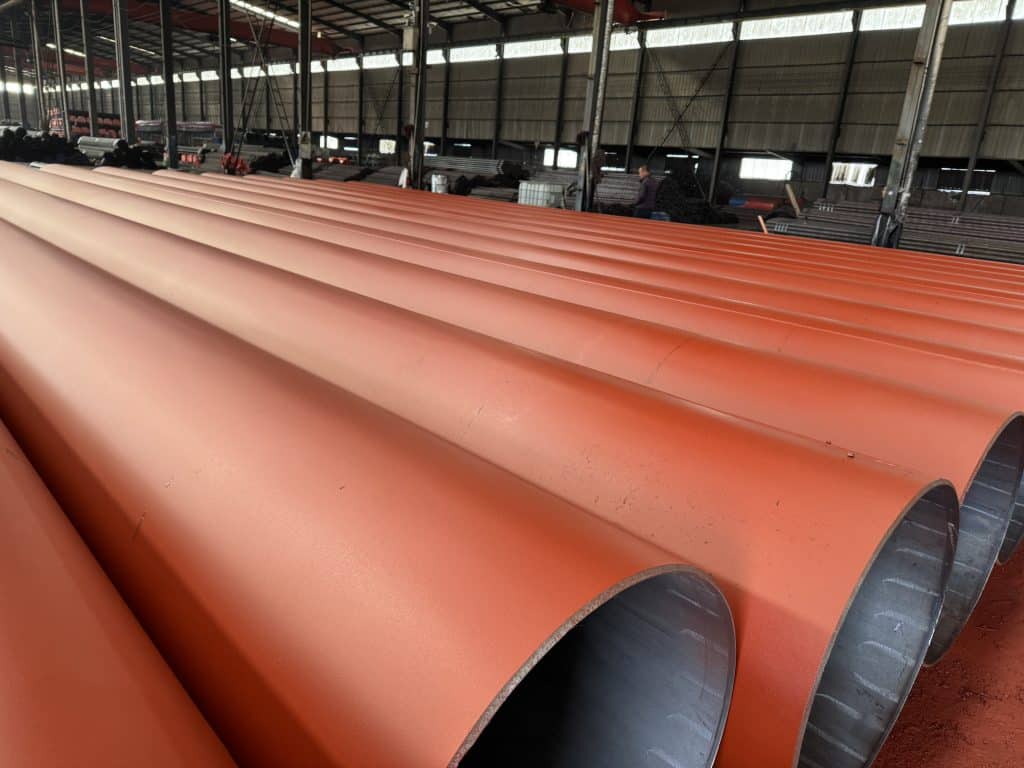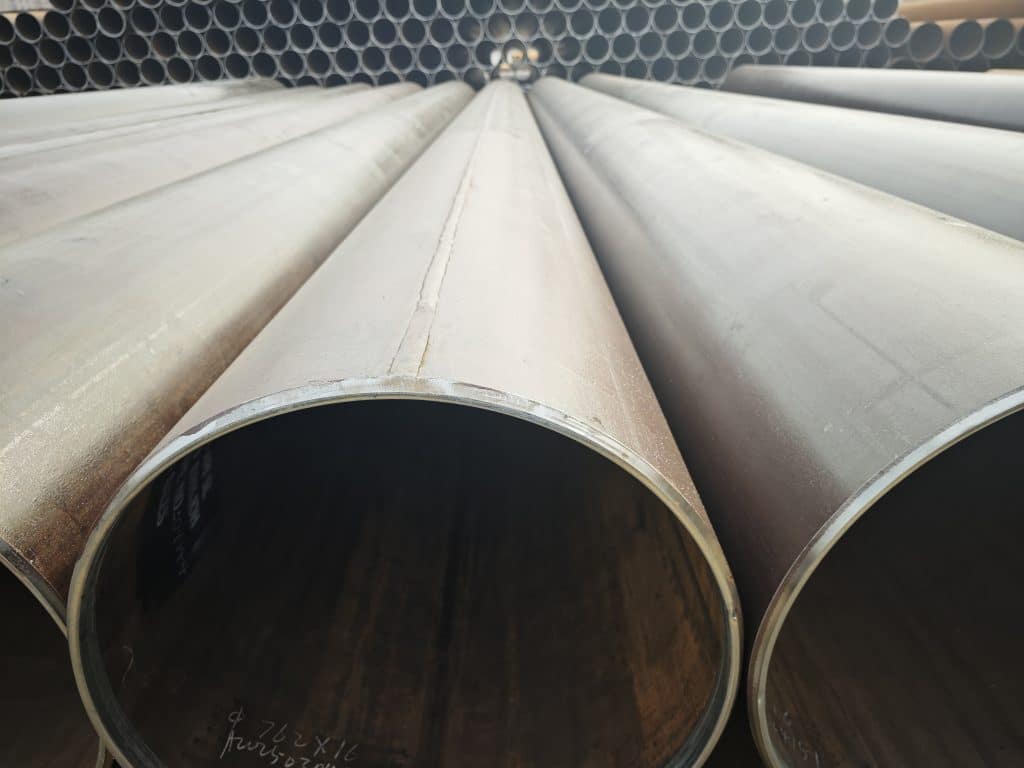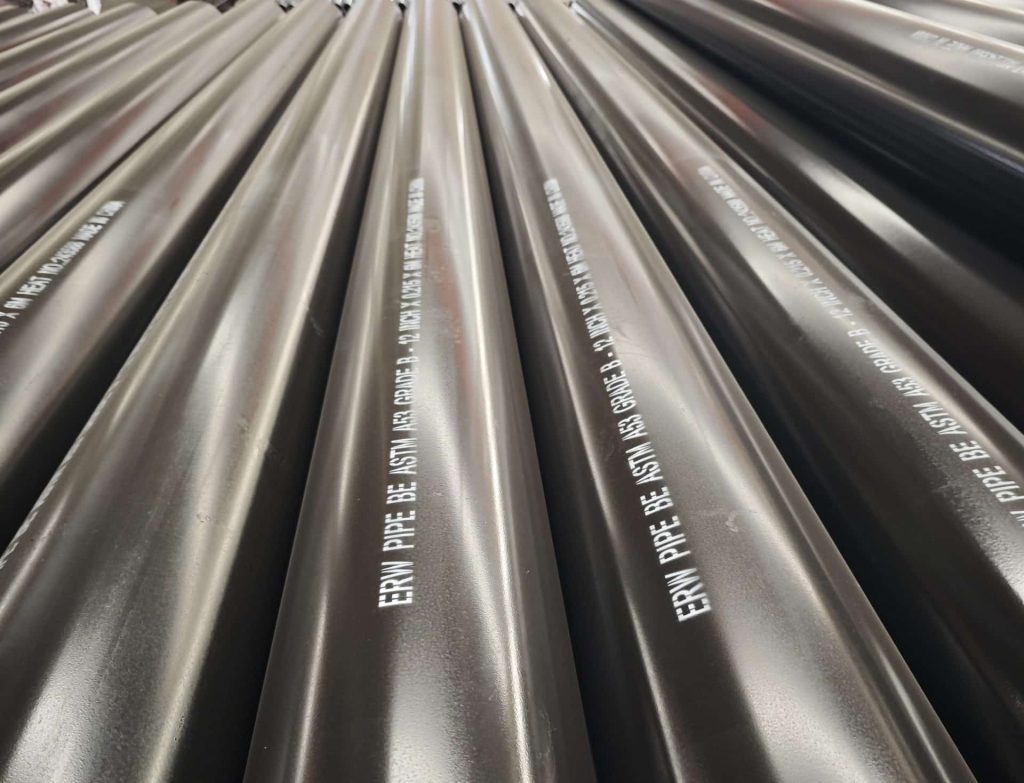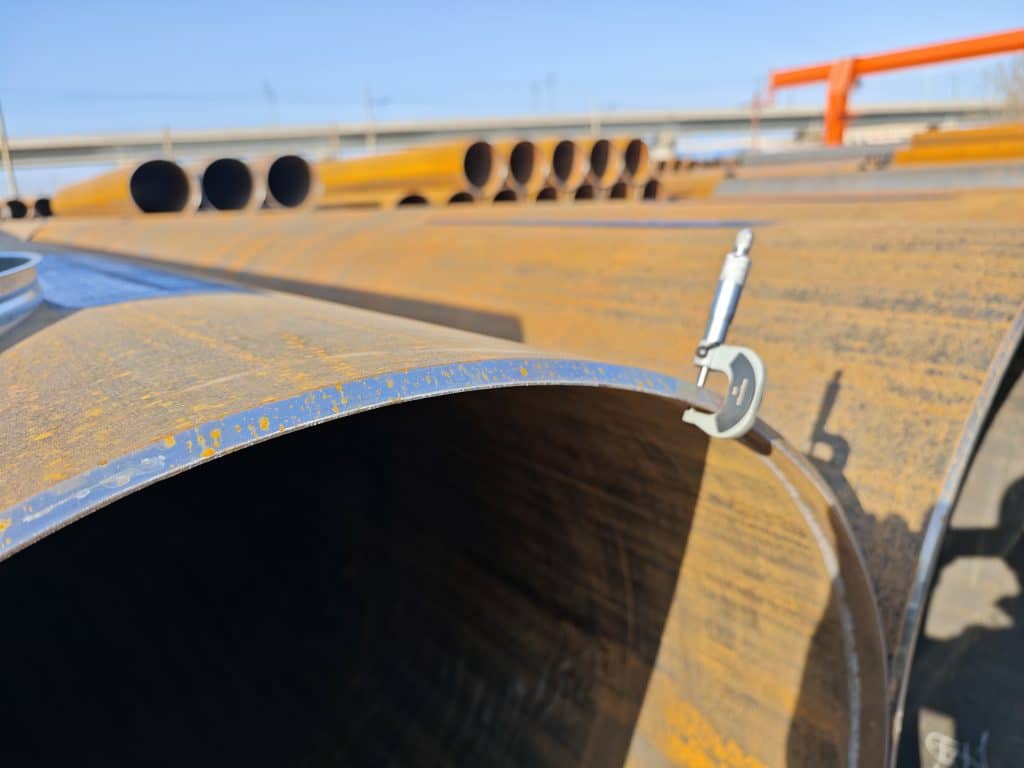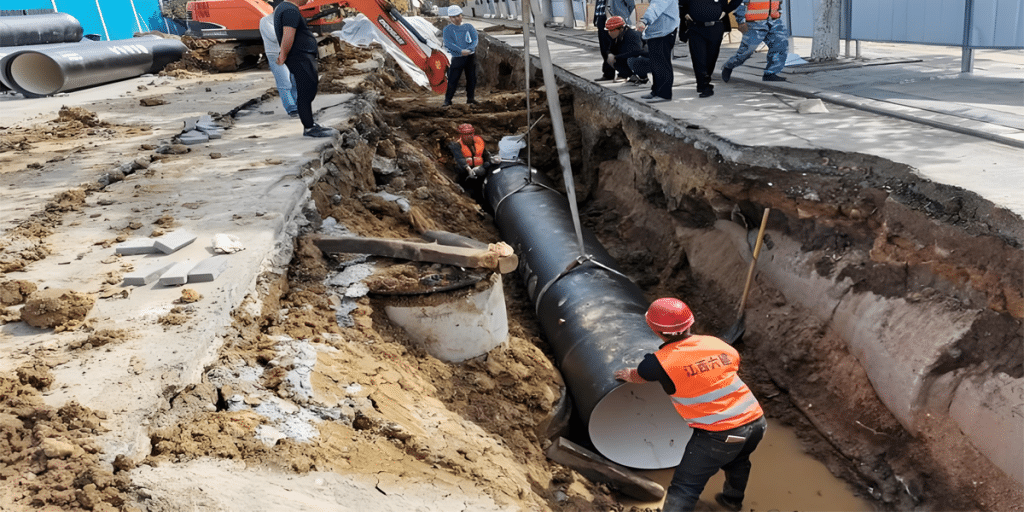
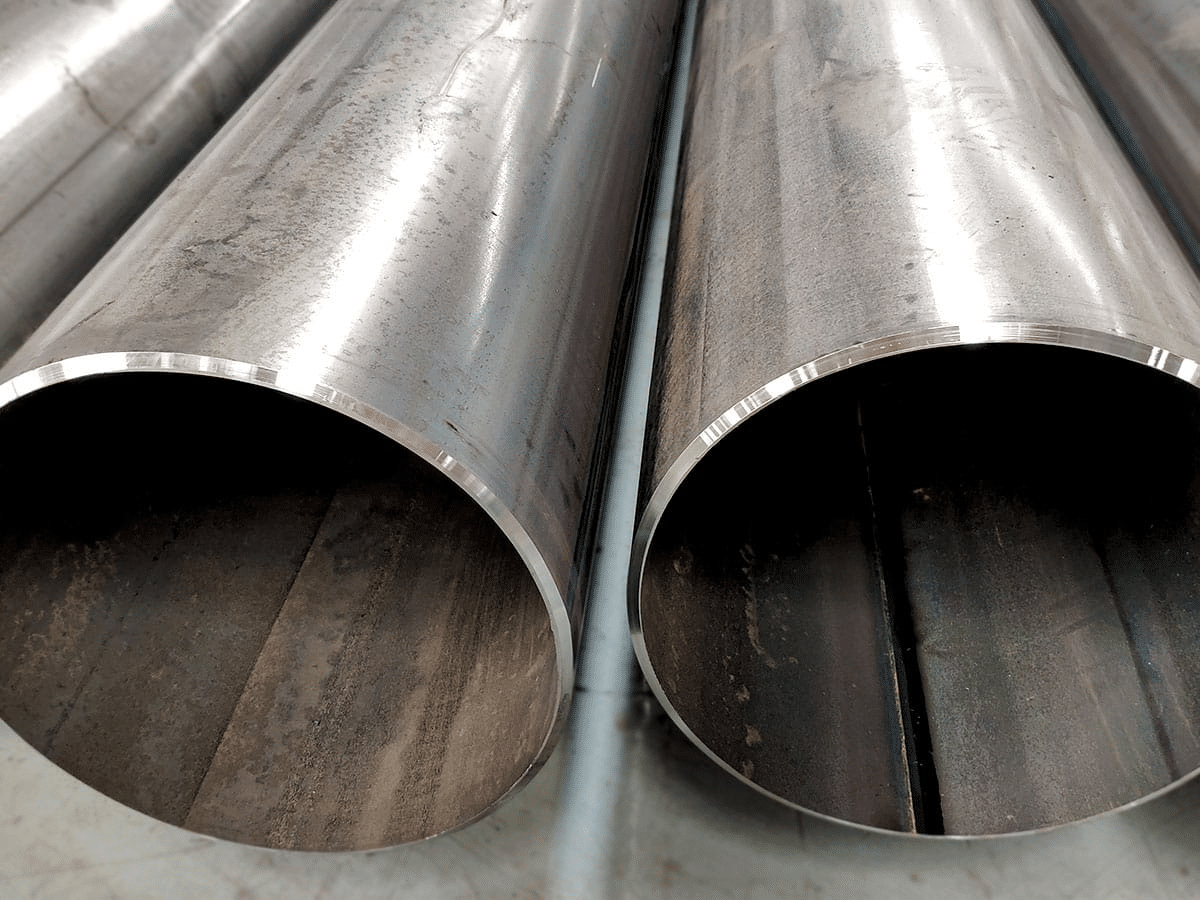
Longitudinal submerged arc welded pipe is commonly formed by JCO, UO or plate-roll bending processes. Where mechanical expansion follows welding, the press-forming routes are commonly described as JCOE and UOE. The forming operation bends a steel plate into a cylindrical shell; submerged arc welding then joins the longitudinal edges. The E denotes expansion, a separate operation used to control the finished pipe geometry.
The appropriate route depends on pipe diameter, wall thickness, steel properties, production quantity and available equipment. Each method can produce suitable pipe when the manufacturing procedure, welding, inspection and finished properties meet the ordered specification. Procurement should focus on the mill’s demonstrated capability for the actual dimensions and grade rather than a forming-method name alone.
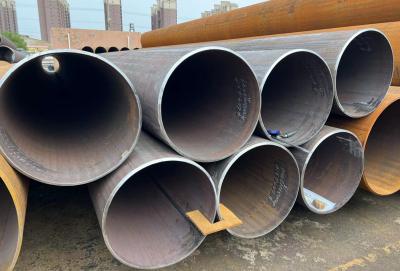
How Forming Influences LSAW Pipe Quality
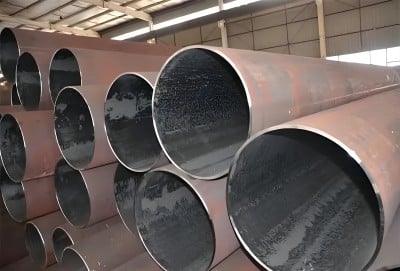
LSAW pipe is generally produced from individual steel plates. Plate preparation, edge bending, shell forming, welding and sizing all contribute to the final geometry. The longitudinal seam runs parallel to the pipe axis. ERW pipe instead uses resistance welding of formed strip, while spiral submerged arc welded pipe has a helical seam. These are different manufacturing routes with their own qualified product ranges.
Forming affects roundness, straightness, edge alignment and local shape near the seam. Poor control can complicate welding, inspection and field fit-up. Material thickness and its variation must also be checked separately: ovality describes shape and is not the same as uneven wall thickness.
Acceptance tolerances come from the ordered pipe standard and project specification. API 5L distinguishes diameter tolerance from out-of-roundness and includes different provisions for dimensions, pipe body and pipe ends. The inspection plan should state the actual limits, measuring locations and methods before production begins.
Comparing Plate Rolling, UOE and JCOE
Plate-Roll Bending
Plate-roll bending progressively curves a plate using a roll arrangement, commonly three or four rolls, with suitable edge preparation and pre-bending. The shell is brought to the required shape before welding. Results depend on plate properties, roll geometry, machine capacity and process control.
This route should not be limited categorically to low-pressure or non-critical products. Suitability follows the product specification, qualified manufacturing procedure and final inspection. For thicker or higher-strength plate, verify the equipment’s ability to control the edges and achieve the required shape without unacceptable local deformation.
UOE Forming
UOE typically includes edge crimping, U-forming and O-forming, followed by seam welding and mechanical expansion. Dedicated presses and tooling support repeatable production for suitable product ranges. The route is often considered where production volumes justify its equipment and tooling arrangements.
The maximum wall thickness and diameter are properties of the actual mill, not fixed universal limits of the UOE process. Review the combination of plate strength, thickness, diameter and press capacity. A stated production range should be supported by relevant manufacturing and inspection records for the intended order.
JCOE Forming
JCOE uses incremental press bending to shape the plate through J, C and O stages, followed by welding and expansion. These shape stages do not represent a fixed number of press strokes. The number, spacing and depth of forming steps depend on the plate and the target shell geometry.
Incremental forming offers flexibility across suitable dimensions and production quantities. Process control must account for springback, material variation and local curvature. Changes in diameter can still require adjustments to tooling, edge crimping and press settings; JCOE should not be described as requiring no tooling changes under all conditions.
| Route | Main forming action | What the buyer should verify |
| Plate rolling | Progressive curvature through rolls | Edge shape, machine capacity and final geometry |
| UOE | U-forming and O-forming with presses | Tooling, product range and production suitability |
| JCOE | Multiple incremental press bends | Step control, springback and qualified dimensions |
Plate Preparation and Shell Forming
Plate selection begins with the specified chemistry, mechanical properties, dimensions and traceability. Inspection may include examination for laminations where required. Plate identity should remain traceable through forming and final pipe inspection.
Longitudinal edges are prepared to produce the joint geometry required by the welding procedure. Milling can establish edge dimensions and remove unsuitable edge material. Mechanical shearing creates a mechanically affected region; it should not automatically be described as producing a thermal heat-affected zone. Where thermal cutting is used, its effects require appropriate preparation and control.
Edge crimping helps develop the curvature near the future weld seam. The plate then passes through the approved forming sequence. Check shell dimensions, edge mismatch and joint fit-up before the main weld. An unacceptable fit-up should be corrected under the manufacturing procedure rather than assumed to disappear during expansion.
Tack welding holds the joint for subsequent welding. Its treatment must follow the applicable product standard and qualified procedure, including whether it is remelted into the final weld or removed where required. A structural welding code should not be applied automatically as the governing rule for every line-pipe manufacturing operation.
Submerged Arc Welding and Expansion
The formed shell is welded internally and externally under flux using the approved submerged arc procedure. An internal welding operation and an external operation do not necessarily mean only two weld beads. Wire arrangements, passes and layers depend on joint geometry, thickness, grade and the qualified process.
Welding controls include consumable selection, heat input, alignment and the required sequence. The weld and adjacent heat-affected zone must meet the applicable inspection and mechanical-property requirements. The forming route does not remove the need for welding qualification or examination.
After welding, mechanical expansion can improve diameter consistency and roundness. Expansion also introduces plastic strain and can change residual-stress distribution and measured mechanical properties. Its effects depend on material behavior, prior processing and the applied strain; it does not eliminate all residual stress or guarantee a uniform strength increase in every direction.
Control the expansion procedure and sizing ratio under the ordered requirements. Acceptance should be based on the finished pipe at the required stage of manufacture, supported by dimensional and mechanical tests. Pre- and post-expansion testing may be specified for qualification or a particular project, but should not be presented as universally required for every production pipe.
Inspection and Procurement Requirements
An RFQ should identify the product standard and edition, grade, delivery condition, PSL where applicable, diameter, thickness, length and quantity. State any required forming route or restrictions, supplementary material tests, coating and inspection hold points. Confirm that the offered equipment can produce the actual grade and dimensions together.
For sour service, assess the actual H₂S environment and agree the applicable material and supplementary qualification requirements. Forming quality, hardness control and steel chemistry are relevant, but a JCOE or UOE designation alone does not establish sour-service suitability. Any required HIC, SSC or additional mechanical testing should be identified in the order.
| Inspection area | Evidence to review |
| Material identity | Plate certificates and traceable heat identification |
| Finished geometry | Diameter, ovality, straightness, thickness and end measurements |
| Weld quality | Applicable UT, RT and other required examination reports |
| Mechanical properties | Results linked to the grade and specified test unit |
| Final acceptance | Hydrostatic records, inspection document and required release reports |
EN 10204 3.1 and 3.2 identify different inspection-document types. Detailed dimensional, welding and testing records may be supplied as traceable supporting reports. Agree independent inspection and its validation requirements explicitly. An API licence or quality-system certificate does not replace verification of the supplied product.
When comparing schedules, consider plate availability, mill loading, procedure approval, inspection and coating. Annual capacity is useful context, but does not guarantee spare production time. LONGMA stock can ship in as little as seven days; custom production schedules require confirmation against the specification and material supply.
Frequently Asked Questions
Does JCOE always produce stronger pipe than UOE?
No. Compare finished-pipe properties, dimensions and inspection against the same specification. Both routes can produce compliant pipe within their qualified capabilities.
Does expansion remove all residual stress?
No. Expansion changes geometry and stress distribution. Its effects must be controlled and verified through the applicable manufacturing and acceptance requirements.
What determines a UOE mill’s wall-thickness range?
The available range depends on the specific mill, material strength, diameter, tooling and equipment capacity.
Source LSAW Pipe from LONGMA
LONGMA has manufactured round LSAW and ERW steel pipes since 2003. Its factory covers 230,000 m², with annual output exceeding 500,000 tonnes. For a forming and inspection review, email info@ilongma.com or visit www.ilongma.com with the grade, dimensions, standard edition and project requirements.