- 1. Why the 2LPE and 3LPE Choice Matters
- 2. What Are 2LPE and 3LPE Coated Steel Pipes?
- 3. Key Differences Between 2LPE and 3LPE
- 4. 2LPE, 3LPE and FBE: Understanding the Options
- 5. How to Select a Coating System
- 6. Procurement and Quality Inspection
- 7. Conclusion
- 8. FAQ
- 9. Request a Coated Pipe Quotation from LONGMA
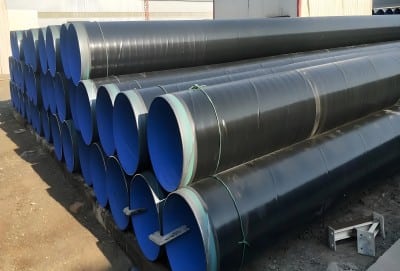
The choice between two-layer polyethylene (2LPE) and three-layer polyethylene (3LPE) coating should be based on the pipeline design conditions and the purchaser’s specification. Both systems use polyethylene as the external barrier layer, but their layer structures differ. A conventional 2LPE system consists of an adhesive layer and a polyethylene outer layer. A 3LPE system adds a fusion-bonded epoxy (FBE) primer between the steel and the adhesive. The additional layer changes the coating construction, but it does not make one system automatically suitable for every project.
Why the 2LPE and 3LPE Choice Matters
External corrosion protection
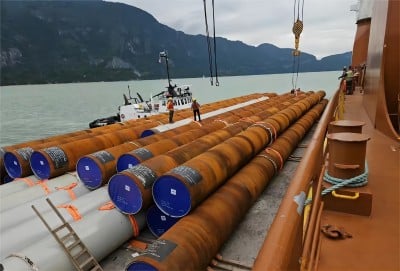
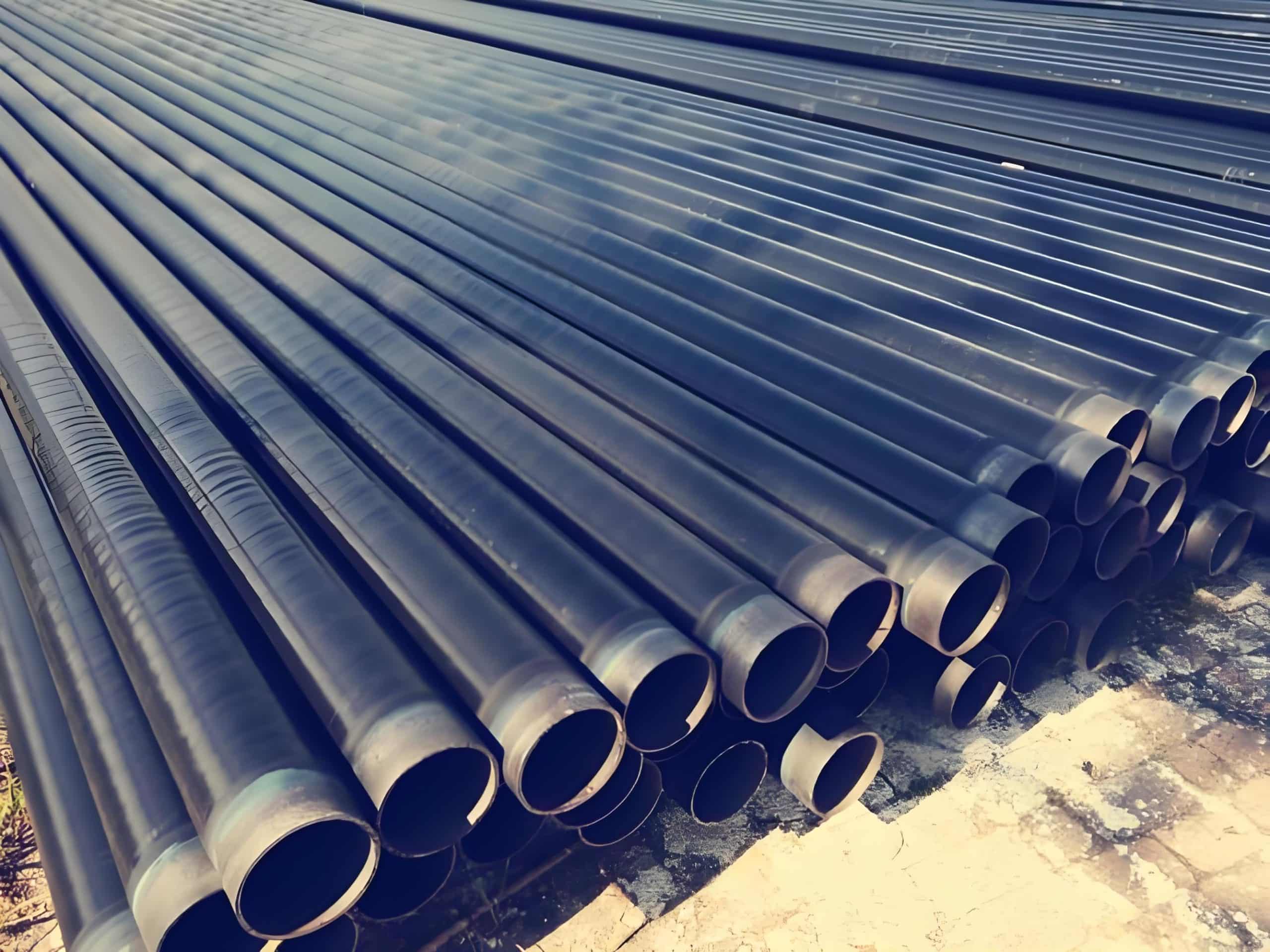
Buried or submerged steel pipelines can be exposed to moisture, dissolved salts, soil chemistry and mechanical damage during handling and installation. An external coating separates the steel from the surrounding environment and, when properly specified, works alongside cathodic protection. Coating performance depends on the coating materials, surface preparation, application controls, thickness, field-joint system, handling and installation practices.
Whole-life cost and service requirements
A coating comparison should consider more than the initial price per metre. Include inspection, handling protection, repair materials, field-joint work, installation risk and future maintenance access. A coating system should be selected against the design life and service conditions established by the project, rather than relying on a generic service-life claim. The least expensive option is not necessarily the lowest-cost solution over the pipeline’s intended service period.
Applicable standards
DIN 30670 has been revised into separate parts; DIN 30670-1:2024-01 addresses requirements and testing for factory-applied extruded polyethylene coatings. Confirm the applicable part, edition and coating designation in the purchase specification. ISO 21809-1:2018 covers plant-applied three-layer PE and three-layer PP coatings for relevant petroleum and natural-gas pipeline transportation systems. It is not a general standard for 2LPE. ISO 21809-3 addresses field-joint coatings and should be considered separately where specified. Pipe-body standards such as API 5L and ASTM A53/A53M do not, by themselves, define the external coating system.
What Are 2LPE and 3LPE Coated Steel Pipes?
2LPE coating structure
A conventional 2LPE coating comprises two layers applied to a suitably prepared steel surface: a copolymer adhesive and a polyethylene outer layer. The adhesive provides the bond between the steel and the polyethylene. The outer layer acts as a moisture barrier and provides electrical insulation and mechanical protection. The coating’s performance depends on the specified materials, surface condition, application parameters, thickness and quality-control requirements.
3LPE coating structure
A conventional 3LPE coating comprises three layers, arranged from the steel outward as follows:
| Layer | Material | Function |
| 1 | Fusion-bonded epoxy (FBE) primer | Applied directly to the prepared steel; provides corrosion protection and a bonding surface. |
| 2 | Copolymer adhesive | Bonds the epoxy primer to the polyethylene outer layer. |
| 3 | Polyethylene outer layer | Provides the external barrier and contributes mechanical protection. |
The layer sequence is important: the adhesive is between the FBE primer and the polyethylene, not outside the polyethylene. The application procedure controls surface preparation, preheating, FBE application and cure, adhesive application, polyethylene application, cooling and final inspection. Actual process parameters must follow the qualified procedure and material supplier instructions.
Key Differences Between 2LPE and 3LPE
| Comparison factor | 2LPE | 3LPE |
| Layer structure | Adhesive + polyethylene | FBE primer + adhesive + polyethylene |
| Steel interface | Adhesive is applied to prepared steel | FBE primer is applied to prepared steel; adhesive bonds it to PE |
| Manufacturing sequence | No FBE primer layer | Includes FBE application and curing before adhesive and PE layers |
| Applicable specification | Project specification and the applicable PE-coating standard | Project specification; ISO 21809-1:2018 may apply where its scope and requirements are specified |
| Selection basis | Must meet the project’s corrosion, temperature, mechanical and installation requirements | Must meet the same project requirements, with the three-layer construction specified and qualified |
Neither coating should be selected solely by categorizing soil as moderate or severe. Soil resistivity, moisture, contaminants, operating temperature, installation method, mechanical loading, coating thickness, cathodic-protection design and purchaser requirements all need to be considered. A rocky backfill or trenchless crossing may increase mechanical-damage risk, but it does not establish a universal coating choice by itself.
2LPE, 3LPE and FBE: Understanding the Options
FBE is a fusion-bonded epoxy coating applied directly to prepared steel. It is a distinct coating system and should not be confused with the FBE primer layer within 3LPE. A 3LPE system combines an FBE primer, adhesive and polyethylene outer layer. A 2LPE system uses adhesive and polyethylene without the FBE primer. The relative suitability of FBE, 2LPE or 3LPE depends on the project design conditions and the relevant coating specification; broad claims about impact resistance, temperature limits or installation suitability should be supported by system-specific data.
How to Select a Coating System
Assess the pipeline environment
Document the soil and groundwater conditions, operating medium, pressure and temperature profile, expected thermal cycles, design life, cathodic-protection design and installation method. Include any special exposure, such as marine or submerged service, where relevant. Compare each proposed coating against the same project data and the same acceptance criteria.
Consider handling and installation risks
Review transportation, storage, lifting, stringing, lowering-in, backfilling and any boring or horizontal directional drilling operation. Confirm the coating’s qualified mechanical properties and the procedures for protecting and repairing it. Specify field-joint coating requirements, uncoated pipe-end lengths and compatibility with the factory-applied coating. Do not assume that a factory coating standard automatically covers field joints.
Use a project-specific decision process
| Project consideration | Questions to resolve before selection |
| Operating conditions | What are the normal, minimum, maximum and transient temperatures? Is thermal cycling expected? |
| External environment | What are the soil, groundwater, immersion and corrosivity conditions? |
| Mechanical exposure | What handling, transport, backfill and installation loads may affect the coating? |
| Standards and approvals | Which coating standard, edition, class or purchaser specification governs? |
| Field joints and repairs | Which joint coating and repair procedures are approved for the selected system? |
| Quality assurance | Which qualification tests, production checks, acceptance criteria and records are required? |
Procurement and Quality Inspection
Information to include in the RFQ
A complete request for quotation should state the pipe standard and grade, outside diameter, wall thickness, quantity, coating system, coating standard and edition, coating thickness, operating conditions, installation environment, field-joint requirements, inspection scope, documentation, packaging, destination and delivery terms. Where 2LPE is proposed, identify the purchaser-approved specification and the required coating construction rather than assuming that a three-layer standard applies.
Inspection stages
Before coating, verify the required surface cleanliness, profile and contamination controls. During coating, review material identification and the process checks required by the approved procedure; for 3LPE this includes the FBE application and cure controls. On finished pipe, perform the specified visual, dimensional, thickness, holiday-detection and other qualification or production tests. Record repairs and re-inspect repaired areas in accordance with the applicable procedure. The inspection plan should define test methods, frequency and acceptance criteria rather than relying on an informal checklist.
Supplier evaluation
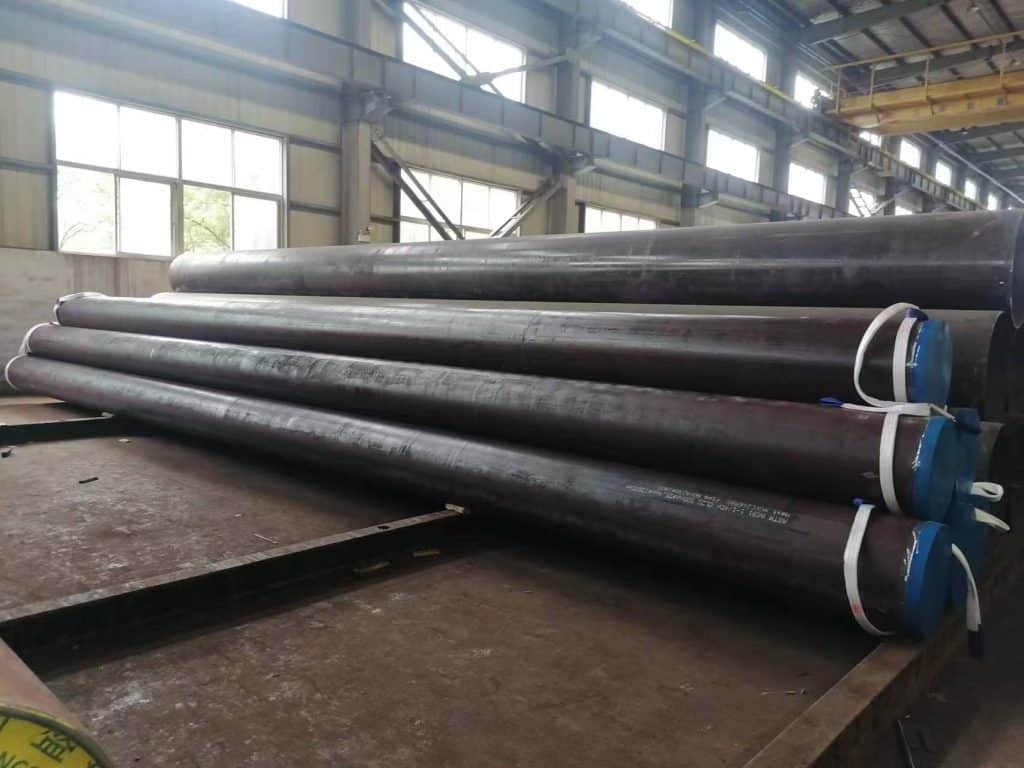
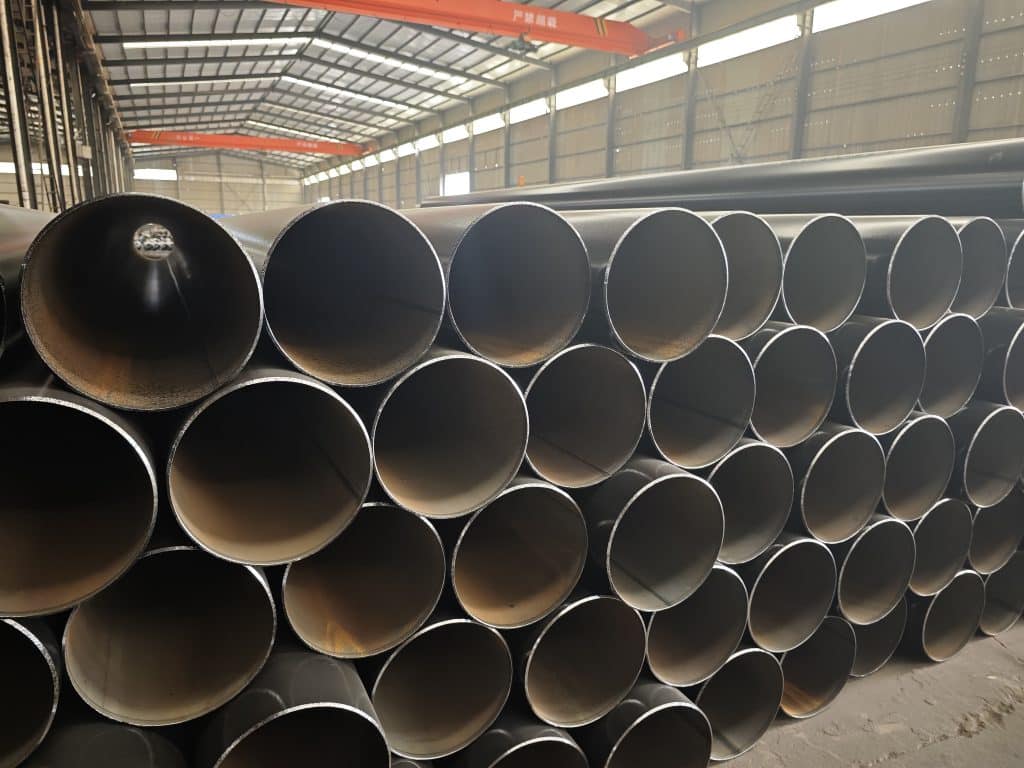
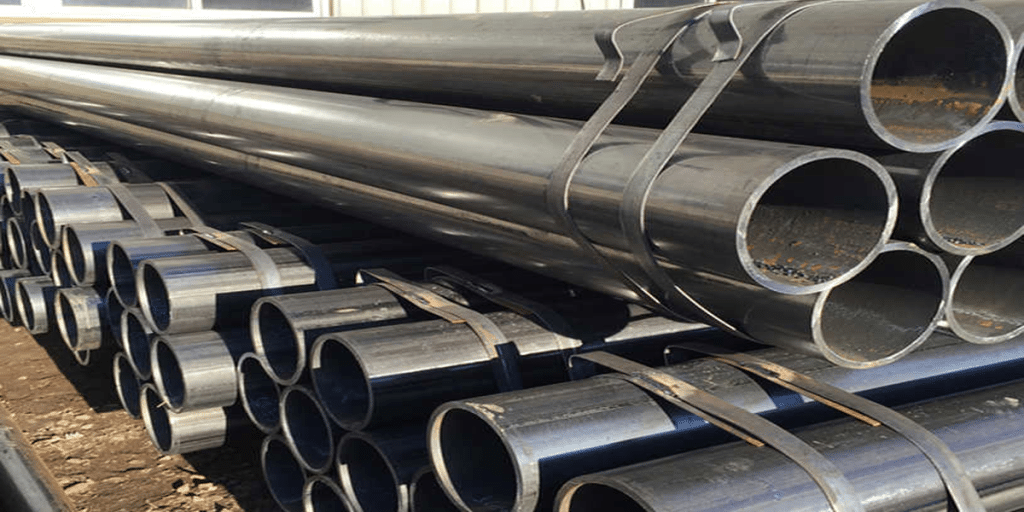
Evaluate whether the supplier can manufacture the specified round ERW or LSAW pipe, apply the requested coating system, maintain material and product traceability, provide the required inspection documentation and support the project’s logistics. LONGMA states that its steel-pipe production site covers 230,000 square metres and annual output exceeds 500,000 tonnes. Confirm the specific pipe dimensions, coating system, applicable standard and delivery schedule for each enquiry.
Conclusion
The essential difference between 2LPE and 3LPE is the layer construction: 2LPE consists of adhesive and polyethylene, while 3LPE adds an FBE primer directly on the prepared steel. The additional layer is a design feature, not a universal guarantee of suitability. Select the coating using the pipeline’s temperature and environmental conditions, mechanical and installation risks, applicable standards, field-joint requirements and documented quality criteria.
FAQ
Is 3LPE always better than 2LPE?
No. The correct system is the one that meets the project specification and service conditions. A higher layer count alone does not establish suitability.
What is the correct 3LPE layer order?
From the steel outward: FBE epoxy primer, copolymer adhesive and polyethylene outer layer.
Does ISO 21809-1 cover 2LPE?
No. ISO 21809-1:2018 specifies plant-applied three-layer polyethylene and three-layer polypropylene coatings.
Can 2LPE or 3LPE be used on buried pipelines?
Either may be considered only where the specified system meets the project’s corrosion, temperature, mechanical, installation and approval requirements.
What information is needed for a quotation?
Provide pipe dimensions and grade, coating system and standard, thickness, operating conditions, installation method, quantity, inspection requirements and delivery details.
Request a Coated Pipe Quotation from LONGMA
For a quotation covering round ERW or LSAW steel pipe with 2LPE or 3LPE coating, send LONGMA the pipe dimensions, steel grade, coating standard and edition, required thickness, service conditions, quantity, inspection requirements and destination. Email: info@ilongma.com. Website: https://www.ilongma.com/.