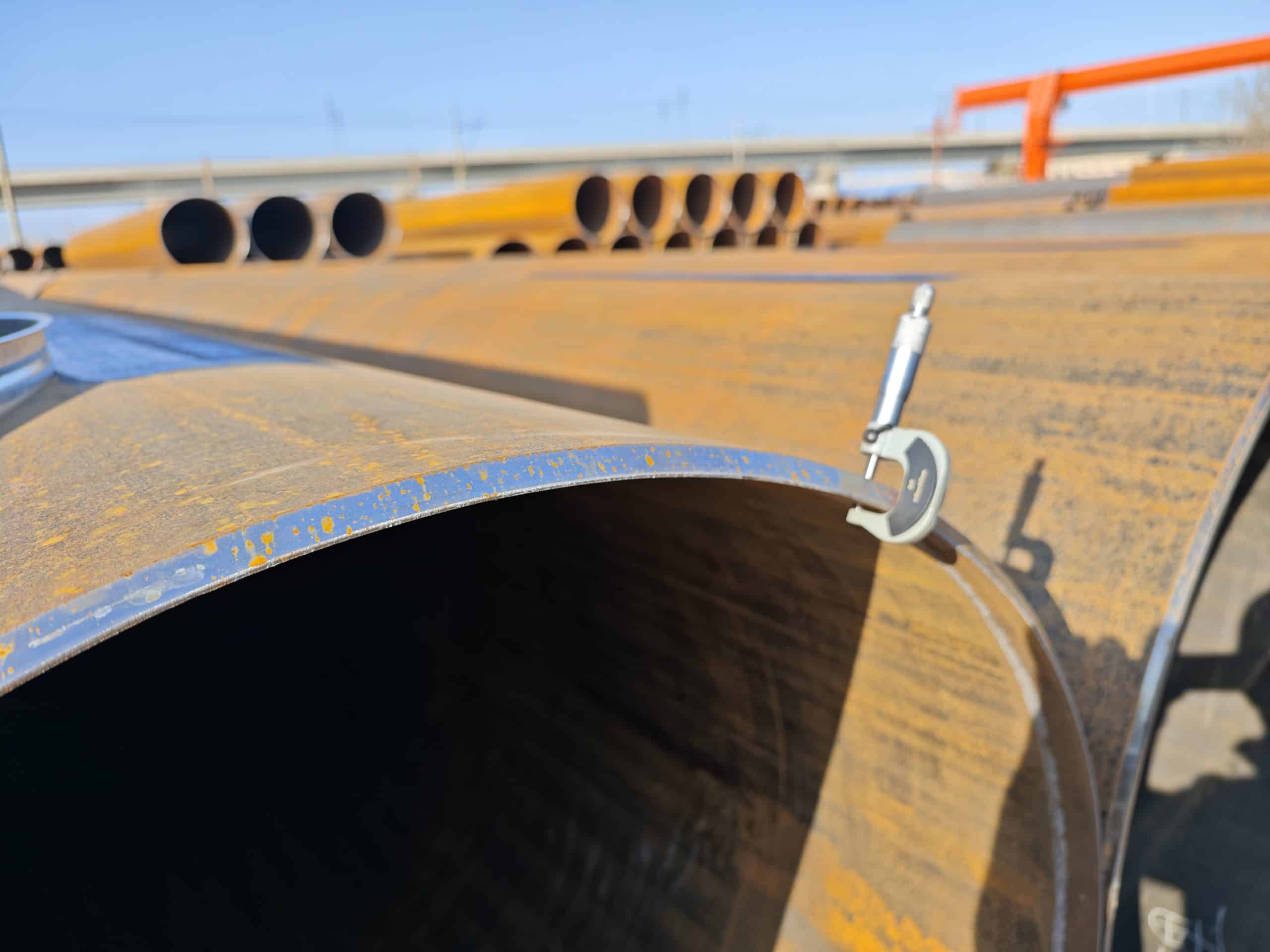
- 1. Why Can Steel Pipe Welding Quality Not Be Judged by Weld Appearance Alone?
- 2. Step 1: Order and Raw Material Review
- 3. Step 2: Plate Edge and Steel Strip Control Before Forming
- 4. Step 3: ERW and LSAW Forming Processes
- 5. Step 4: ERW High-Frequency Welding Control
- 6. Step 5: LSAW Internal and External Submerged Arc Welding
- 7. Step 6: Welding Procedure Qualification and Personnel Qualifications
- 8. Step 7: Online and Offline Nondestructive Testing
- 9. Step 8: Hydrostatic Testing, Dimensional Inspection, and Laboratory Verification
- 10. Key Risks Buyers Need to Prevent
- 11. Why Choose LONGMA?
- 12. Conclusion
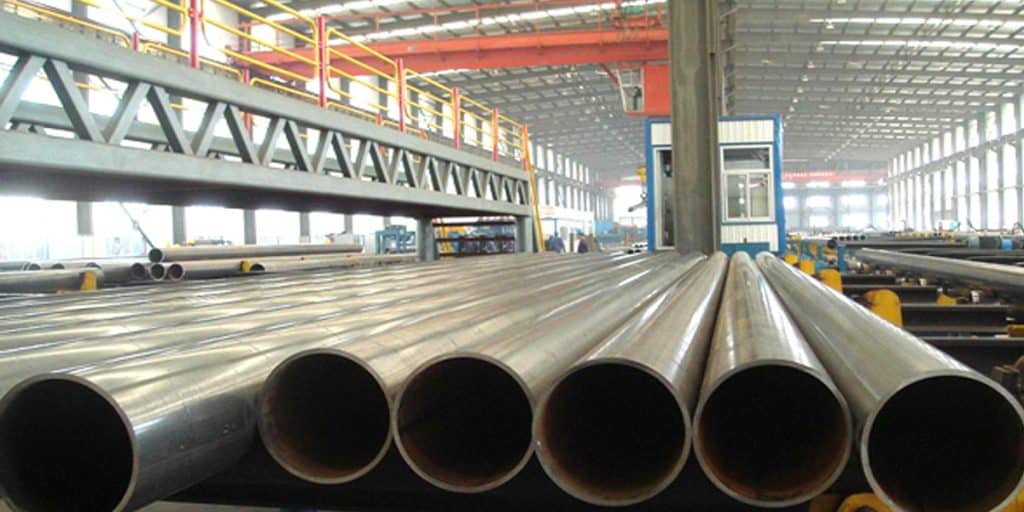
In oil and gas, water supply, pressure transmission, and industrial pipeline projects, weld quality directly affects the pressure-bearing capacity of steel pipes, on-site installation efficiency, and long-term operational safety. For buyers, the key question is not simply whether the steel pipe has been welded, but whether the raw materials, forming process, welding parameters, heat treatment, nondestructive testing, and quality documentation form a complete and traceable control chain.
With more than 20 years of industry experience, LONGMA mainly manufactures round ERW and LSAW welded steel pipes. For projects involving API 5L, ISO 3183, ASTM A53, ASTM A671, and ASTM A672, LONGMA develops production plans according to the steel grade, wall thickness, service temperature, and inspection level. Product performance is then verified through its internal laboratory and nondestructive testing facilities.
Why Can Steel Pipe Welding Quality Not Be Judged by Weld Appearance Alone?
A smooth weld appearance does not necessarily mean that its internal quality is acceptable. During welding, current, voltage, welding speed, heat input, squeeze pressure, and cooling rate interact with one another. Deviations in these parameters may cause lack of fusion, incomplete penetration, slag inclusions, porosity, cracks, or deterioration of heat-affected-zone properties.
API Spec 5L specifies requirements for the materials, manufacture, inspection, testing, marking, and traceability of seamless and welded steel pipes used for oil and gas transportation. API released the 47th Edition in June 2026, adding or revising requirements in more than 15 technical areas. Therefore, the applicable edition must be clearly stated in every new order.
ISO 3183:2019 specifies PSL1 and PSL2 seamless and welded steel pipes used in petroleum and natural gas pipeline transportation systems. It also supplements the requirements of API 5L, 46th Edition.
Consequently, a complete steel pipe welding process must begin with order review rather than with the moment the welding machine is switched on.
Step 1: Order and Raw Material Review
Before production, LONGMA first confirms:
- Standard number and applicable edition;
- Steel grade, Grade, Class, or PSL level;
- Outside diameter, wall thickness, length, and pipe-end configuration;
- Impact test temperature;
- Hydrostatic testing and nondestructive testing scope;
- Third-party inspection and documentation requirements.
Before raw materials enter the production line, the heat number, chemical composition, mechanical properties, and delivery condition of the steel plate or steel strip must be verified.
Chemical composition affects the carbon equivalent, welding heat input, and susceptibility to cracking. When only the minimum yield strength is checked while carbon, manganese, and microalloying elements are ignored, insufficient preheating or abnormal hardening of the heat-affected zone may occur.
ASTM currently lists A671/A671M-20 (2025) for electric-fusion-welded steel pipes intended for atmospheric and lower-temperature service, while A672/A672M-19 (2025) applies to electric-fusion-welded steel pipes intended for moderate-temperature and high-pressure service. The two standards cover different applications and cannot be substituted for one another merely because the pipe dimensions are the same.
Step 2: Plate Edge and Steel Strip Control Before Forming
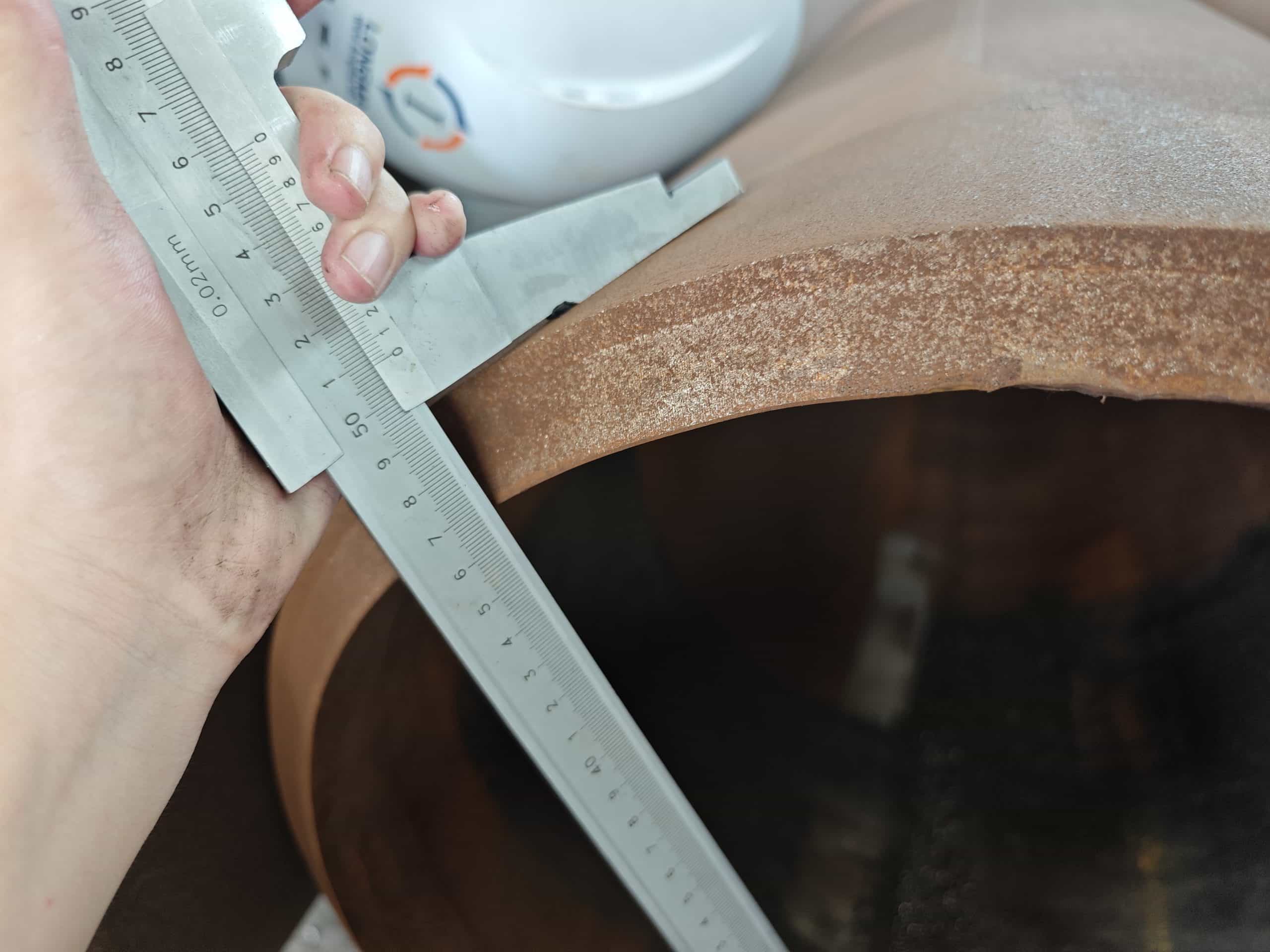
Weld quality depends to a large extent on the condition of the edges before forming. Burrs, contamination, mechanical damage, or width fluctuations along the steel strip edges may affect welding stability.
For LSAW steel pipes, the steel plate bevel angle, root face dimensions, and edge straightness directly influence the penetration and formation of the internal and external submerged arc welds.
Before forming, LONGMA inspects:
- Raw material surface quality;
- Plate edge or steel strip edge condition;
- Bevel dimensions;
- Steel plate thickness and width;
- Heat and batch identification and traceability status.
Although these basic controls may not be as visible as final product testing, they represent the first line of defence against welding defects.
Step 3: ERW and LSAW Forming Processes
LONGMA selects the appropriate manufacturing method according to pipe diameter, wall thickness, applicable standard, and intended application.
| Comparison Item | ERW Steel Pipe | LSAW Steel Pipe |
| Primary raw material | Steel coil or steel strip | Individual steel plate |
| Welding method | High-frequency electric resistance welding | Longitudinal submerged arc welding |
| Common advantages | High production efficiency and good dimensional consistency | Suitable for large-diameter, heavy-wall, and high-strength products |
| Process focus | Edge convergence, heat input, and squeeze pressure | Bevel preparation, internal and external welding parameters, and weld formation |
| Typical applications | Gathering lines, water supply, structural applications, and general pipelines | Long-distance pipelines and large-diameter pressure pipelines |
During ERW forming, the steel strip edges must converge steadily to prevent edge misalignment, waviness, or an abnormal V-shaped opening angle.
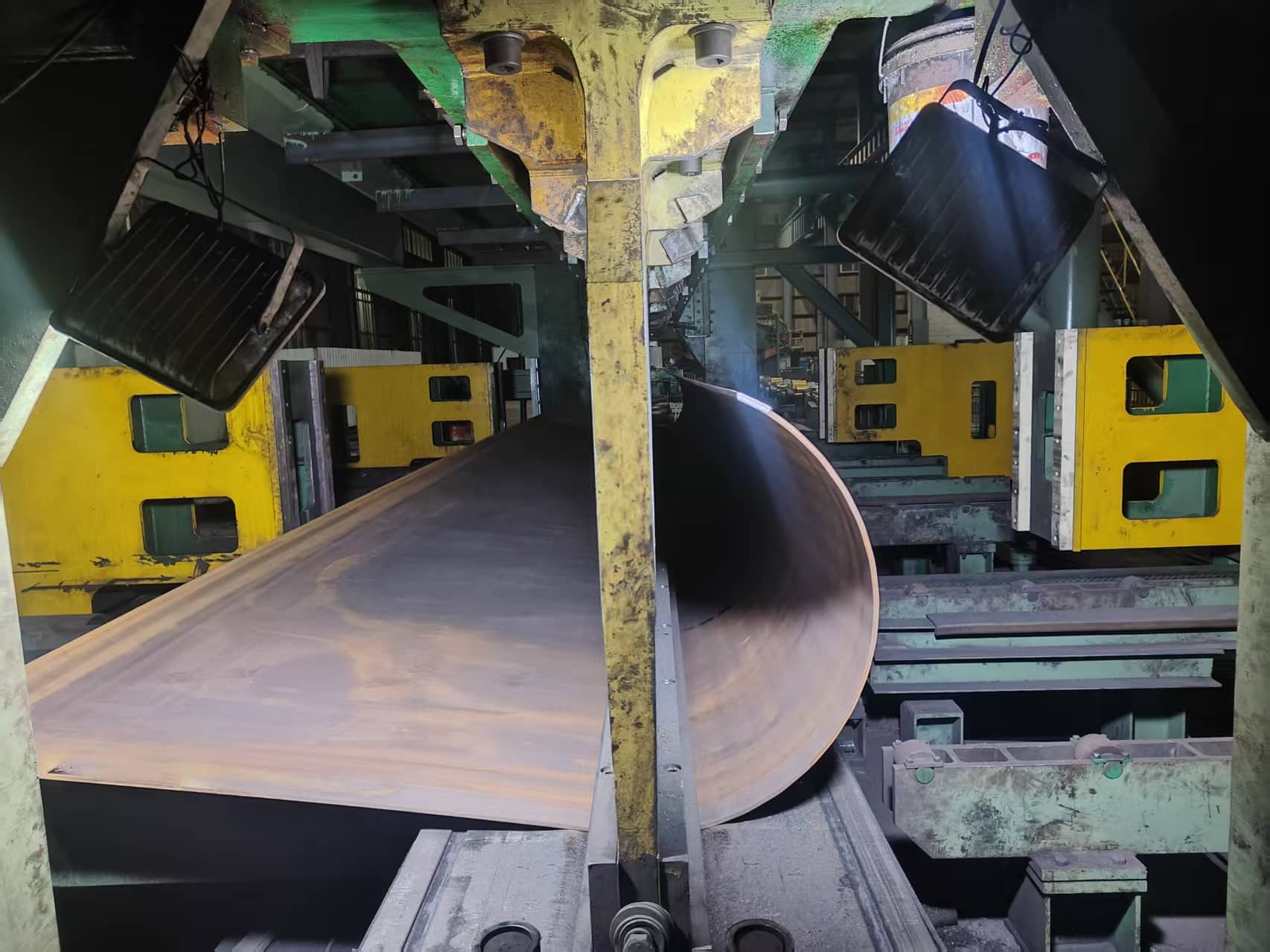
During LSAW forming, the progressive bending of the steel plate must be controlled to prevent excessive pipe ovality and residual stress.
Step 4: ERW High-Frequency Welding Control
ERW steel pipes are produced by using high-frequency current to heat the steel strip edges and then applying squeeze rolls to bond the two metal edges together.
Quality control does not simply involve heating and pressing the edges together. Heat input, opening angle, welding speed, and squeeze pressure must be managed simultaneously.
Key Parameters and Associated Risks
| Parameter | Risks When Too Low | Risks When Too High |
| High-frequency heat input | Cold welding and lack of fusion | Overheating and increased oxide formation |
| Squeeze pressure | Insufficient bonding and reduced weld strength | Excessive metal extrusion and abnormal weld geometry |
| Welding speed | Local overheating | Insufficient heating and process instability |
| Opening angle | Abnormal current concentration | Reduced thermal efficiency |
| Post-weld cooling | Uneven microstructural transformation | Abnormal hardness in the heat-affected zone |
After welding, internal and external weld beads must be removed. Depending on the steel grade and order requirements, the weld area may also undergo online heat treatment.
The purpose of heat treatment is to improve the microstructure of the weld and heat-affected zone, producing more uniform performance.
A reliable ERW steel pipe supplier should therefore retain key process parameters and inspection records rather than providing only a material certificate after production has been completed.
Step 5: LSAW Internal and External Submerged Arc Welding
LSAW steel pipes normally undergo tack welding or pre-welding first to maintain the stability of the formed pipe body. Internal and external welding are then completed.
Submerged arc welding uses welding wire and flux to create a protected welding environment, making it suitable for the continuous and efficient production of heavy-wall longitudinal welds.
LONGMA focuses on controlling:
- Welding wire and flux batch numbers;
- Current, voltage, and welding speed;
- Welding wire position and electrode extension;
- The overlapping relationship between the internal and external weld passes;
- Weld reinforcement, width, and fusion condition;
- Interpass cleaning and flux recovery conditions.
Insufficient heat input during LSAW welding may cause sidewall lack of fusion or incomplete penetration. Excessive heat input may enlarge the heat-affected zone, cause grain coarsening, and reduce impact toughness.
For PSL2 or low-temperature projects, the welding process window must also be adjusted according to the impact test results.
Step 6: Welding Procedure Qualification and Personnel Qualifications
Product standards mainly specify how steel pipes must be manufactured and accepted. However, welding processes should also be supported by an applicable qualification system.
ASME BPVC Section IX includes rules for the qualification of welding, brazing, and fusing procedures and personnel. It must be used together with the applicable construction code.
Typical documents include:
- Welding Procedure Specification, or WPS;
- Procedure Qualification Record, or PQR;
- Welder qualification records;
- Welding consumable batch and drying records;
- Process parameter and equipment calibration records.
It should be noted that an API or ASTM material certificate for a steel pipe does not automatically qualify every field girth-welding procedure.
Manufacturing welds and field installation welds must be managed separately according to their respective applicable codes.
Step 7: Online and Offline Nondestructive Testing
Visual inspection alone cannot identify internal weld defects. LONGMA uses a combination of UT, RT, MT, or PT according to product standards and project requirements.
| Testing Method | Main Purpose | Execution Steps | Typical Defects |
| UT — Ultrasonic Testing | Detect internal and planar discontinuities | Calibration, scanning, positioning, evaluation, and recording | Cracks, lack of fusion, and inclusions |
| RT — Radiographic Testing | Obtain internal images of the weld | Setup, exposure, imaging, and interpretation | Porosity, slag inclusions, and incomplete penetration |
| MT — Magnetic Particle Testing | Inspect surface and near-surface defects | Magnetisation, magnetic particle application, and indication observation | Weld-toe cracks and surface cracks |
| PT — Liquid Penetrant Testing | Inspect surface-breaking defects | Cleaning, penetrant application, excess penetrant removal, and developer application | Fine cracks and pinholes |
Testing equipment must be calibrated using applicable reference standards or calibration blocks.
When an indication exceeds the acceptance criteria, it must be located, evaluated, repaired, and retested.
Customers should also specify the testing percentage, acceptance level, and third-party witness points before placing the order.
Step 8: Hydrostatic Testing, Dimensional Inspection, and Laboratory Verification
Nondestructive testing is used to identify discontinuities, while hydrostatic testing verifies the pressure-bearing integrity of the pipe body and weld. The two methods cannot replace one another.
Hydrostatic testing normally includes water filling, air removal, pressurisation, pressure holding, inspection, and recording.
During the test, leakage, pressure loss, and abnormal deformation must be monitored.
LONGMA’s internal laboratory can also conduct the following tests according to order requirements.
1.Chemical Composition Analysis
After verifying the heat number, specimens are prepared and spectrometric equipment is used to analyse carbon, manganese, phosphorus, sulfur, and other relevant elements.
The results are then entered into the traceability system.
2.Tensile Testing
Tensile testing verifies yield strength, tensile strength, and elongation, confirming the performance of the finished steel pipe rather than only that of the original raw material.
3.Impact Testing
Impact testing evaluates the ability of the base metal, weld metal, or heat-affected zone to resist brittle fracture at a specified temperature.
It is particularly important for PSL2 and low-temperature projects.
4.Hardness and Bend Testing
Hardness testing can identify abnormal hardening in the heat-affected zone. Bend or flattening tests are used to evaluate weld ductility and bonding integrity.
This internal verification system transforms the steel pipe welding process from a set of production parameters into measurable data that customers can review and verify.
Key Risks Buyers Need to Prevent
Common risks when purchasing welded steel pipes include:
- Failure to state the applicable standard edition in the contract;
- Checking only the steel grade without confirming the PSL level, Grade, or Class;
- Failure to specify the impact test temperature and NDT percentage in advance;
- Requesting third-party witnessing only after production has been completed;
- MTC documentation that cannot be linked to specific heat numbers, production batches, and pipe numbers;
- Comparing only unit prices while ignoring repair, retesting, and project-delay costs.
A professional supplier should resolve these issues before production begins.
Through contract review, inspection and test planning, and document-list confirmation, LONGMA reduces the risk of products being technically acceptable in general but unable to pass project acceptance.
Why Choose LONGMA?
LONGMA has more than 20 years of experience in manufacturing round welded steel pipes and can establish separate manufacturing and quality control plans for ERW steel pipes and LSAW steel pipes.
LONGMA’s main advantages include:
- Complete traceability from raw materials to finished products;
- Control of ERW heat input, squeeze pressure, and weld heat treatment;
- Control of LSAW internal and external welding parameters and weld formation;
- UT, RT, MT, PT, and hydrostatic testing capabilities;
- Internal laboratory verification through chemical, tensile, impact, and hardness testing;
- Support for EN 10204 3.1 documentation and third-party inspection;
- Production organised according to the applicable standard edition and supplementary technical requirements stated in the order.
Conclusion
A complete steel pipe welding process extends far beyond the welding equipment itself. It is a quality system covering raw materials, forming, parameter control, heat treatment, nondestructive testing, hydrostatic testing, and document traceability.
Through a recordable and verifiable steel pipe welding process, LONGMA helps customers reduce procurement risks related to weld defects, on-site rework, and incomplete acceptance documentation.
Whether a project requires high-efficiency ERW steel pipes or large-diameter, heavy-wall LSAW steel pipes, customers should provide the applicable standard edition, steel grade, dimensions, wall thickness, service temperature, inspection scope, and destination port during the inquiry stage.
Based on this information, LONGMA will provide a manufacturing feasibility analysis, quality control plan, delivery schedule, and commercial quotation, ensuring that purchasing decisions are based not only on price but also on proven manufacturing capability and verified inspection data.