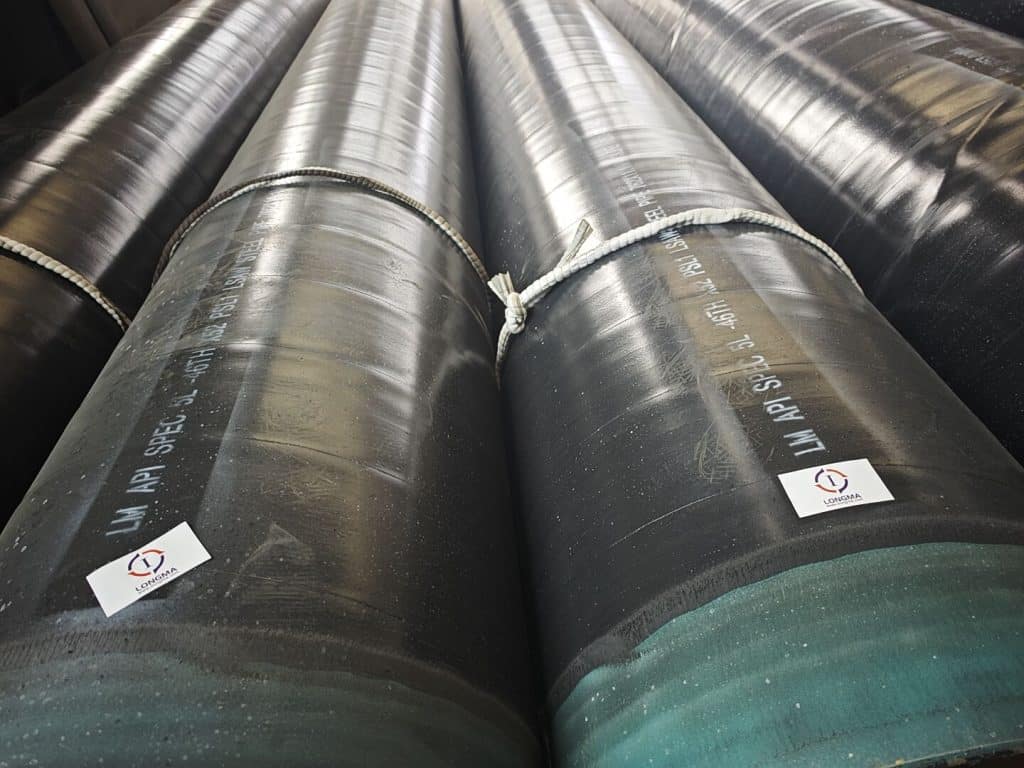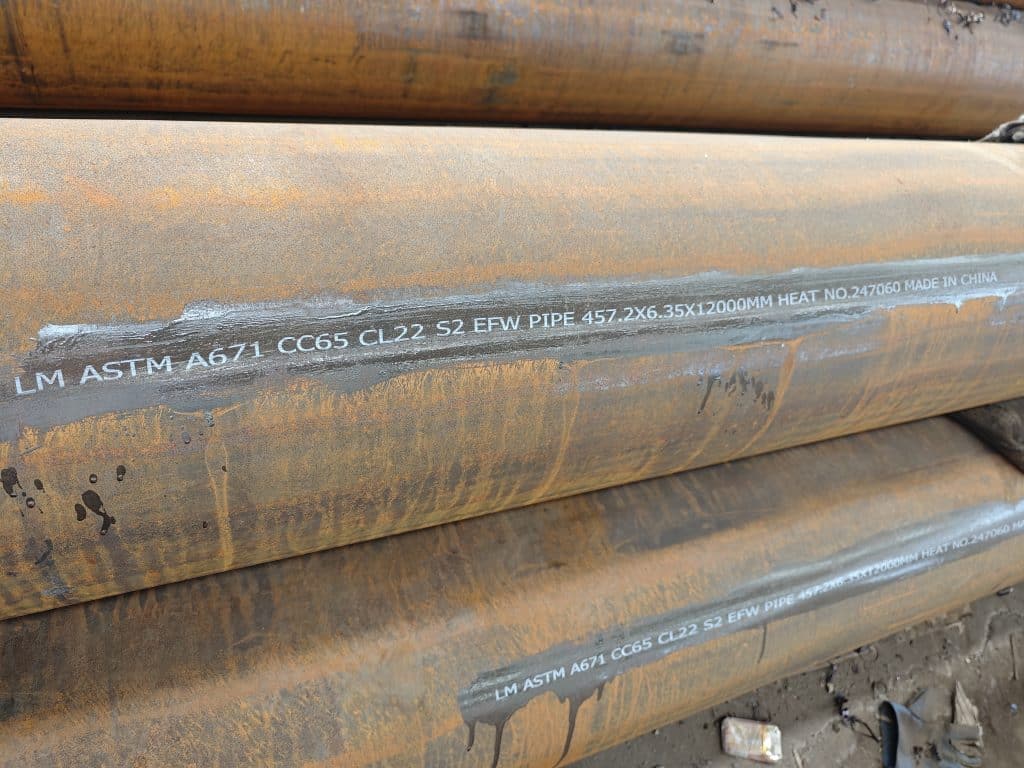
C350 and C350L0 are cold-formed structural hollow-section grades under AS/NZS 1163. They share the same nominal strength level, while C350L0 adds specified Charpy V-notch impact toughness at 0°C. The correct choice is therefore based on the structural design, minimum design temperature, member details, loading, fracture-risk assessment, fabrication, and project specification. C350L0 should not be selected merely because it sounds like a higher-strength grade, and C350 should not be accepted merely because a project is located in a generally warm city.
AS/NZS 1163 covers cold-formed structural steel hollow sections in more than one shape. This guide focuses on circular hollow sections because LONGMA supplies round steel pipe and does not promote square or rectangular sections as part of its product range.
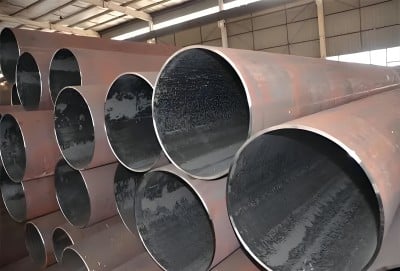
What C350 and C350L0 Mean
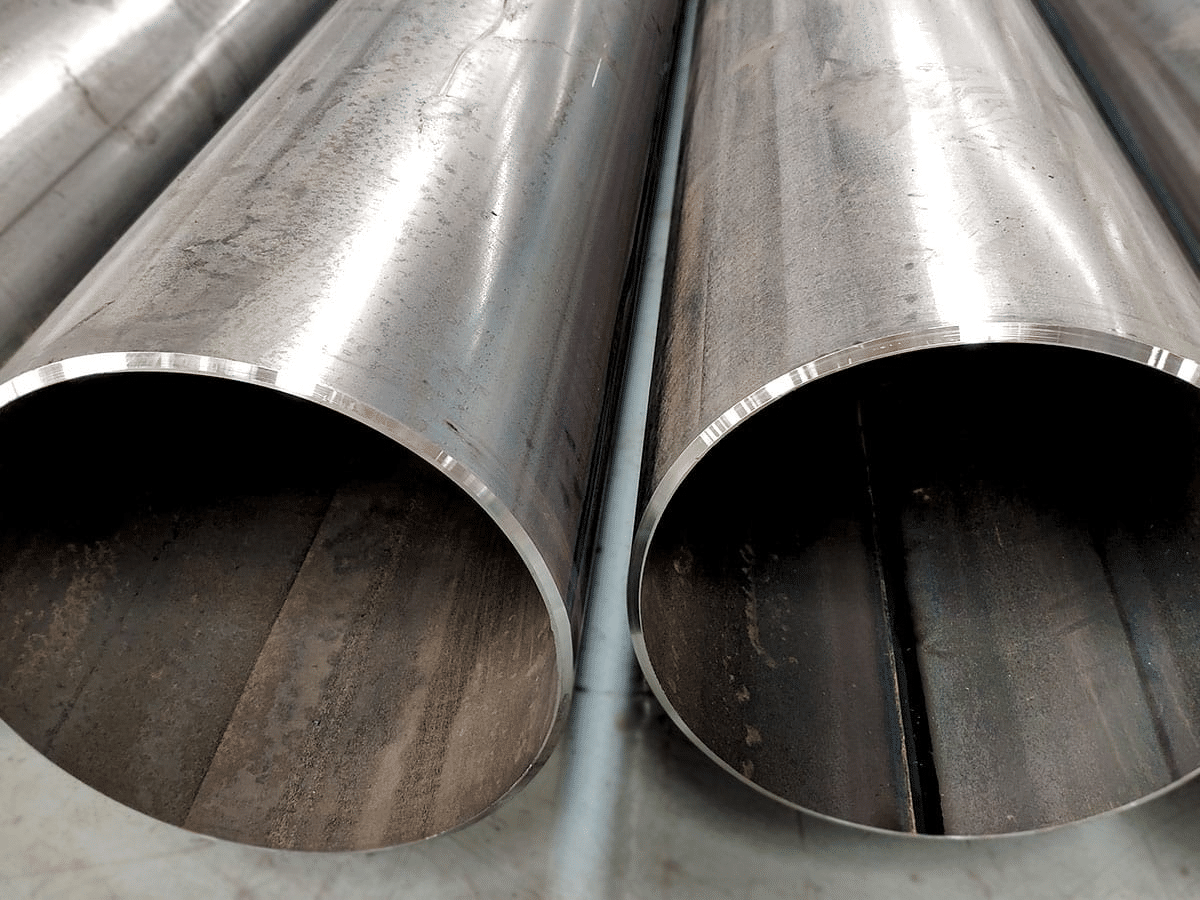
The C designation identifies a cold-formed grade, and 350 identifies its yield-strength level. C350L0 has the same specified strength level as C350 but includes the L0 impact-toughness designation. Under AS/NZS 1163, L0 refers to Charpy V-notch testing at 0°C; the applicable acceptance values, specimen orientation, specimen size, sampling, and retest provisions must be checked in the governing edition of the standard.
| Feature | C350 | C350L0 |
| Product family | Cold-formed structural hollow section | Cold-formed structural hollow section |
| Strength level | 350 MPa grade designation | Same 350 MPa grade designation |
| Impact designation | No L0 designation | L0 impact requirement at 0°C |
| Selection basis | Permitted by design and project specification | Specified where the design or project requires L0 toughness |
| Evidence to review | MTC, chemistry, tensile properties, dimensions, manufacturing and inspection records | The same records plus compliant Charpy impact results |
AS 1391 addresses tensile testing of metallic materials. It should not be cited as the Charpy impact-test method. Procurement documents should reference the impact-testing provisions and test method required by the applicable AS/NZS 1163 edition and project specification.
How to Choose the Grade
Use C350 when the structural design and project specification permit a non-L0 grade. Use C350L0 when the engineer or contract requires verified impact toughness at 0°C. The decision should account for the minimum design temperature, member thickness, stress level, connection detail, cyclic or impact loading, consequence of fracture, fabrication route, and the relevant structural design provisions.
Climate alone is not a sufficient rule. A structure in a warm region may still have fatigue-sensitive or impact-sensitive details, while a conventional member in a colder region may be governed by a more specific engineering assessment. Likewise, labels such as “bridge,” “mining,” or “offshore” do not automatically determine the grade. The project engineer must translate service conditions into a material specification.
C350L0 should be treated as mandatory only when it is required by the approved design, project specification, or governing acceptance pathway. If the specification is unclear, the buyer should obtain written clarification before ordering. Substituting C350 for C350L0 after production can create a material nonconformance because impact-test evidence cannot be assumed from strength results.
Comparison with Other Structural Pipe Standards
ASTM A500 and EN 10219 are structural tubing or hollow-section specifications, while ASTM A53 primarily covers pipe intended for mechanical and pressure applications and certain ordinary uses. Similar yield-strength numbers do not establish equivalence because each standard controls grades, product forms, dimensions, tolerances, sampling, testing, marking, and documentation differently.
| Standard | General scope | Substitution point |
| AS/NZS 1163 | Cold-formed structural steel hollow sections | Use the specified AS/NZS grade and documentation when the contract requires it. |
| EN 10219 | Cold-formed welded structural hollow sections | Do not treat an EN grade as automatically equivalent; obtain engineering and contractual acceptance. |
| ASTM A500 | Cold-formed welded and seamless carbon structural tubing in rounds and shapes | Compare the exact round-tubing grade, strength, dimensions, tests, and documentation. |
| ASTM A53 | Steel pipe specification with pressure, mechanical, and ordinary-use scope | Do not substitute solely on nominal size or Grade B designation. |
Compliance with EN 10219 or ASTM A500 does not automatically prove compliance with AS/NZS 1163. An alternative material may be accepted only through the project’s applicable engineering, contractual, and regulatory process. The relevant decision makers may include the project engineer, certifier, or authority identified for the project; there is no single generically named “Australian Building Authority” that decides every case.
Inspection and Documentation
Receiving inspection should connect the product markings and heat identity to the mill documentation. Buyers should check the ordered grade, dimensions, length, tolerances, chemical analysis, tensile results, and weld inspection records. For C350L0, the documentation must also show the required Charpy results at the specified test temperature under the applicable sampling and specimen rules.
- Confirm that the purchase order and material certificate both state C350 or C350L0 and the governing AS/NZS 1163 edition.
- Match heat or batch identification on the pipe and packing to the inspection document.
- Check dimensions with calibrated equipment and assess results against the applicable standard and purchase-order tolerances.
- Review the manufacturing route, weld examination, and mechanical test records required for the ordered product.
- Treat EN 10204 3.1 documentation as a purchaser-specified inspection document, not as a universal statutory condition for every Australian building approval.
ISO 9001 certification can support confidence in a supplier’s quality-management system, but it does not replace product conformity. Third-party inspection can witness agreed hold points and review records, but acceptance remains tied to the contract and governing technical requirements.
Ordering C350 and C350L0 Circular Hollow Sections
A technically complete inquiry should include the standard edition, grade, circular shape, outside diameter, wall thickness, length, end condition, surface condition or coating, quantity, dimensional tolerances, inspection document, mechanical and impact testing, non-destructive examination, marking, packing, and third-party inspection requirements. Do not rely on a supplier’s general brochure to fill gaps in the project specification.
Price and shipping time depend on steel cost, dimensions, quantity, testing, coating, inspection, production scheduling, destination, and vessel availability. Buyers should therefore compare dated quotations with the same technical scope and Incoterms rather than assume a fixed price advantage or transit period.
LONGMA states that its AS/NZS 1163 offering includes round pipe in C250, C350, and C450 L0 grade families, with a published outside-diameter range of 114.3 to 1,422 mm. Final availability, wall thickness, length, testing, and delivery schedule must be confirmed for the specific inquiry. LONGMA’s official website reports a 230,000 m² production site and annual output exceeding 500,000 tonnes by the end of 2022. For a technical offer, contact enquiry@ilongma.com.
Frequently Asked Questions
Is C350L0 stronger than C350
The L0 suffix does not identify a higher nominal yield-strength grade. It identifies additional impact-toughness requirements at 0°C. Both grades belong to the same 350 MPa strength level.
Is C350L0 required for every Australian structural project
No. The approved design and project specification determine whether L0 toughness is required. If the documents conflict or omit the grade, obtain clarification from the responsible engineer before ordering.
Can EN 10219 material replace AS NZS 1163 material
Not automatically. The standards differ in technical delivery requirements, grade designations, dimensions, testing, and documentation. Any substitution requires review and acceptance under the project’s engineering, contractual, and regulatory process.
What documents should be requested
Request the inspection document specified in the purchase order, traceable chemistry and tensile results, dimensional records, applicable weld-examination records, and marking details. For C350L0, include the required Charpy impact-test results.
Does EN 10204 3.1 guarantee project approval
No. A 3.1 certificate provides traceable inspection results under EN 10204, but project acceptance also depends on the specified material standard, design documents, inspection scope, and approval pathway.