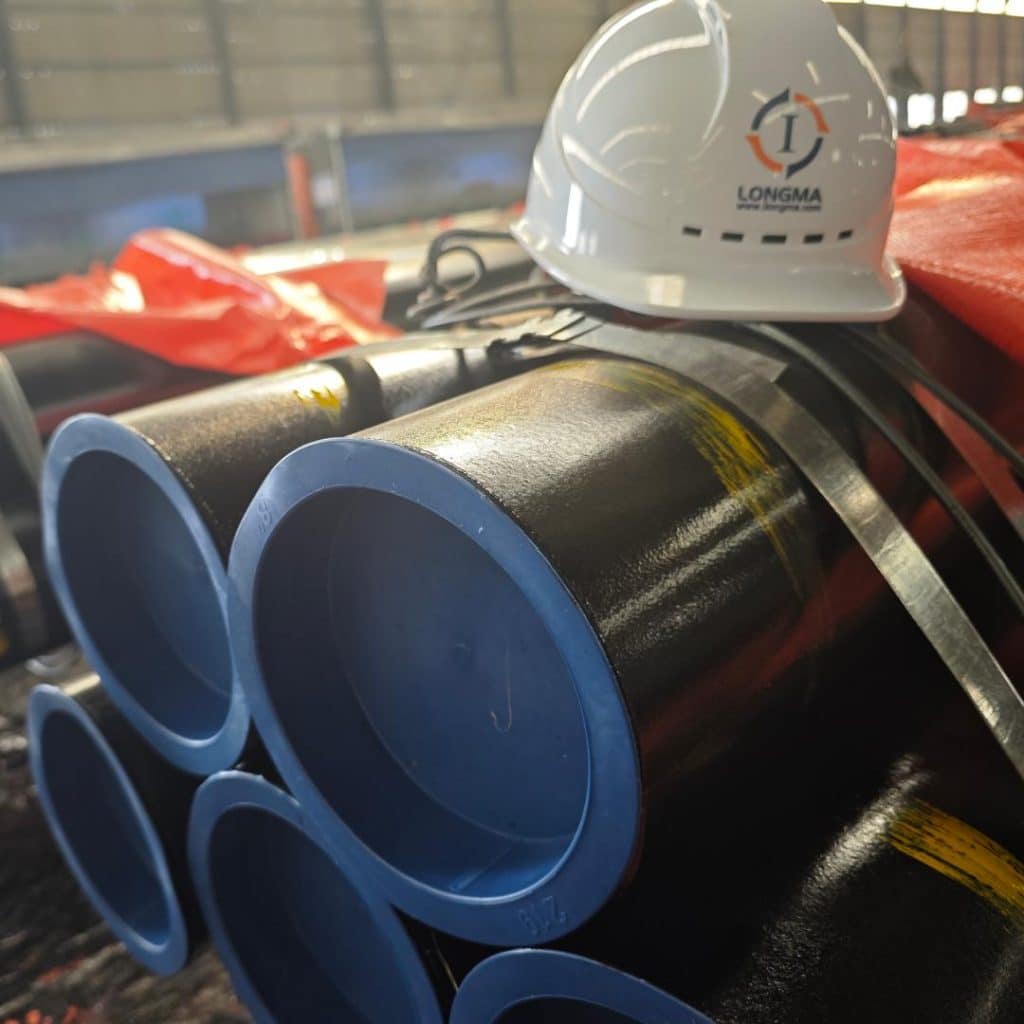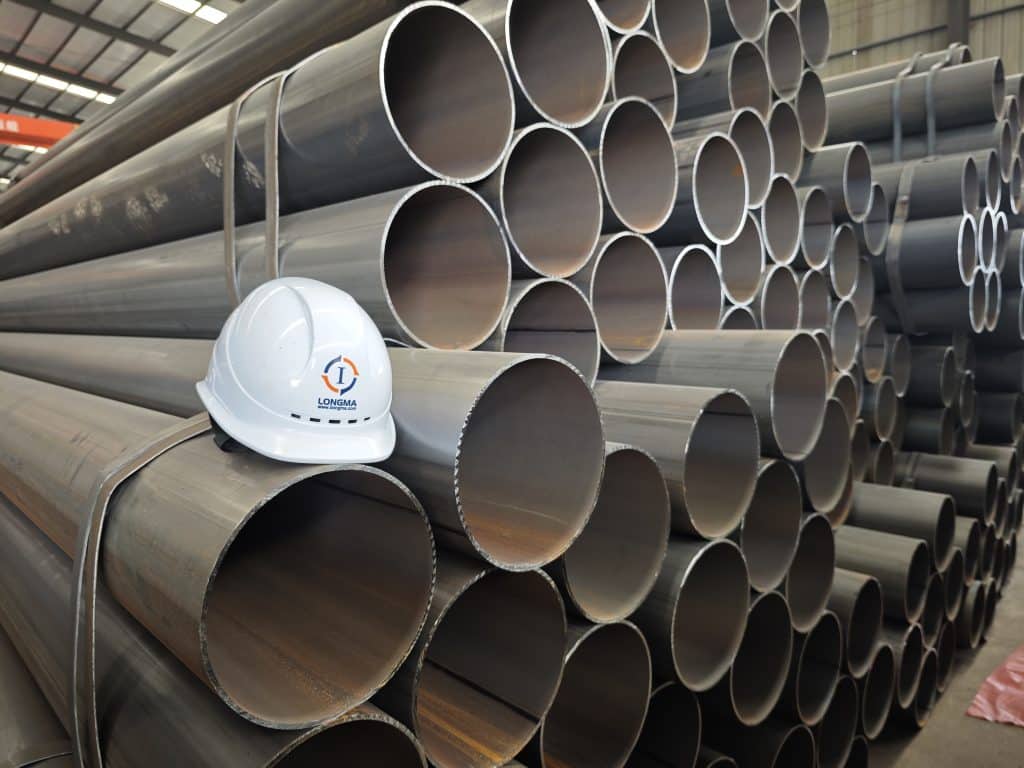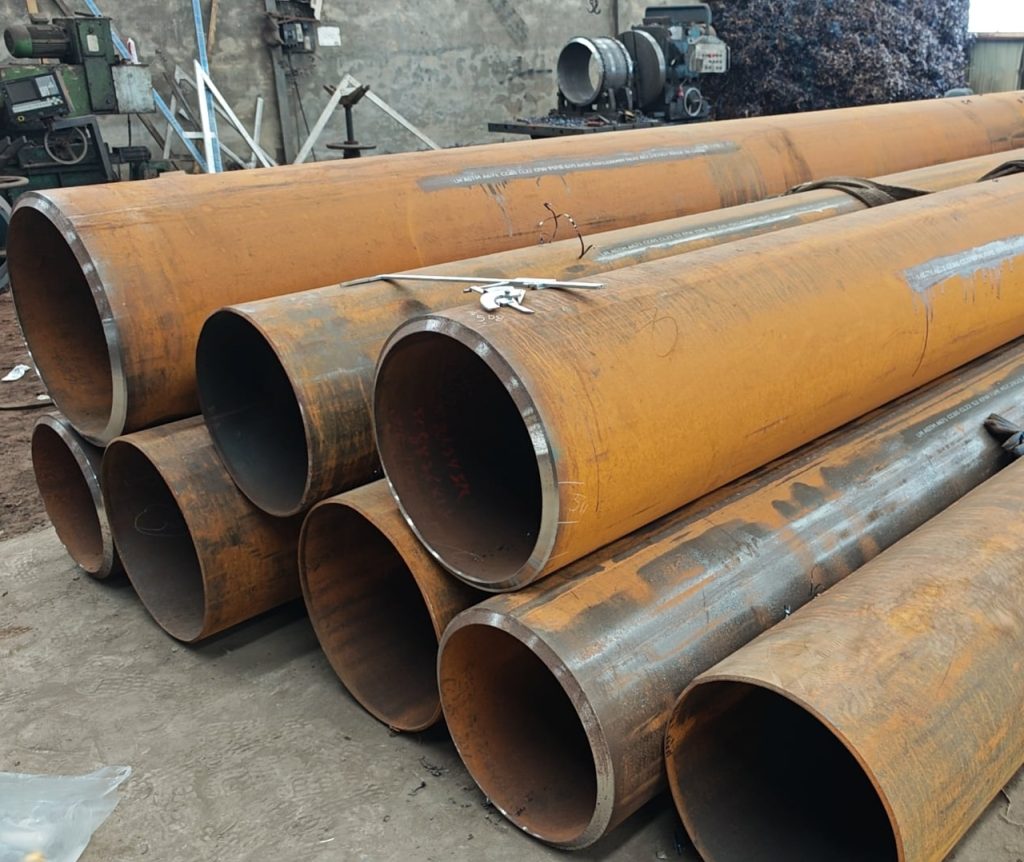
Carbon steel pipes are commonly classified by how they are manufactured: seamless pipe has no longitudinal weld, while welded pipe is formed from steel strip or plate and joined along a seam. Major welded types include electric resistance welded (ERW), longitudinal submerged arc welded (LSAW) and spiral submerged arc welded (SSAW) pipe. Each can be supplied to suitable product standards and dimensions.
A pipe may also be described by its grade, application or surface treatment. For example, galvanized pipe has a zinc coating and may be made by a permitted manufacturing process; it is not a separate welding method. The right carbon steel pipe depends on pressure, temperature, fluid, diameter, corrosion exposure and the applicable project specification.
Types of Carbon Steel Pipe by Manufacturing Method
Seamless Carbon Steel Pipe
Seamless pipe is made from a solid steel billet that is pierced and processed into a hollow section without a longitudinal weld. It is available to several product specifications. ASTM A106, for example, covers seamless carbon steel pipe for high-temperature service. Under the commonly referenced A106 Grade B requirements, specified minimum yield strength is 35,000 psi and minimum tensile strength is 60,000 psi; use the ordered edition and unit system for acceptance.
Seamless pipe can be selected for suitable process piping, steam lines and other pressure duties. Its absence of a longitudinal seam is one characteristic of the product, but it does not automatically make it the best choice for every high-temperature or high-pressure application. Grade, dimensions, design code, temperature-dependent allowable stresses and inspection requirements must all be considered.
ERW Carbon Steel Pipe
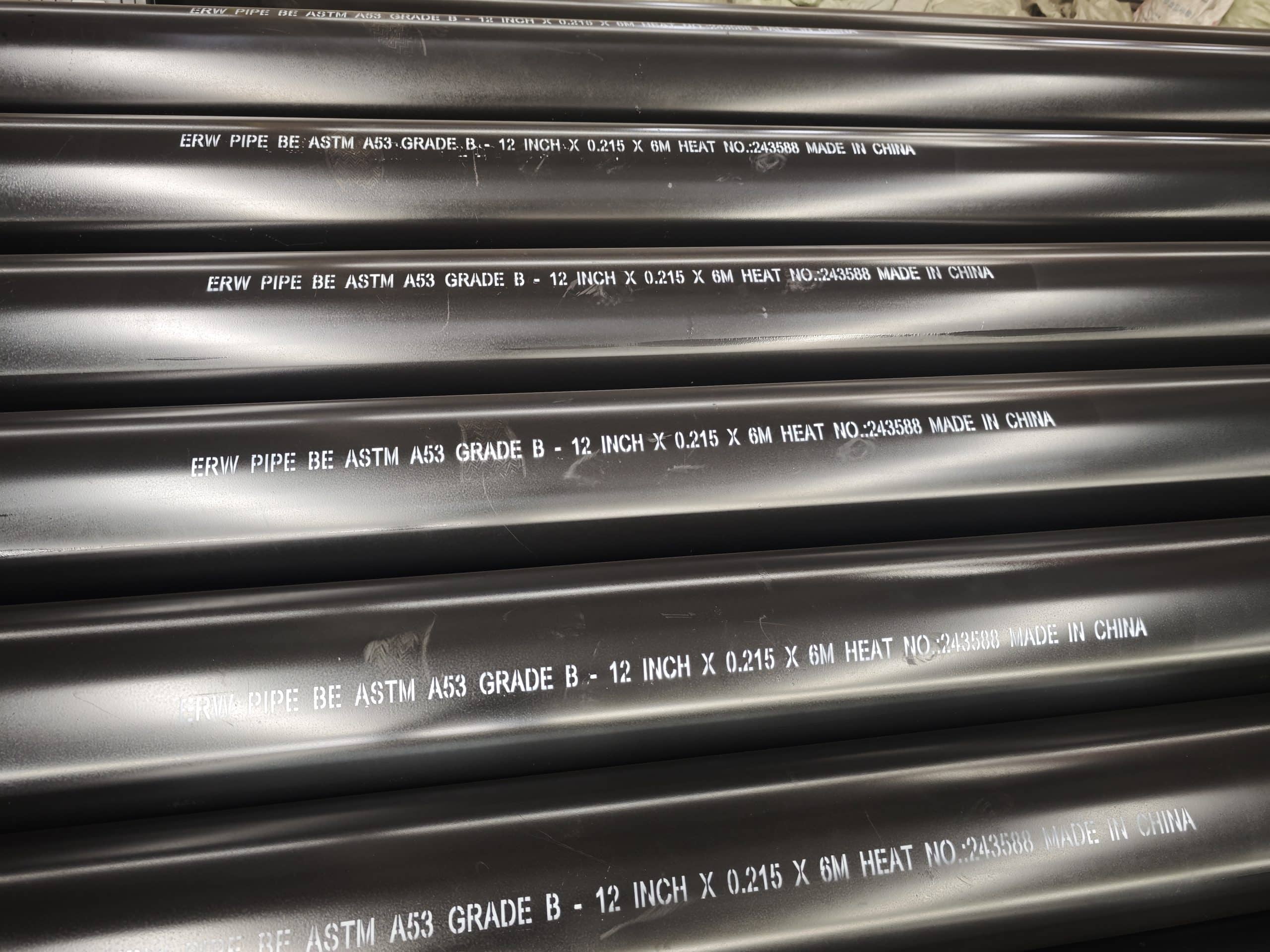
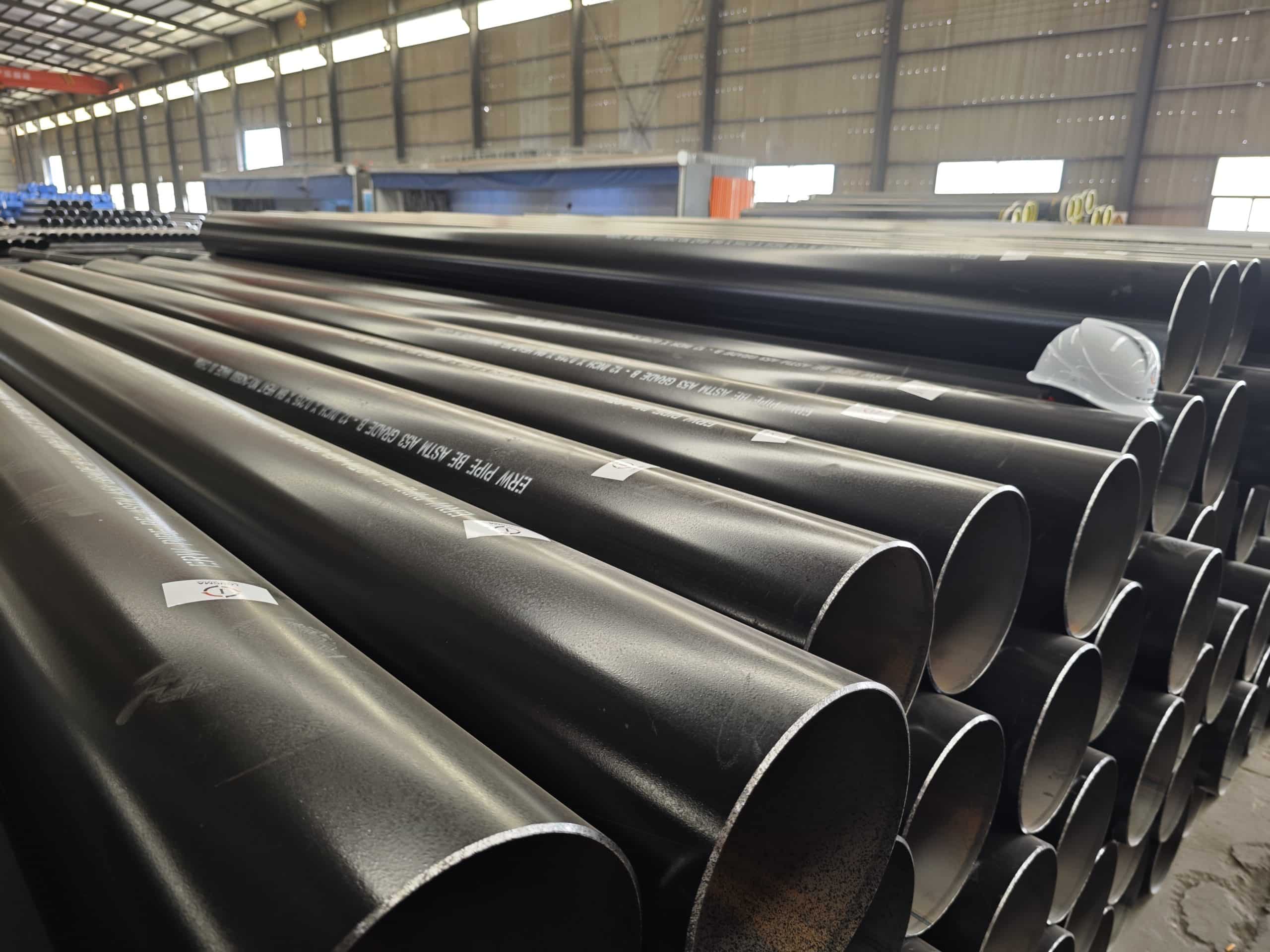
Electric resistance welded pipe is made from strip or coil formed into a round section. Electrical resistance heating and pressure join the longitudinal edges, normally without filler metal. The finished pipe is sized and inspected according to the ordered specification. ERW is widely used in suitable line pipe, water, utility and structural applications.
Applicable products may include API 5L line pipe or ASTM A53 Type E pipe, depending on the order. The permitted grades, dimensions and inspection requirements depend on the specification and edition. API 5L 46th edition includes X80 PSL2 for permitted high-frequency welded manufacture; actual availability depends on the mill and size. LONGMA manufactures round ERW pipe and can confirm the range for a particular grade and order.
LSAW Carbon Steel Pipe
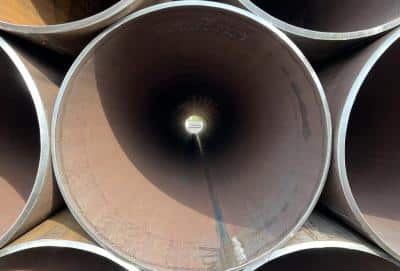
Longitudinal submerged arc welded pipe is formed from steel plate and welded along its length using submerged arc welding. Plate-forming routes can include JCOE or UOE. LSAW is often selected for larger-diameter and thicker-wall applications, subject to the manufacturing range and the project specification.
API 5L LSAW pipe can be specified for suitable onshore and offshore transmission lines. For example, X65 has a specified minimum yield strength of 450 MPa in the API 5L 46th edition SI tables. The grade alone does not determine allowable pressure: diameter, wall thickness, temperature, allowances and the governing code must also be considered. LONGMA manufactures round LSAW pipe; confirm the required grade and dimensions before ordering.
SSAW Carbon Steel Pipe
Spiral submerged arc welded pipe is formed from strip or plate with a helical seam. It is used in suitable water, piling and pipeline applications when allowed by the product standard and design specification. The weld configuration, inspection provisions and available dimensions should be assessed for the intended service. LONGMA’s manufacturing scope described here is round ERW and LSAW pipe.
| Type | Manufacturing feature | Common selection consideration |
| Seamless | No longitudinal weld seam | Specification, dimensions and pressure or temperature requirements |
| ERW | Longitudinal resistance weld | Available size, grade, production route and inspection |
| LSAW | Longitudinal submerged arc weld | Large diameter or wall thickness within the mill’s range |
| SSAW | Helical submerged arc weld | Diameter, seam configuration and project acceptance |
Standards, Grades and Product Levels
A manufacturing method and a product standard describe different things. API 5L specifies line pipe for pipeline transportation systems, while ASTM A53 covers specified welded and seamless pipe for suitable mechanical and pressure applications. ASTM A106 covers seamless carbon steel pipe for high-temperature service. A project should identify the exact standard, edition, grade, pipe type, dimensions and any supplementary requirements.
API 5L includes PSL1 and PSL2 product specification levels. PSL2 includes additional applicable requirements for material properties, toughness, chemical composition and traceability. Under the 46th edition, the PSL1 grade range extends to X70, while X80 is listed as a PSL2 grade. API published the 47th edition in 2026; the applicable purchase order should identify the edition being used.
Do not assume that pipe grades are interchangeable merely because their minimum strength values are similar. Product specifications can differ in manufacturing, chemistry, inspection, marking and intended scope. Where a design requires substitution, the purchaser and engineer should approve it against the governing code and complete project requirements.
Carbon Steel Pipe and Other Materials
Carbon steel is widely used because it combines useful strength, manufacturability and cost. It generally requires a suitable corrosion-control strategy when exposed to corrosive soil, water or chemicals. Stainless steels contain chromium and can offer improved corrosion resistance in appropriate environments, but the exact grade and fluid conditions matter. Stainless pipe can be selected for process or other services where its resistance and lifecycle cost are justified.
Alloy steels may include chromium, molybdenum or other elements to meet specific high-temperature or mechanical requirements. ASTM A335 covers seamless ferritic alloy-steel pipe for high-temperature service. The choice between a carbon steel grade such as A106 and an alloy steel grade depends on design temperature, pressure, applicable allowable stresses and the service environment. A single temperature value is not a universal boundary between these materials.
Non-metallic pipe and ductile iron can also serve selected applications. Their pressure ratings, temperature limits, joining systems, external-load behavior and corrosion performance depend on the product and design. Compare the complete system against the project specification rather than selecting a material by strength alone.
Coatings and Corrosion Protection
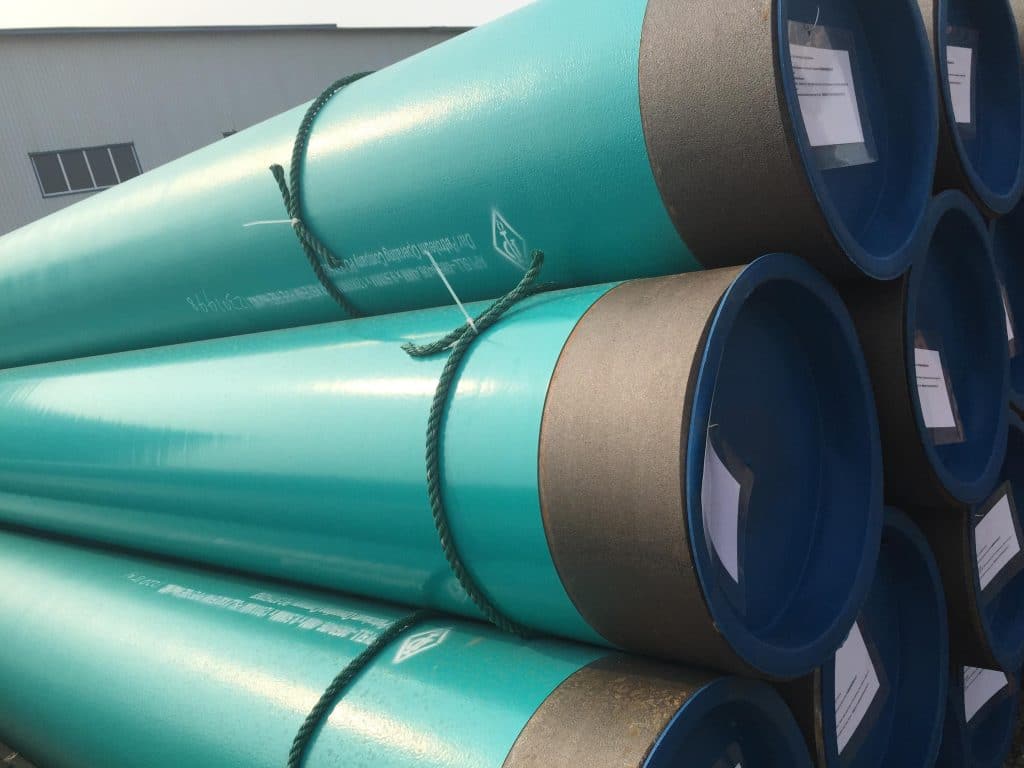
External protection is selected separately from the manufacturing method. Common options for suitable carbon steel pipes include fusion-bonded epoxy (FBE), three-layer polyethylene (3LPE), three-layer polypropylene (3LPP), liquid epoxy and hot-dip galvanizing. A coating may be applied to a compatible ERW or LSAW substrate when its dimensions and surface condition meet the coating procedure.
3LPE combines an epoxy primer, an adhesive and a polyethylene outer layer. DIN 30670 addresses polyethylene coating systems; ISO 21809-1 addresses applicable three-layer PE and PP systems. ISO 21809-2 addresses applicable single-layer external FBE. Select the appropriate standard and edition for the ordered coating rather than treating DIN 30670 as the standard for every system.
Coating choice depends on operating and application temperatures, soil or seawater exposure, installation loads, field joints and the project’s corrosion-control design. Cathodic protection may also be needed for buried or submerged pipelines. Internal linings are specified separately for the conveyed fluid, including any potable-water contact requirements. Handling, inspection and repair are essential to maintaining coating integrity.
Selecting and Ordering Carbon Steel Pipe
Start with the application and design conditions. Identify the fluid, maximum and minimum temperature, design pressure, diameter, nominal wall thickness, corrosion allowance and applicable design code. Then choose a pipe product standard, grade and manufacturing method that meet those conditions. For structural or piling applications, also assess external loads, connection details and the relevant structural specification.
The purchase order should identify the standard edition, dimensions, length, quantity, delivery condition, pipe ends, coating and required inspection. For sour service, provide the actual H₂S conditions and specify the applicable supplementary provisions, material requirements and tests. Neither a PSL2 designation alone nor an S suffix should substitute for a complete project specification.
Agree the inspection and test plan before manufacturing. Hydrostatic testing, mechanical tests and nondestructive examinations depend on the ordered standard, manufacturing route and any additional project requirements. Request the required material certificate, dimensional records, test reports, coating reports and traceability. EN 10204 3.1 and 3.2 are different inspection-document types; agree independent inspection and certification requirements explicitly.
Frequently Asked Questions
Are welded pipes suitable for high-pressure pipelines?
Yes. ERW and LSAW pipes can be used in high-pressure service when their product specification, grade, dimensions, inspection and design meet the project requirements. Operating pressure must be calculated under the governing design code.
Does a galvanized pipe have to be seamless?
No. Hot-dip galvanizing is a surface treatment. Suitable welded or seamless pipe can be galvanized when permitted by the relevant product and coating requirements.
Can carbon steel pipe be used for sour service?
Yes, when the material, welding and tests satisfy the applicable requirements for the actual service environment. Specify the necessary sour-service provisions in the order and verify the inspection records.
Request a Carbon Steel Pipe Quote
Since 2003, LONGMA has manufactured round ERW and LSAW steel pipes for pipeline and industrial applications. Its factory covers 230,000 m², with annual output exceeding 500,000 tonnes and more than 60 senior technical personnel. For a quotation, send your pipe standard, grade, dimensions, quantity, coating and inspection requirements to info@ilongma.com or visit www.ilongma.com.