- 1. Where Carbon Steel Works in Desalination Plants
- 2. How Does Seawater Damage Carbon Steel Pipe Systems?
- 3. Which Desalination Pipelines Can Safely Use Carbon Steel?
- 4. API 5L Carbon Steel vs Duplex Stainless Steel: Which Wins for Seawater Lines?
- 5. How Should Chloride Levels Guide Your Material Decision?
- 6. How to Select API 5L Grade, PSL, and Wall Thickness
- 7. How to Verify API 5L Pipe Quality Before You Sign the Contract
- 8. Case Study: Retrofitting a Gulf Desalination Intake Line
- 9. Conclusion
- 10. FAQ
- 11. Ready to Spec Your Desalination Pipeline Project?
One issue is posed by desalination engineers prior to the bidding process for each and every intake or transfer line: are API 5L carbon steel pipes capable of handling this service? Therefore, the answer is not just dependent on the API 5L stamp; it is also dependent on the chloride level, temperature, flow speed, lining, and grade. A clear decision route is provided in this guide, which is supported by data on water chemistry and a case study of a Gulf refit.
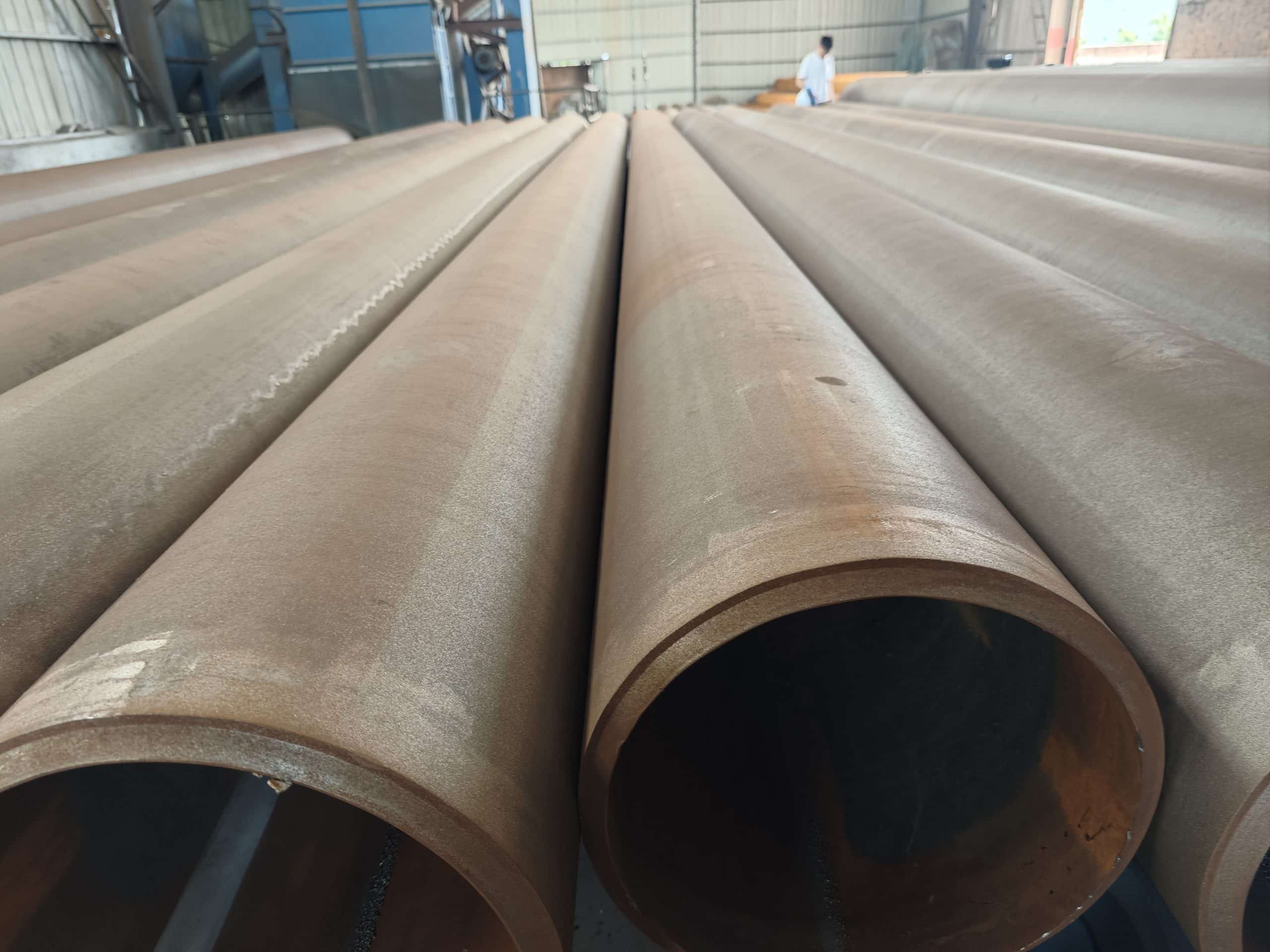
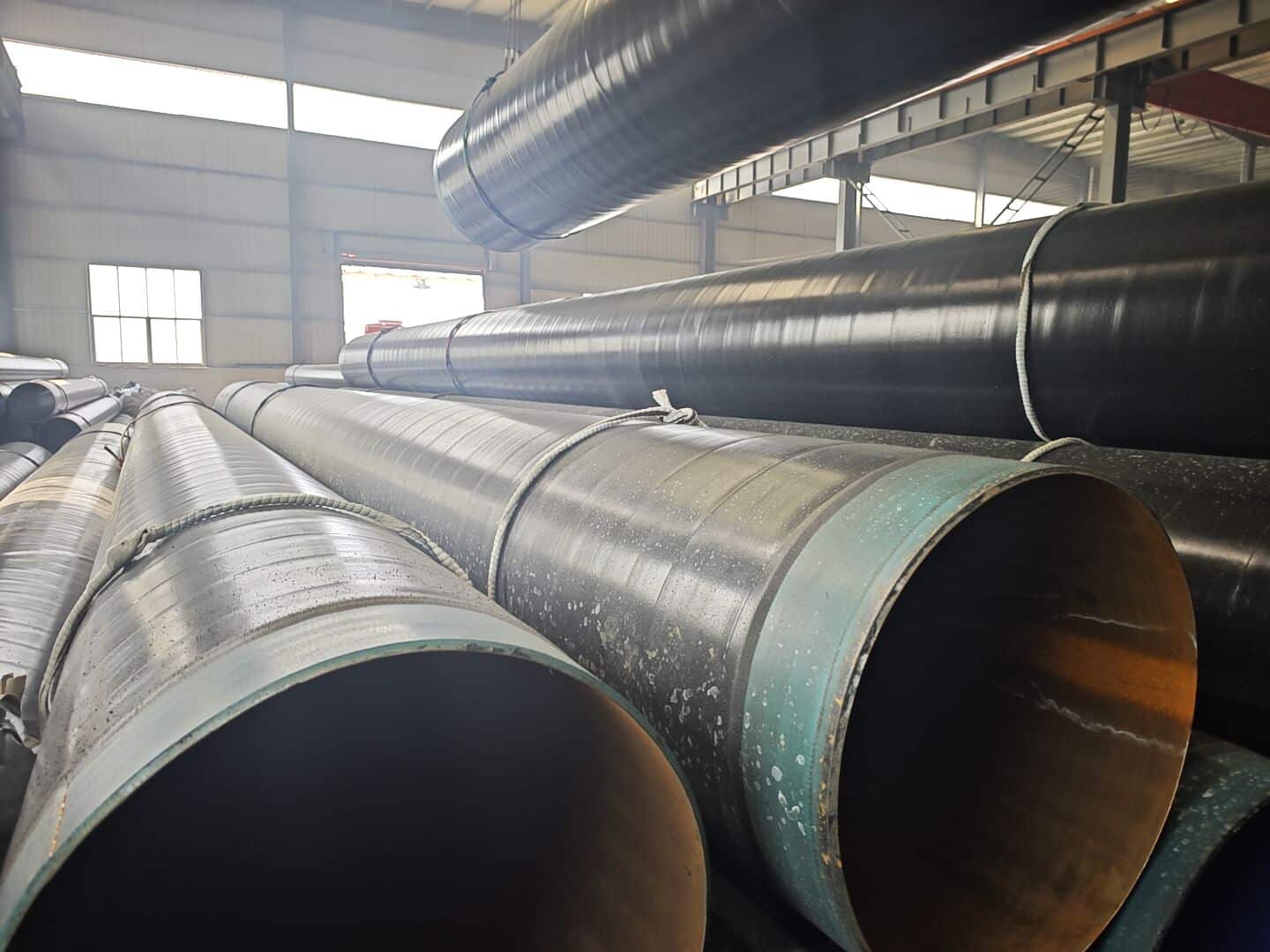
Where Carbon Steel Works in Desalination Plants
The Direct Answer
API 5L carbon steel works well for some desalination duties but not others. Moving and seawater intake lines use lined and coated carbon steel, provided temperature, salinity, and flow speed stay within allowed ranges. Bare carbon steel suffers in seawater because it chips and cracks. The line, not the whole business, drives the right choice. Separating critical seawater service from general utility service helps teams decide what to use and avoid premature pipe replacement.
Service Condition Decision Table
Most of the time, this is how carbon steel works for cleaning:
| How good the carbon steel is | Condition of service | Main control |
| How water works and how to keep the surface safe | Service with dry air or fresh water | Usually right |
| Taking in saltwater from the sea | Conditional | Lining on the inside, rust permit exams |
| Salt water can only get through if there is a metal lining or something else used. | High-chloride brine service | Metal or non-metallic internal lining required |
| A lot of salt water and a high risk. A study of rust by experts. | Severe seawater exposure with elevated risk | Expert corrosion assessment required |
| Conditional | Speed, temperature, lining, chloride | Pipes that bring water into reverse osmosis |
| Percolate pipes that are very clean | Steel pipes aren’t always enough | Rules for water quality |
This table is just the start; it’s not the whole plan. Before the order is sent out, each line still needs to be checked for rust based on the job.
How Does Seawater Damage Carbon Steel Pipe Systems?
Chloride Pitting and Crevice Corrosion
Steel in API 5L carbon steel pipes rusts because chloride ions break down the thin oxide film that protects it. Once the film breaks down, small pits form and grow faster than the assumed wall loss. Crevice corrosion follows the same pattern in tiny gaps. The most risky areas are:
- Flange and gasket apertures, where water adheres to bare metal and oxygen levels increase and decrease fast, accelerate the assault.
- Weld toes and heat-affected zones are more likely to crack pipe steel than other areas. Microstructure changes and residual stress generate “dead legs” and “low-flow sections” where water does not flow. Salt accumulates since it’s not drained.
- Repairs supports, clamps, and coatings where metal damage allows water touch steel.
- Floors rust quicker than air-exposed surfaces because particles and living things attach to them and block oxygen.
Pipes that aren’t checked commonly leak at the supports and junctions instead of the straight lengths. This is due to weak places.
External Corrosion in Marine Air and Buried Soil
Above-ground lines face damage from heavy rain, steam, and salt spray; subsurface soils are often more acidic, and underwater or splash-zone pipes suffer worse from wet-dry cycling. Protection options include fusion-bonded epoxy (FBE), three-layer PE or PP (3LPE/3LPP), liquid epoxy or polyurethane coatings, and cathodic protection for buried or submerged runs. Don’t choose a coating just because it’s cheap—consider how visible the system will be, too.
Which Desalination Pipelines Can Safely Use Carbon Steel?
Raw-Water and Seawater Intake Lines
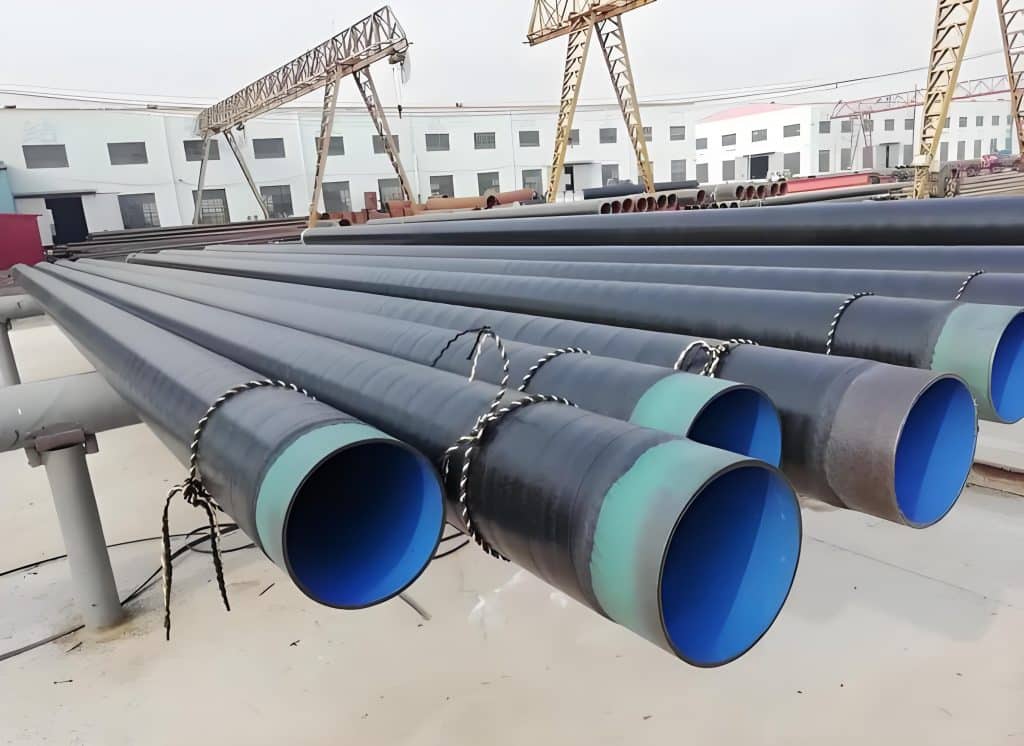
API 5L carbon steel pipes are often used in large-diameter intake and transfer lines, sealed inside and coated outside. Hydraulic design still must control speed, noise, sediment load, and biofouling. Submerged intake screens, risers, and connection points need more frequent checks than open lines. Across several Gulf projects, extra-large twin pipe cost more without helping the slower section; lined carbon steel was chosen for the main intake header instead.
Three Buyer Scenarios LONGMA Sees Most Often
The most significant of these three desalination orders is obvious:
- When making an integrated skid or whole plant pipe package, EPC contractors make sure all sections operate well together, acquire authorisation to weld, and have all the paperwork the owner needs for a third party inspection.
- Local pipe sellers may stock Grade B, X42, or X52. These distributors must retain correct batch and size records and have adequate stock to meet orders without waiting for a fresh run.
- When replacing or adding to a line, plant personnel typically bring the corrosion history of an old pipe. After that, they require a superior coating or lining system.
The most critical sections of the standard vary by query since they are distinct.
API 5L Carbon Steel vs Duplex Stainless Steel: Which Wins for Seawater Lines?
Side-by-Side Performance Comparison
| Criterion | API 5L carbon steel | Duplex stainless steel |
| Chloride resistance | High resistance to salt if it’s lined or covered; low resistance if it’s not | High, grade-dependent |
| Initial material cost | At the beginning, the cost of supplies is often higher or cheaper. | Usually higher |
| Coating dependence | Layers often depend on each other a lot, but sometimes they don’t depend on each other at all. | Lower, but not zero |
| Welding complexity | Most of the time, welding is easier, but it needs to be carefully managed. | Needs tighter procedure control |
| Inspection burden | For lining service and important ocean service, there are a lot of checks. | High for critical seawater service |
| Lifecycle cost | How competitive it is with good protection | How competitive it is in rough service |
| Typical use | People often use protected large-bore pipes. Very important are lines that can handle saltwater and a lot of chlorine. | High-pressure RO brine lines and critical bare-seawater service |
Grade B, X42, X52, X65 — Strength Is Not Corrosion Resistance
It’s not true that higher grades of API 5L carbon steel pipes keep you safer from salt. When the pressure is low, Grade B is good for general line-pipe work. Smaller designs can use more power with the X42. When there is more pressure, the walls of an X52 can get smaller. This could make big projects easier. For runs with more pressure, the X65 works best because it helps them lose weight the most. You shouldn’t choose a grade based on what sounds stronger. Instead, look at the pipe code and see how much stress is safe.
When Duplex Stainless Is Worth the Extra Cost
For long periods of time, high temperatures, bare saltwater, and high levels of dissolved oxygen are all things that duplex or super-duplex stainless steel can handle. This makes the extra cost worth it. It’s also worth it when the steel is used in important lines where a leak is not an option and in places that are hard to check out or fix. But it’s not always the better choice. To weld duplex, you have to be more careful about how much heat you use and leave the plates and parts for longer than with carbon steel. LONGMA has seen projects waste a lot of money by putting in duplex for a low-speed utility line that could have been lined with carbon steel for a lot less.
How Should Chloride Levels Guide Your Material Decision?
Water Chemistry Data to Collect First
For API 5L carbon steel pipes, you should look at a water chemistry data sheet instead of a product brochure before making a big decision. For the design, it’s important to think about the pH and alkalinity, the range of temperatures, the dissolved oxygen level, the sulfide or oxidizing biocide content, the flow rate, the cleaning chemicals, the suspended solids, and both normal and abnormal operating conditions. If you skip any of these numbers, the choice of material is no longer based on engineering but on a guess. Claim of early corrosion is often just a guess.
A Chloride Decision Matrix
It’s better to have a grid made just for one project than a chloride number that can be used for everything:
| Condition | Carbon steel decision |
| Low-chloride freshwater | Normal rust control works, and the water is fresh and has low chlorine levels. |
| Natural seawater | Be careful: usually needs lining or metal choice |
| Concentrated RO brine | People who are trained to do so should be the only ones who look at concentrated RO salt. |
| Warm, oxygenated seawater | Bare carbon steel shouldn’t be in warm, fresh saltwater most of the time. |
| Intermittent seawater exposure | Design factors for upkeep, drainage, and cleaning |
Corrosion Allowance and Design Life
There is no one flat rule of thumb that you should use to figure out the rust limit. You should instead increase the predicted rate of corrosion by the long-term life. When it comes to pipes, ASME B31.3 is for process pipes and ASME B31.4 is for liquid transfer lines (ASME, 2023) and the design has to match them. After the first leak, you shouldn’t change how often you check based on risk and the thickness of the wall. Even before the plant starts up, they should be written down in the instructions.
How to Select API 5L Grade, PSL, and Wall Thickness
Mechanical Property Comparison by Grade
| Grade | Relative yield strength | Relative tensile strength | Typical decision use |
| Grade B | Baseline | Baseline | General line-pipe applications |
| X42 | Moderate rise | Moderate rise | Moderate-pressure pipeline design |
| X52 | Higher | Higher | More pressure, thinner walls |
| X65 | Highest of this group | Highest of this group | Higher-strength transmission applications |
Always check exact numbers for API 5L carbon steel pipes against the most recent version of API 5L and the project’s purchase needs. This is because small changes can happen between editions.
PSL1 vs PSL2
| Item | PSL1 | PSL2 |
| Chemical control | Basic spec requirements | Tighter controls |
| Mechanical testing | Standard requirements | Additional or stricter requirements |
| Toughness testing | Project-dependent | Hardness tests are needed more often |
| Nondestructive examination | Baseline level | More in-depth |
| Traceability | Standard level | More detailed documentation |
| Typical selection | Service that doesn’t ask for much | Important, bad, or offshore projects |
With PSL2, you can keep better track of your paper work and goods. This will not protect you from salt in steel if you do not cover or line it with something else.
Wall Thickness and Dimension Planning
In API 5L, the outside diameter, length, end finish, and range of sizes are all measured. People use “API 5L pipe schedule” in business, but API 5L and ASME B36.10M are not the same thing, and they shouldn’t be written on the same order. Because of the pipe code, the outside width, the design pressure, the allowed stress, the temperature, the weld joint factor, and the rust limit, you should plan the wall thickness. Not just one variable at a time.
How to Verify API 5L Pipe Quality Before You Sign the Contract
Standards Every Project Should Reference
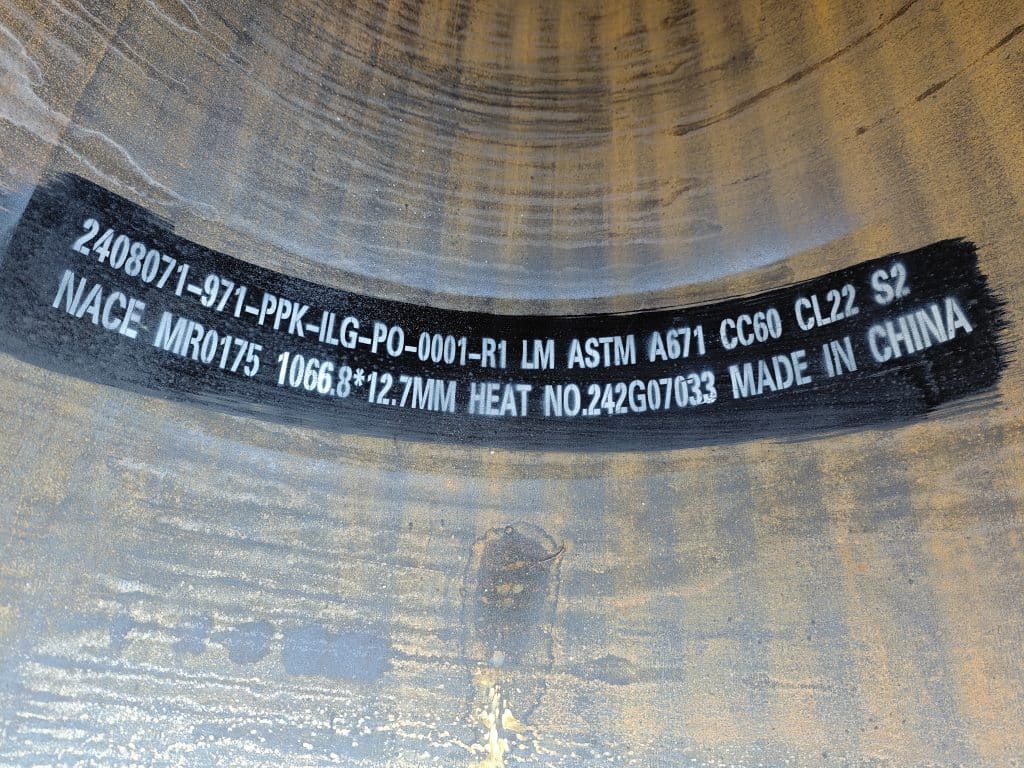
A clean spec sheet for API 5L carbon steel pipes will almost certainly include: API 5L or ISO 3183 for line pipe (API, 2024; ISO, 2019); ASME B31.3 or B31.4 for the piping system; NACE MR0175/ISO 15156 for sour service; ISO 8501-1 for surface preparation; the ISO 21809 series for external coatings; AWWA standards for water infrastructure; and EN 10204 Type 3.1 or 3.2 for inspection documents. From 2023, NSF/ANSI/CAN 61 or relevant drinking water directives apply where pipe contacts water (NSF International). RoHS or FDA markings aren’t always needed on plain line pipe—only when the project requires them.
Ten-Step Inspection Checklist
The pipe leaves the mill after a few tests that discover most of the issues:
- Make sure your purchases are made of acceptable materials.
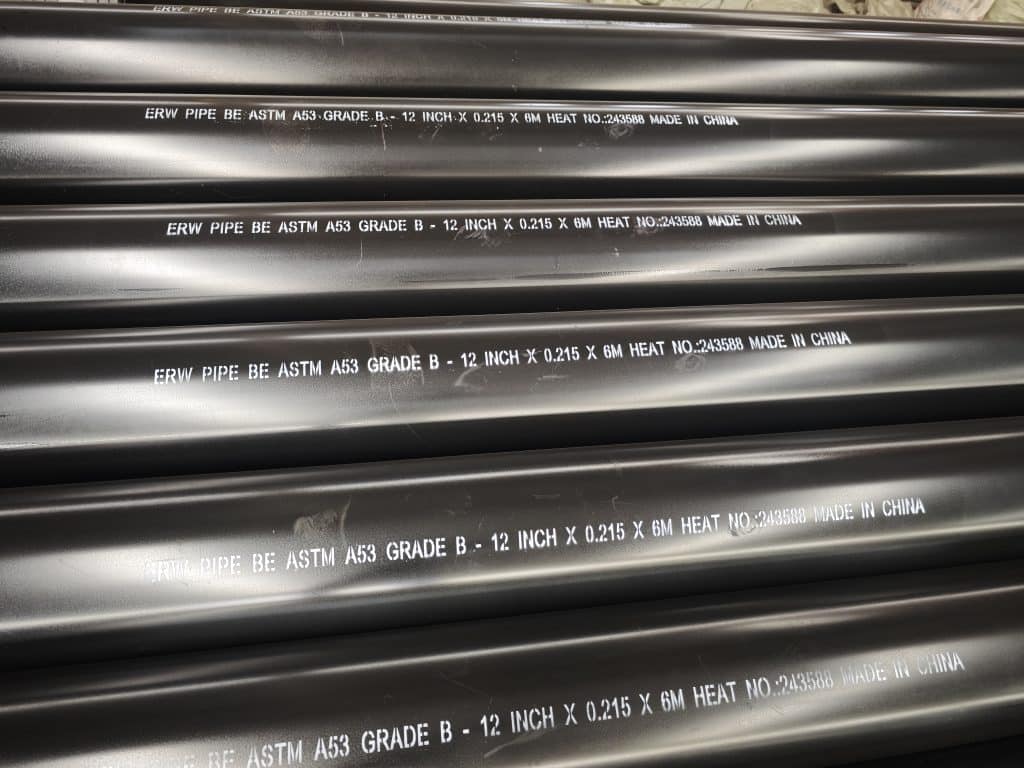
- Every length should have a heat number and pipe marked for tracking.
- Compare chemical composition and mechanical strength test results to order.
- The hydrostatic or certified nondestructive test on each pipe should be examined.
- Compare the wall’s length and breadth to the edge.
- Check repair records and weld together welded lines.
- See how the coating was manufactured and applied in the papers.
- Check hardness, impact, and sour service test findings if asked.
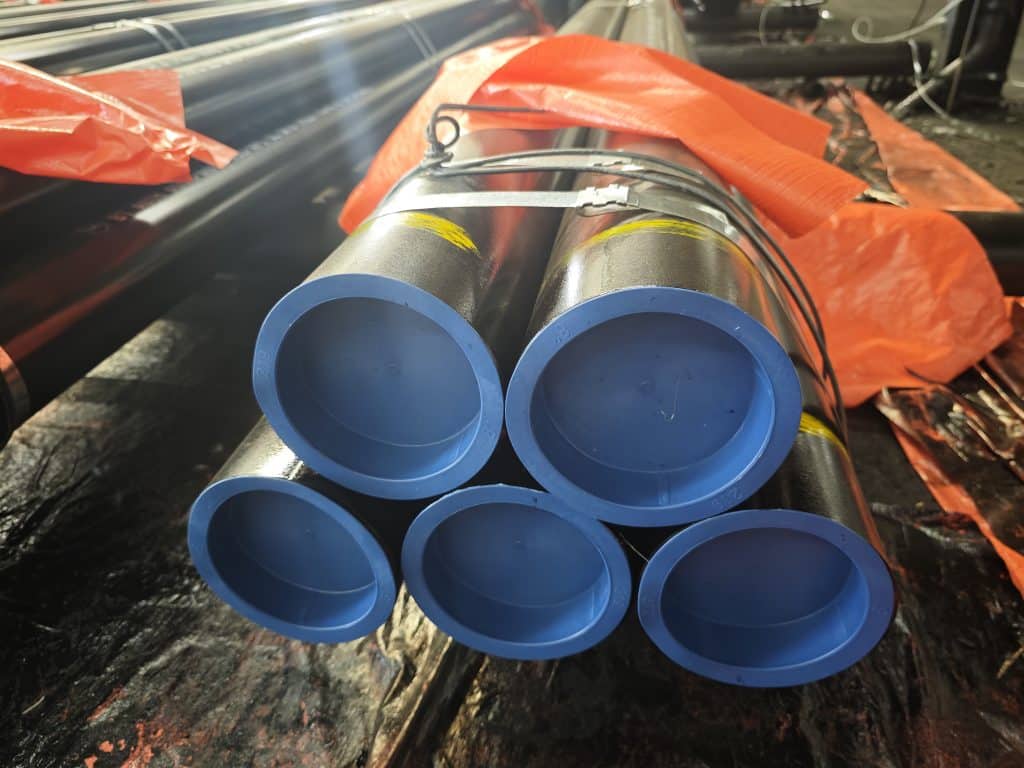
- Check packaging, end protection, and preservation before loading.
- Check all papers before shipping the goods.
Supplier Evaluation Checklist
Before ordering, verify the supplier meets current API 5L standards with an auditable quality system, offers Grade B–X65 in seamless and welded forms, has a fully traceable manufacturing route, experience coating/lining for water or desalination, in-house testing, export packing, and clear mill lead-time vs. stock info, plus defined warranty and nonconformance claim rules. LONGMA tracks everything from raw plate via heat, batch, and product numbers, so nonconforming items are recorded and fixed before reaching the loading dock.
Case Study: Retrofitting a Gulf Desalination Intake Line
The Corrosion Problem at the Intake Header
A Gulf EPC company called LONGMA’s project team because a bare API 5L carbon steel pipes intake header that had been in service for eight years started leaking at support clamps and flange joints. The crack was about 2.8 mm deep against a 12 mm wall, as seen from the inside. These depths were usually found at low-flow dead legs and weld heat-affected zones. When the line was first built, the people who worked on it didn’t request an interior lining because they thought the exterior paint would be enough to keep it safe. That one gap drove the decision to replace it.
The Lined API 5L Solution and Results
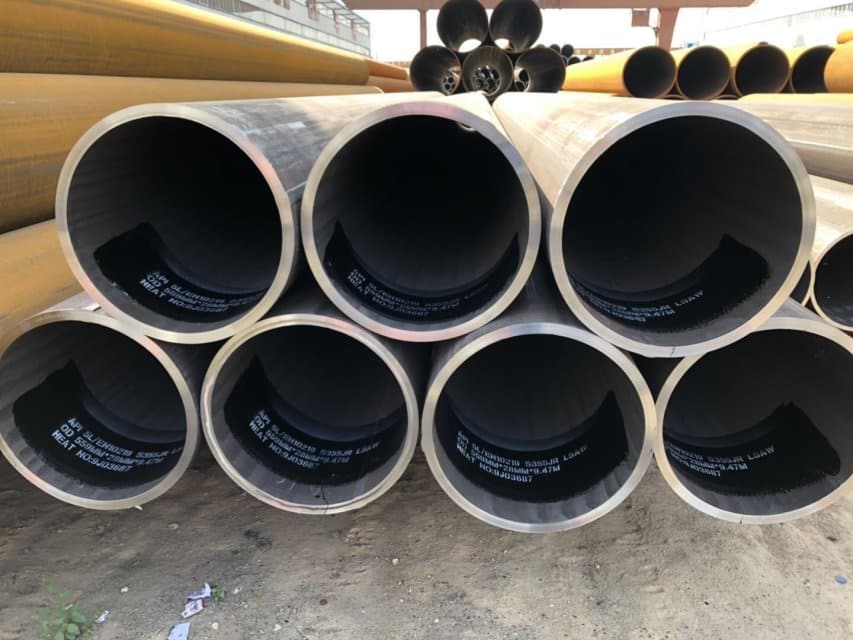
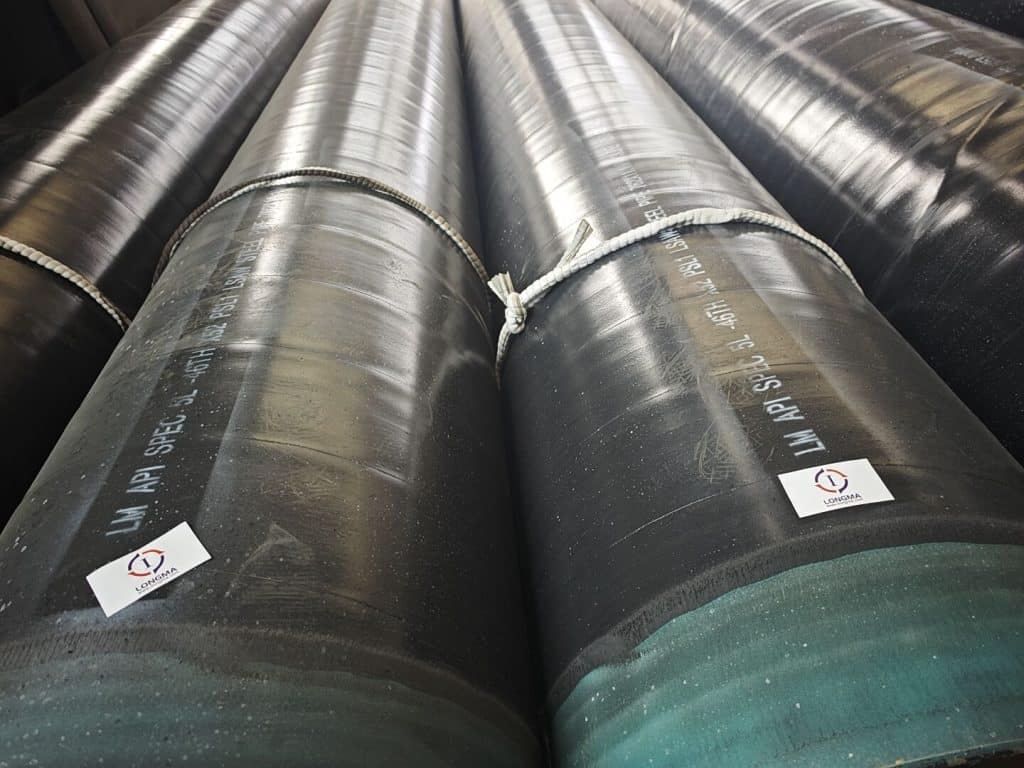
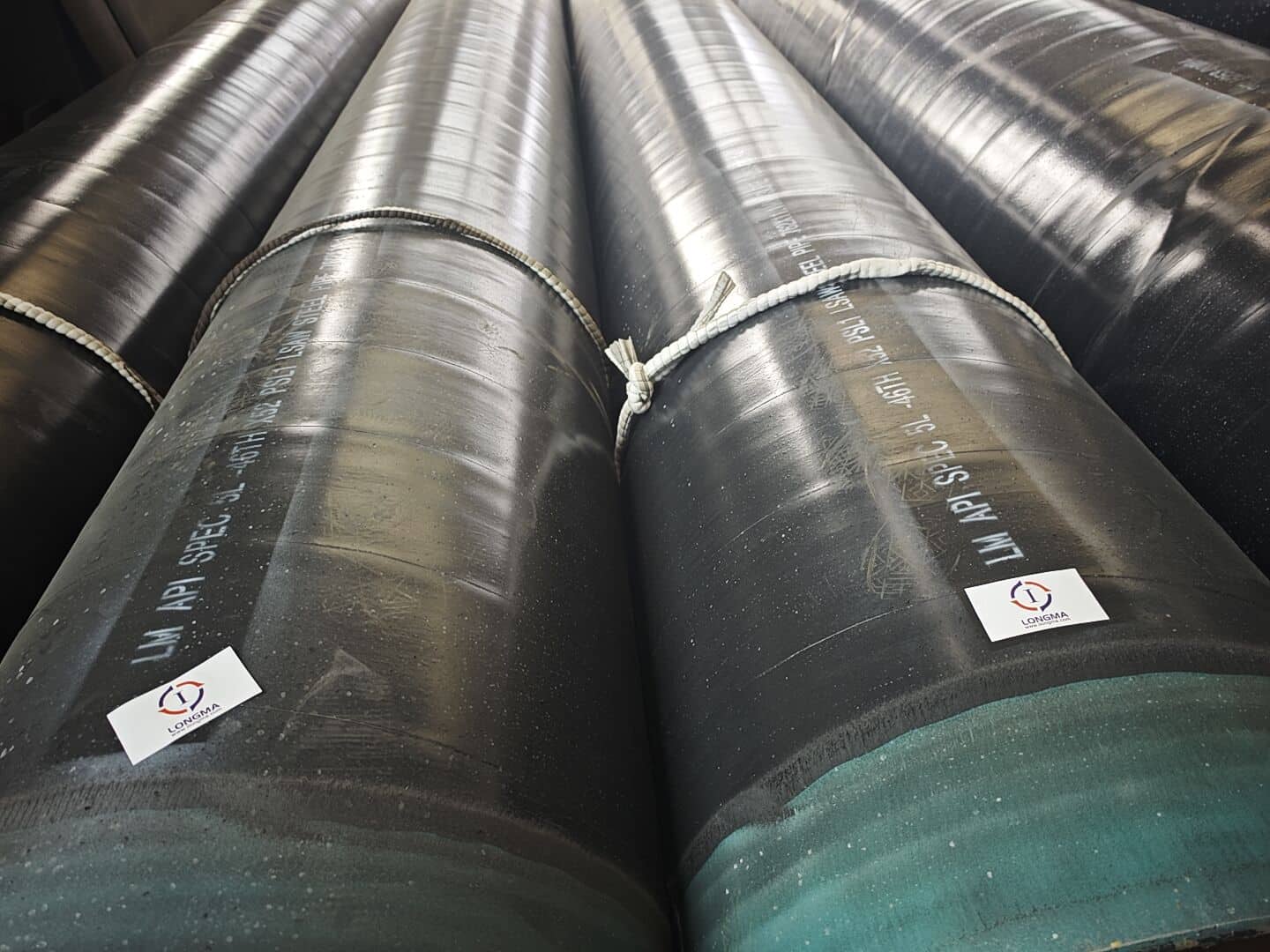
API 5L X52 PSL2 LSAW pipe, 36-inch: solvent-free epoxy outside, 3-layer PE inside; ~1,800m made and shipped in 38 days in two packages; EN 10204 3.2 and ultrasonic tests passed; no pits after 18 months; flow speed dropped 3.1 to 2.0 m/s via new hydraulic design.
What the Data Tells Future Buyers
This project shows better steel wasn’t the answer; differences came from the internal lining, flow-speed control, and dead-leg design. Given the water and flow, the carbon steel that failed after eight years worked well once replaced. Wrong steel grade is usually blamed, but lining and flow design are the real issues—what LONGMA sees most in desalination plant upgrades.
Conclusion
API 5L carbon steel pipes work in desalination only when the service is well specified and supported by appropriate lining, coating, corrosion allowance, and inspection. In the presence of constant saltwater, bare steel cannot survive. Grade, PSL, wall thickness, and protection must all correspond to the actual job of each line; it is not sufficient to make a general assumption.
FAQ
Can API 5L carbon steel pipe be used for seawater?
Yes, but only if it has a coating on the outside, a lining on the inside, a limit on rust, and a set inspection plan. Chloride can make holes in carbon steel that is left out in salt water all the time.
Is API 5L PSL2 better than PSL1 for desalination?
In PSL2, the rules are even stricter when it comes to chemicals, mechanics, testing, and keeping track of things. While it does stop rust in salt water, it’s not enough to cover or coat something on its own.
Which API 5L grade is best for desalination pipelines?
There’s more than one good grade. Grade B, X42, X52, or X65 should be chosen based on the pressure, wall thickness, governing code, supply, and plan for stopping rust on the line.
Ready to Spec Your Desalination Pipeline Project?
Buying the appropriate product the first time will save you money. Longma makes API 5L ERW and LSAW carbon steel pipes since 2003. They produce 500,000 tons of steel at their 230,000-square-meter factory annually. From steel plate to finished work, they can observe the process. PSL1 and PSL2 grades B–X80 are API 5L carbon steel pipes. LONGMA manufactures them. LONGMA ensures water and process line compatibility as a direct API 5L carbon steel pipe manufacturer. Send size, pressure, and salinity data, and LONGMA will develop a bid. Send your specification document to info@ilongma.com to check grade, dimensions, and lead time before your next project milestone.