- 1. What Does X65 Sour Service Mean?
- 2. API 5L 47th Edition Matters for Current Procurement
- 3. Chemistry, Carbon Equivalent and Hardness
- 4. Manufacturing Route: ERW/HFW and LSAW
- 5. Inspection and Testing for Sour-Service Orders
- 6. Coating Does Not Replace Sour-Service Material Qualification
- 7. What Buyers Should Put in an X65 Sour-Service RFQ
- 8. LONGMA Quality and Documentation Support
- 9. Conclusion
- 10. FAQ
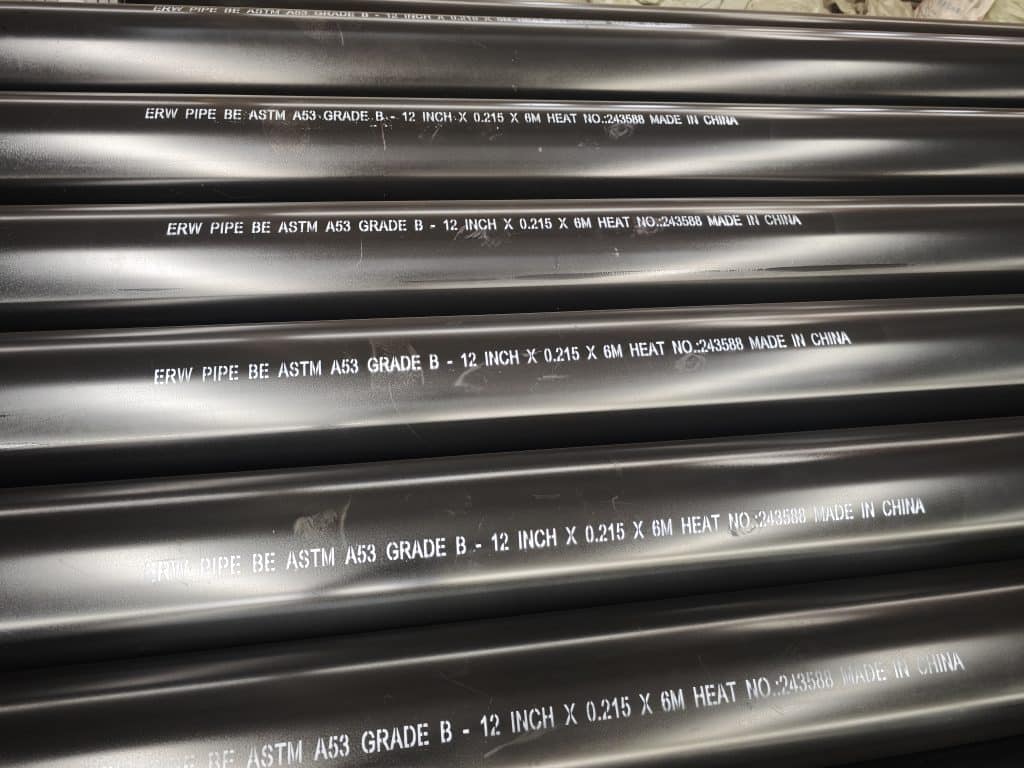
API 5L Grade X65 line pipe can be specified for pipelines where hydrogen sulfide (H2S) creates a sour-service risk, but sour-service compliance cannot be established from grade designation alone. The purchase specification must define the applicable API 5L product specification level, sour-service requirements, service conditions, testing and documentation. API published the 47th Edition of API Specification 5L in June 2026, and this edition includes updates to sour-service requirements, chemical element ranges, HFW pipe quality, impact toughness and sulfide stress cracking testing.
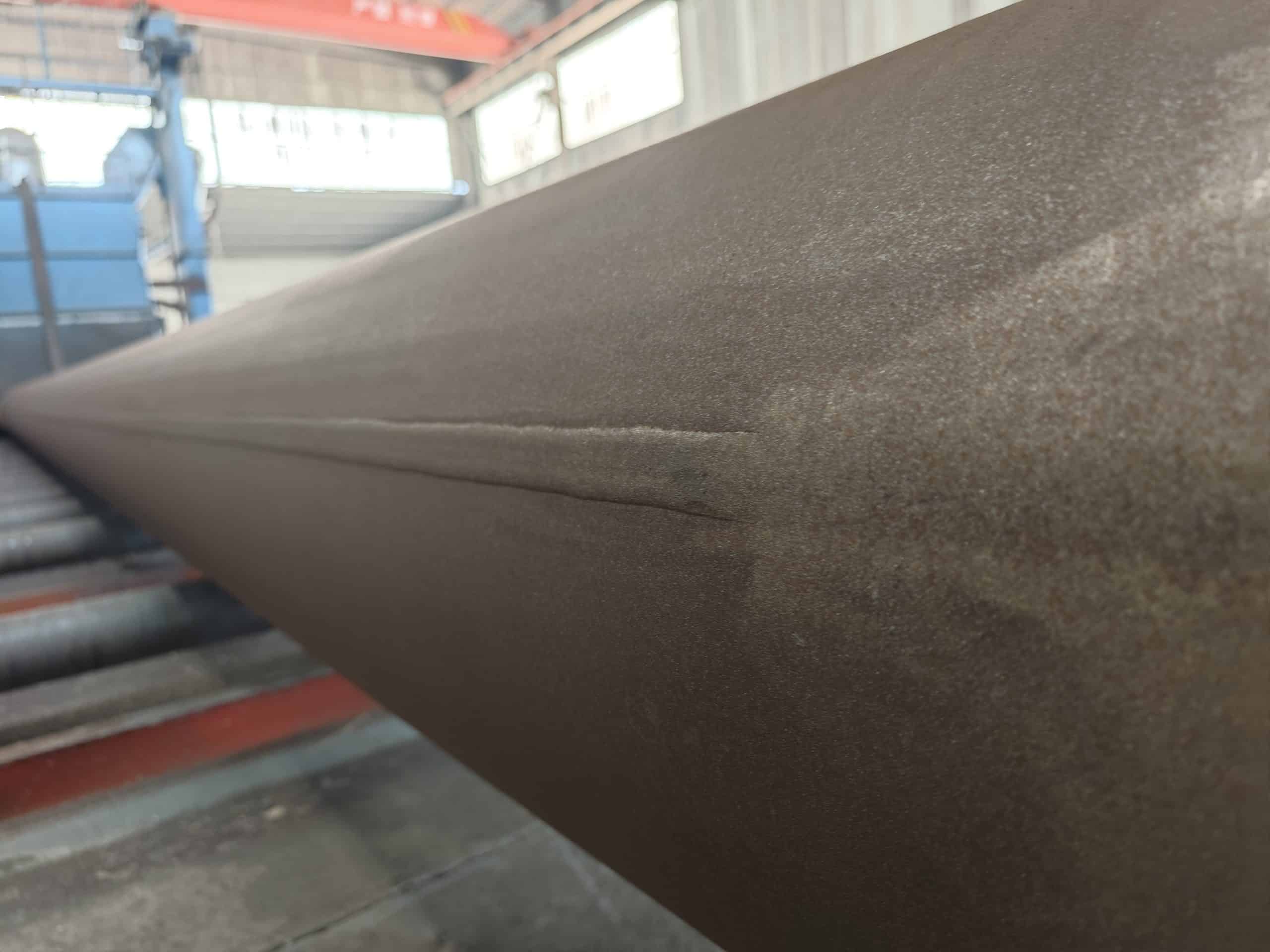
What Does X65 Sour Service Mean?
API Spec 5L covers seamless and welded steel line pipe. For PSL 2 pipe ordered for sour service, API licensing documentation continues to identify Annex H as the sour-service product category. In practice, an X65 sour-service order should be defined by the purchase specification rather than by adding an ‘S’ designation and assuming that one fixed chemistry, hardness or test package applies to every project.
API 5L 47th Edition Matters for Current Procurement
Older articles frequently cite the 2018 edition of API 5L. That edition was the 46th Edition, not the 45th. The current 47th Edition was published in June 2026. Because API specifically identifies sour-service requirements, chemical element ranges, HFW quality, impact toughness and SSC testing among the updated areas, buyers should not copy chemistry or testing limits from a 2018 table into a 2026 purchase specification without checking the current edition.
Mechanical Properties: Use the Current Order Requirements
X65 identifies the line-pipe strength grade, but acceptance should be based on the complete mechanical-property requirements in the applicable API 5L edition and purchase order. Yield strength, tensile strength, yield-to-tensile ratio, elongation and impact requirements can be affected by PSL, pipe dimensions, test-piece orientation and supplementary service requirements. For this reason, this article does not present a single Charpy energy value as a universal X65 sour-service requirement.
Chemistry, Carbon Equivalent and Hardness
Sour-service performance depends on steel cleanliness, chemistry, microstructure and manufacturing control. Carbon equivalent or Pcm can also be important for weldability. However, maximum carbon, sulfur, CE/Pcm and hardness values should be taken from the current API 5L requirements and the project specification for the actual product and service condition. A single limit such as ‘250 HV10 for all X65S pipe’ should not be treated as a universal rule without confirming where the hardness is measured and which requirement governs.
SSC and HIC Are Different Damage Mechanisms
Sulfide stress cracking (SSC) is associated with susceptible material exposed to H2S under tensile stress, while hydrogen-induced cracking (HIC) can develop through hydrogen accumulation in susceptible steel without the same applied-stress mechanism. Sour-service material qualification may therefore include different tests and acceptance criteria. The purchaser should specify the applicable test method, test solution, specimen location and acceptance criteria rather than simply requesting ‘NACE testing.’
Manufacturing Route: ERW/HFW and LSAW
| Manufacturing Route | Typical Procurement Consideration | Important Point |
| ERW/HFW | Common within the mill’s qualified dimensional and grade range | Current API 5L includes specific HFW quality requirements; suitability depends on the order specification |
| LSAW | Often selected for large-diameter or heavy-wall line-pipe projects | Pressure capability is not determined by process name alone; grade, dimensions, design and quality requirements govern |
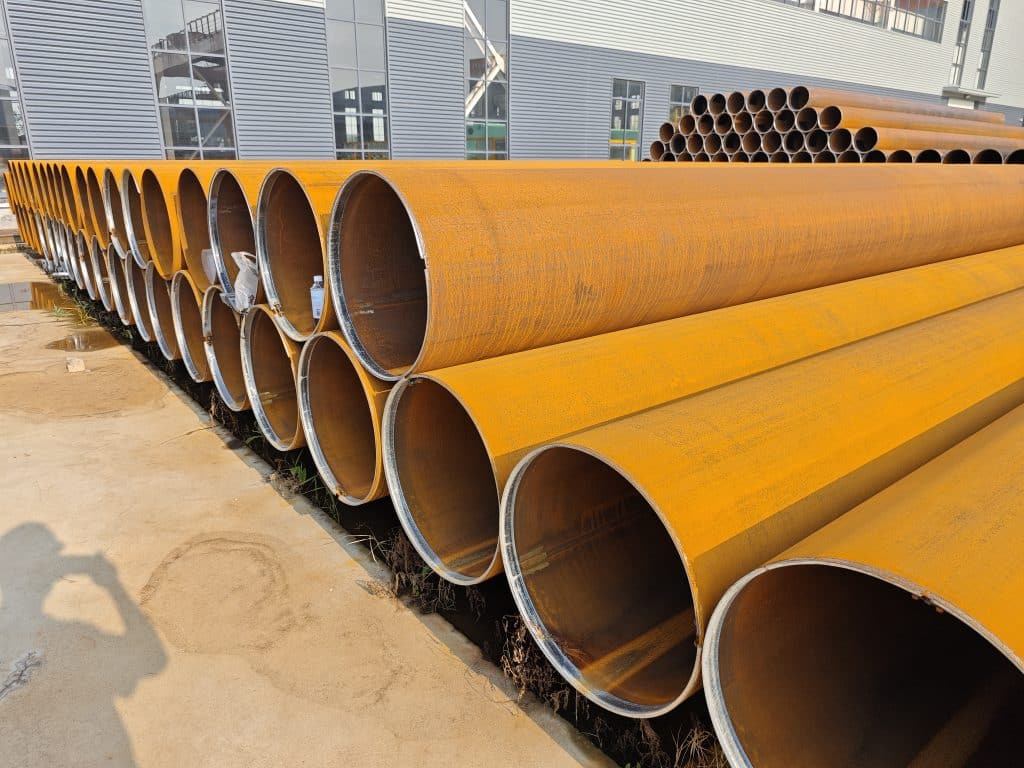
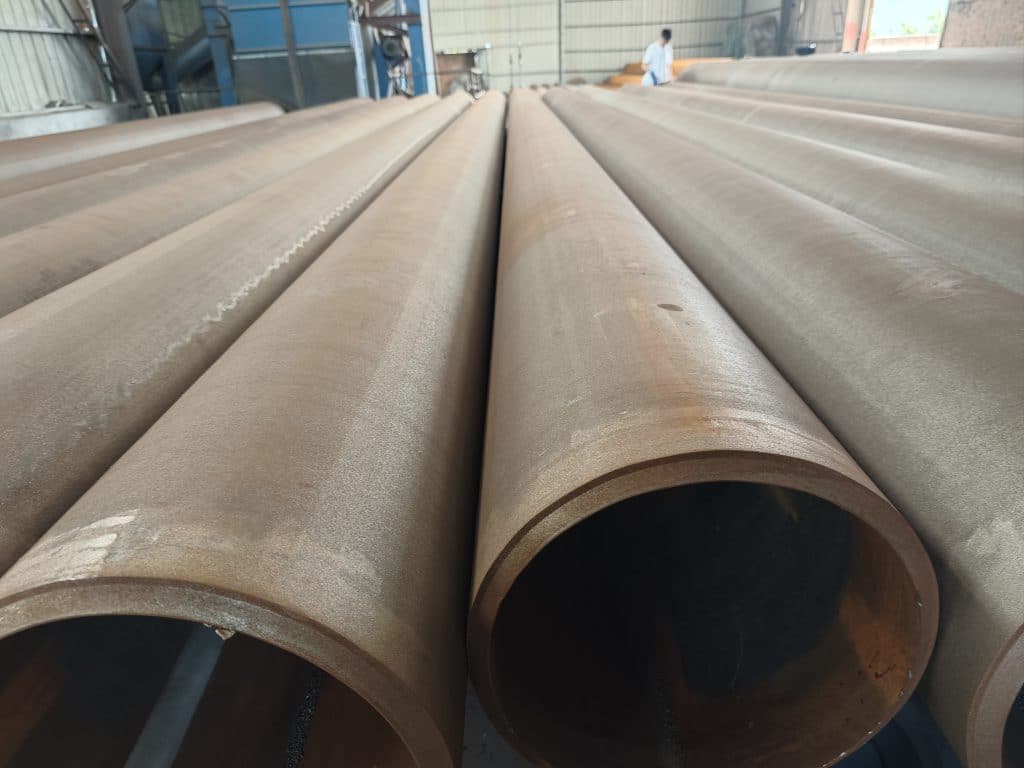
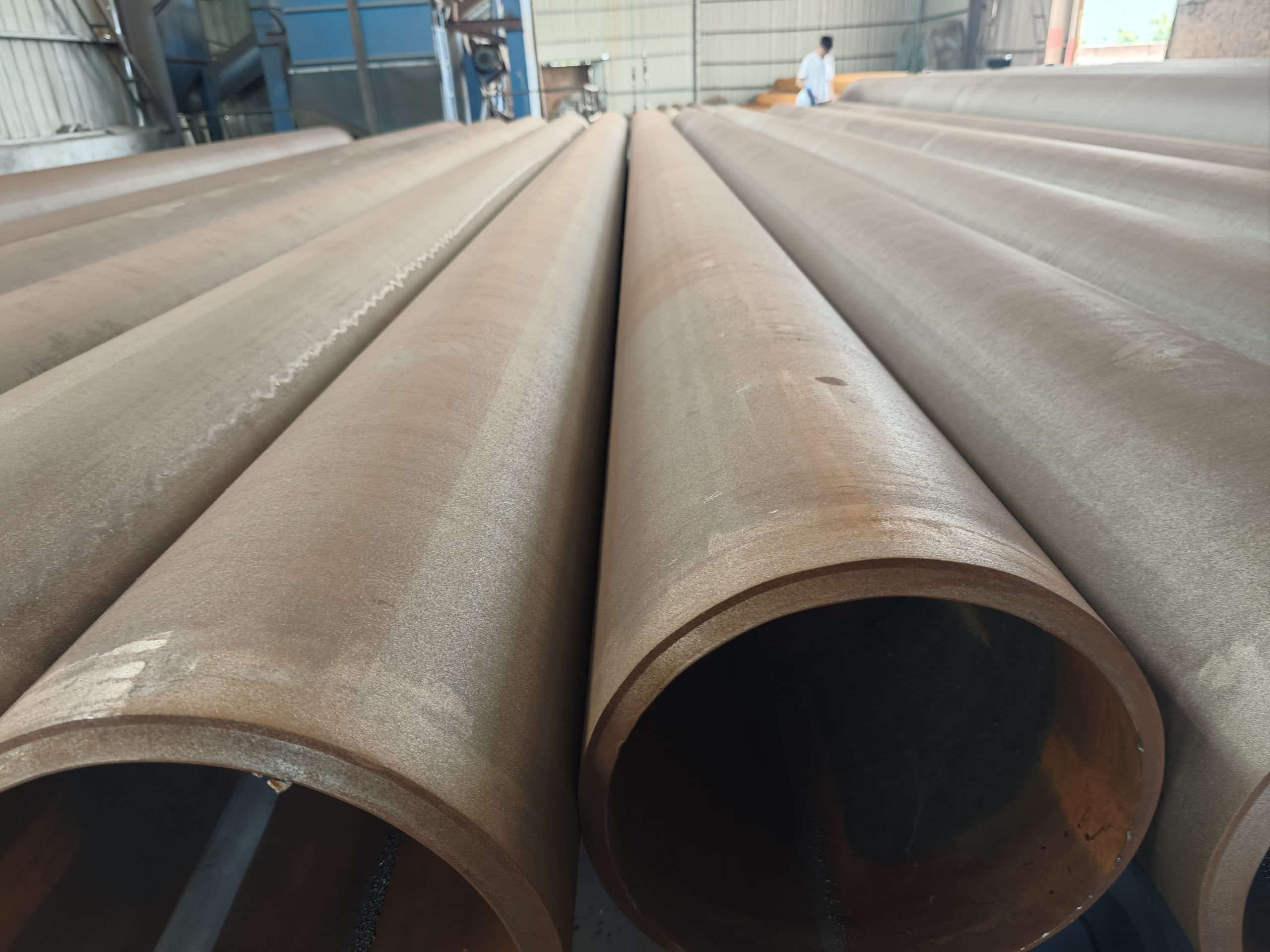
LONGMA focuses on round ERW and LSAW steel pipe. Neither manufacturing route should be described as automatically superior for sour service. The correct route depends on diameter, wall thickness, grade, project design and the mill’s qualified manufacturing capability.
Inspection and Testing for Sour-Service Orders
A rigorous sour-service inspection plan should distinguish between requirements of the base API 5L specification, Annex H requirements, purchaser-specified supplementary requirements and additional project requirements. This prevents optional or project-specific tests from being incorrectly presented as mandatory for every X65 sour-service pipe.
- Material traceability and review of chemical and mechanical test results
- Required weld-seam and/or pipe-body NDE for the specified manufacturing route
- Hydrostatic testing in accordance with the applicable product requirements
- Impact testing where required by the applicable PSL and purchase specification
- Hardness testing at the locations and by the method required by the specification
- HIC and/or SSC testing when required by the applicable sour-service specification and purchase order
- Third-party inspection when requested by the purchaser
Coating Does Not Replace Sour-Service Material Qualification
External coatings such as FBE or 3LPE can protect the outside surface from the surrounding environment, but they do not by themselves qualify the steel for internal H2S-containing service. External corrosion control, internal corrosion assessment, material selection and integrity management should be treated as separate but coordinated parts of the pipeline design.
What Buyers Should Put in an X65 Sour-Service RFQ
- API Spec 5L edition required by the project, including PSL and applicable sour-service annex.
- Grade, OD, wall thickness, length and manufacturing route.
- Design/service information required by the project material-selection basis.
- Required chemistry, hardness, toughness and sour-service testing criteria.
- NDE, hydrostatic test and inspection requirements.
- Coating system and surface preparation requirements, if applicable.
- EN 10204 inspection-document type and third-party witnessing requirements, if applicable.
- Required documentation package and traceability level.
LONGMA Quality and Documentation Support
LONGMA manufactures round ERW and LSAW steel pipe. The production base covers approximately 230,000 square meters, with annual production exceeding 500,000 tons. For sour-service inquiries, the technical review should be based on the customer’s current specification and data sheet. Inspection, NDT, mechanical testing, MTC documentation and third-party inspection arrangements should be confirmed against the purchase order rather than represented as one universal package for every project.
Conclusion
API 5L Grade X65 sour-service pipe should be purchased as a fully specified material system, not as a grade name alone. The most important procurement step is to use the current project-required edition of API 5L and clearly define Annex H, chemistry, hardness, toughness, HIC/SSC testing, NDE and documentation requirements. This is especially important after publication of API Spec 5L 47th Edition in 2026, which updated several areas directly relevant to sour-service line pipe.
FAQ
- Is API 5L 2018 the current edition?
No. API published API Specification 5L, 47th Edition, in June 2026. The 2018 publication was the 46th Edition.
- Does X65 sour service always mean a fixed 250 HV10 maximum hardness?
Do not apply one hardness value universally without checking the current API 5L requirements and the project-specific sour-service specification, including the required test locations and method.
- Are HIC and SSC tests automatically identical requirements?
No. They address different cracking mechanisms and use different test methods and acceptance criteria. The purchase specification should state which tests are required.
- Is LSAW always better than ERW/HFW for sour service?
No. Both manufacturing routes can be considered when they satisfy the applicable product and project requirements within the mill’s qualified capability.